RUSSIANS AT WAR: CONTROVERSY
This is the untold story of ‘the most controversial film of the year’.
Russians at War was made against all odds. For seven months, I alone filmed clandestinely with a Russian battalion on the frontlines, without permission from the Ministry of Defense or any official authority.
My goal was simple: to document human stories obscured by the fog of war. To bear witness from a side few have seen, without censorship or political prejudice.
Russians at War was selected by major festivals and broadcasters, including TVO, Knowledge Network (Canada) and ARTE (France). It was predicted to have a strong box office run (including even an Oscar nomination). But the story did not end there.
Russians at War divided critics. Some called it a documentary equivalent to All Quiet on the Western Front. Others, mainly from the Ukrainian community, labeled it ‘Russian propaganda’ – without watching it. Still others, mostly Russian dissidents, questioned if Russians soldiers should be ‘humanized’ at all.
The controversy became part of the film’s story. Russians at War became more than a film. It became a test of whether documentary cinema can still explore human complexity in wartime without being forced into ideological obedience.
And it revealed something profound – not only about war, but about all of us, watching war today.
VENICE
Russians at War is selected by the Venice Film Festival.
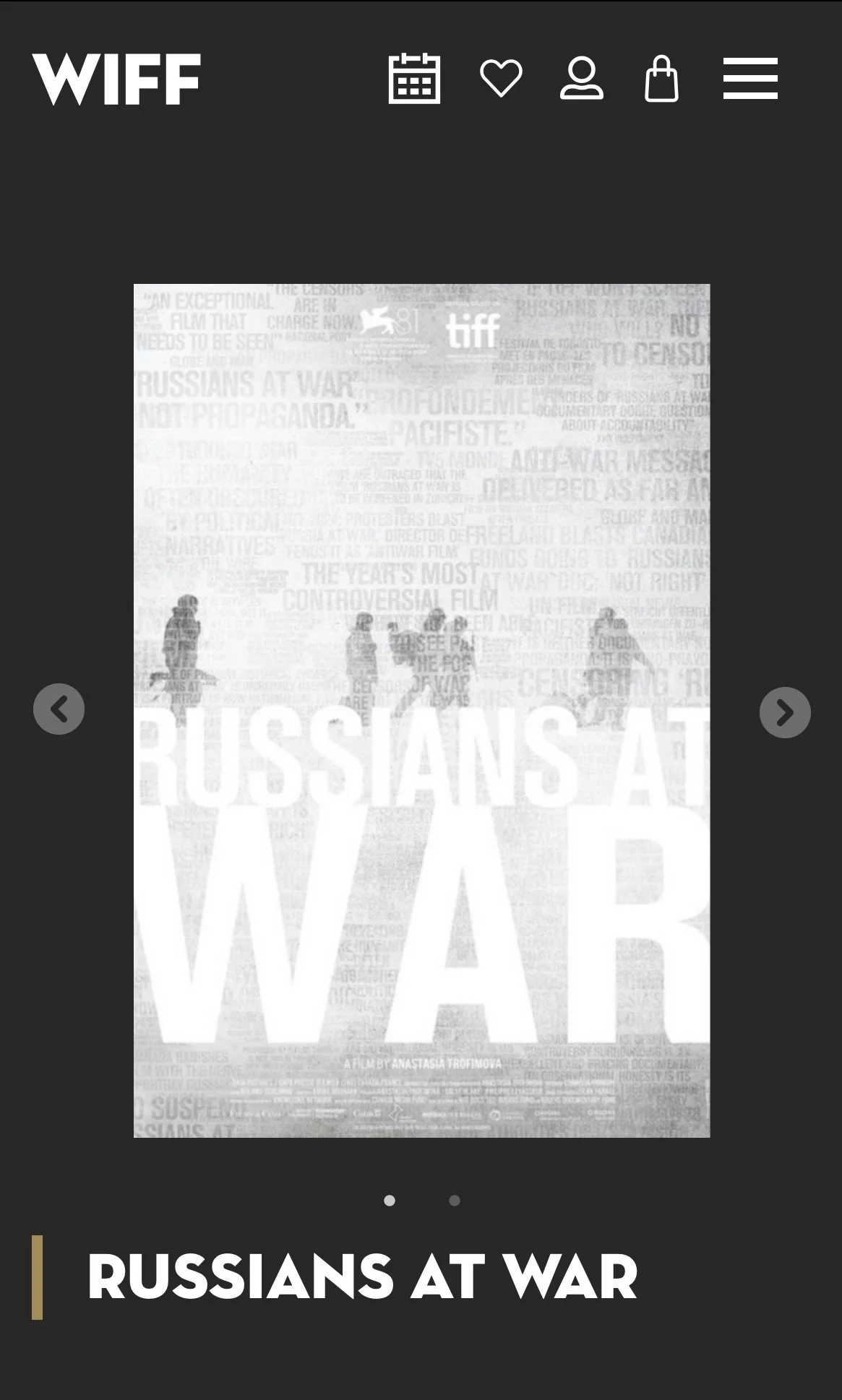
And then by Toronto (TIFF), Amsterdam (IDFA), Zurich (ZFF), Windsor (WIFF), Lunenburg, Mumbai (MAMI), Athens (AIFF) and Sydney (Antenna).
Venice. The festival’s first red carpet and opening film, Beetlejuice. In the audience are Monica Bellucci, Winona Ryder, Jenna Ortega… And I’m in the same row as Sigourney Weaver!
It’s a few days before our world premiere. Russians at War is being released at a time when the war is seen exclusively through the Ukrainian lens and Russian directors are all but absent at international festivals. A film by a Russian director – and on the most ‘controversial’ topic, the stories of Russian soldiers – is something no one expects.
…How will people see a reality that’s so far from this?
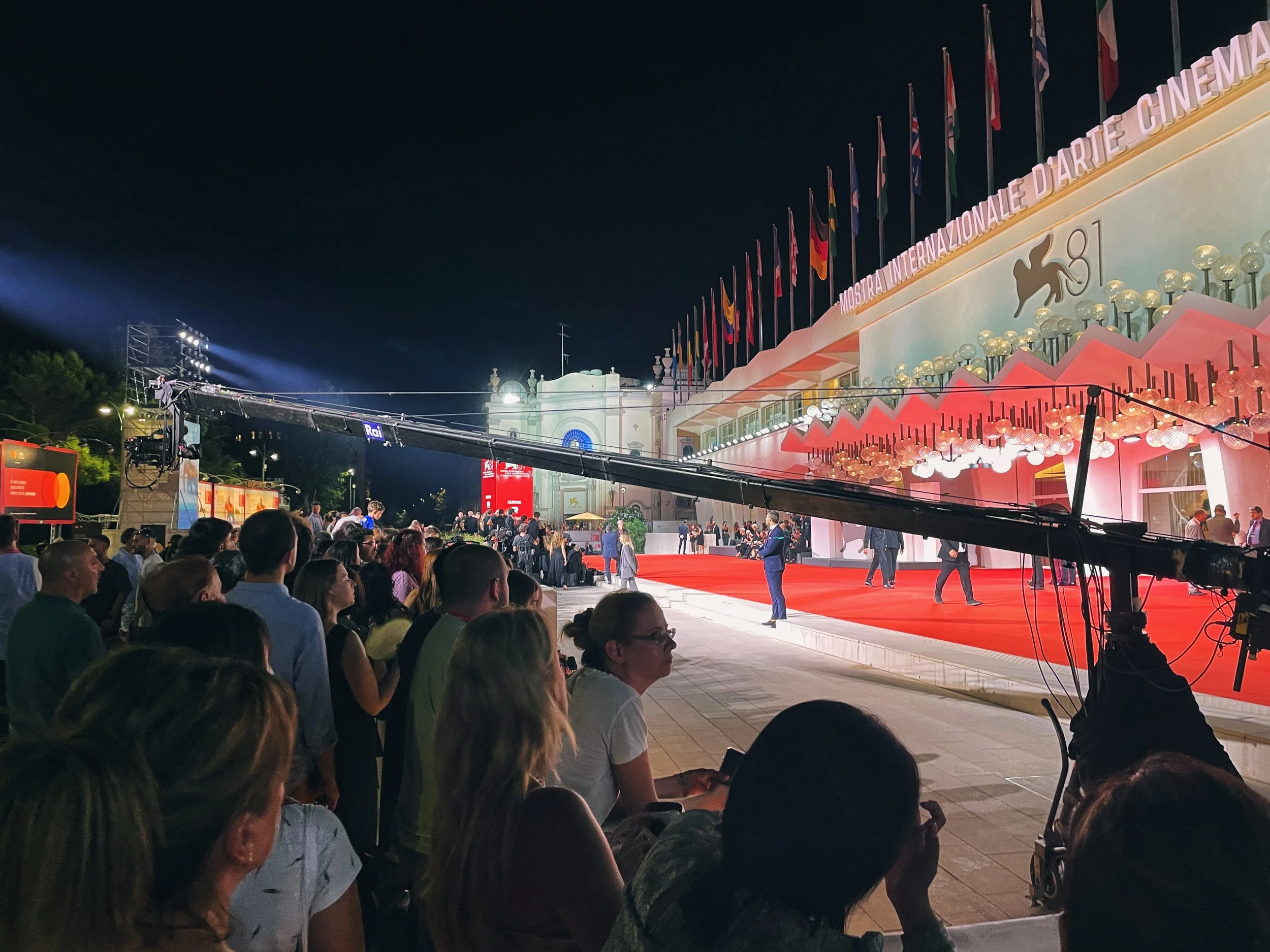
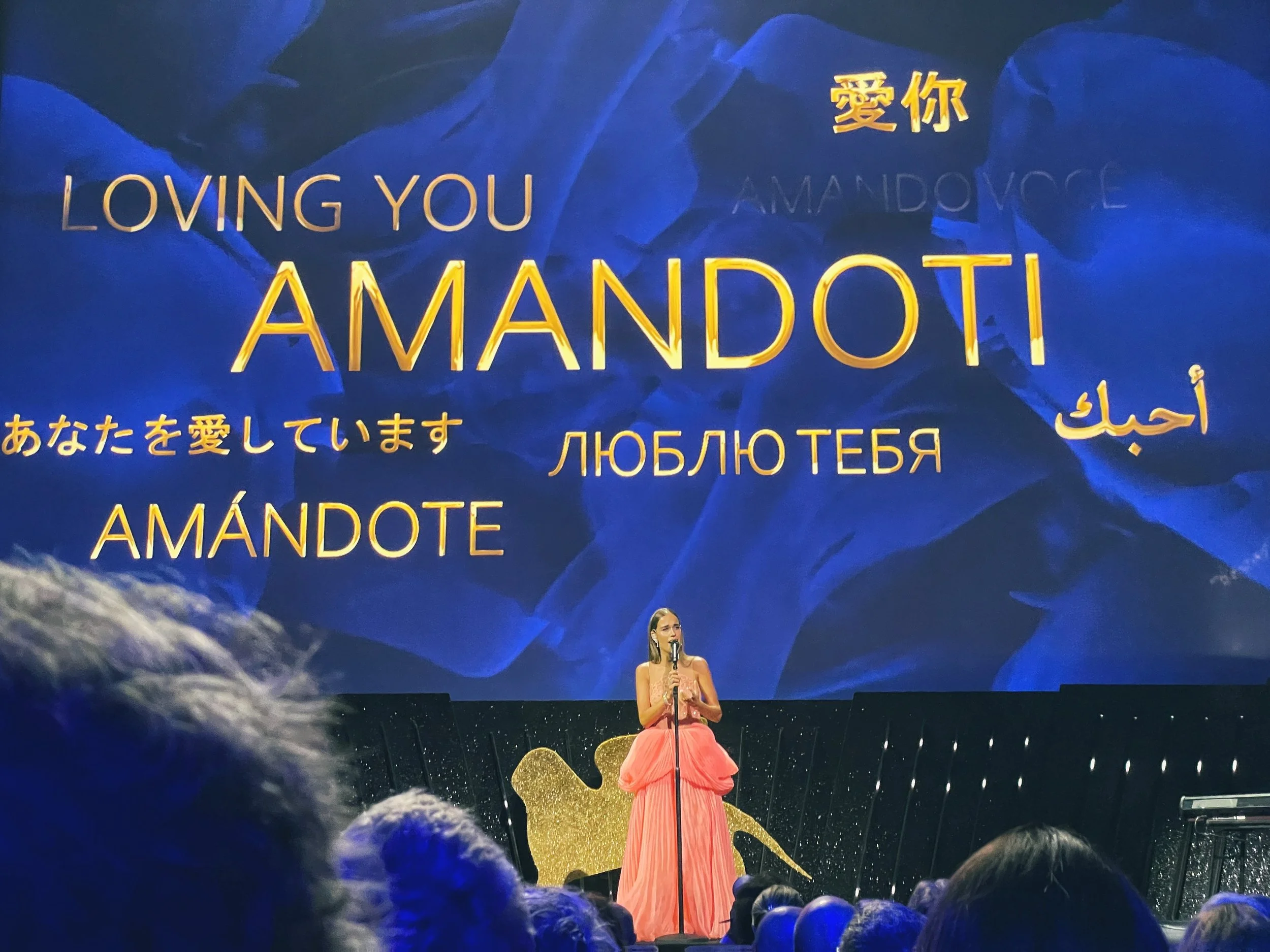
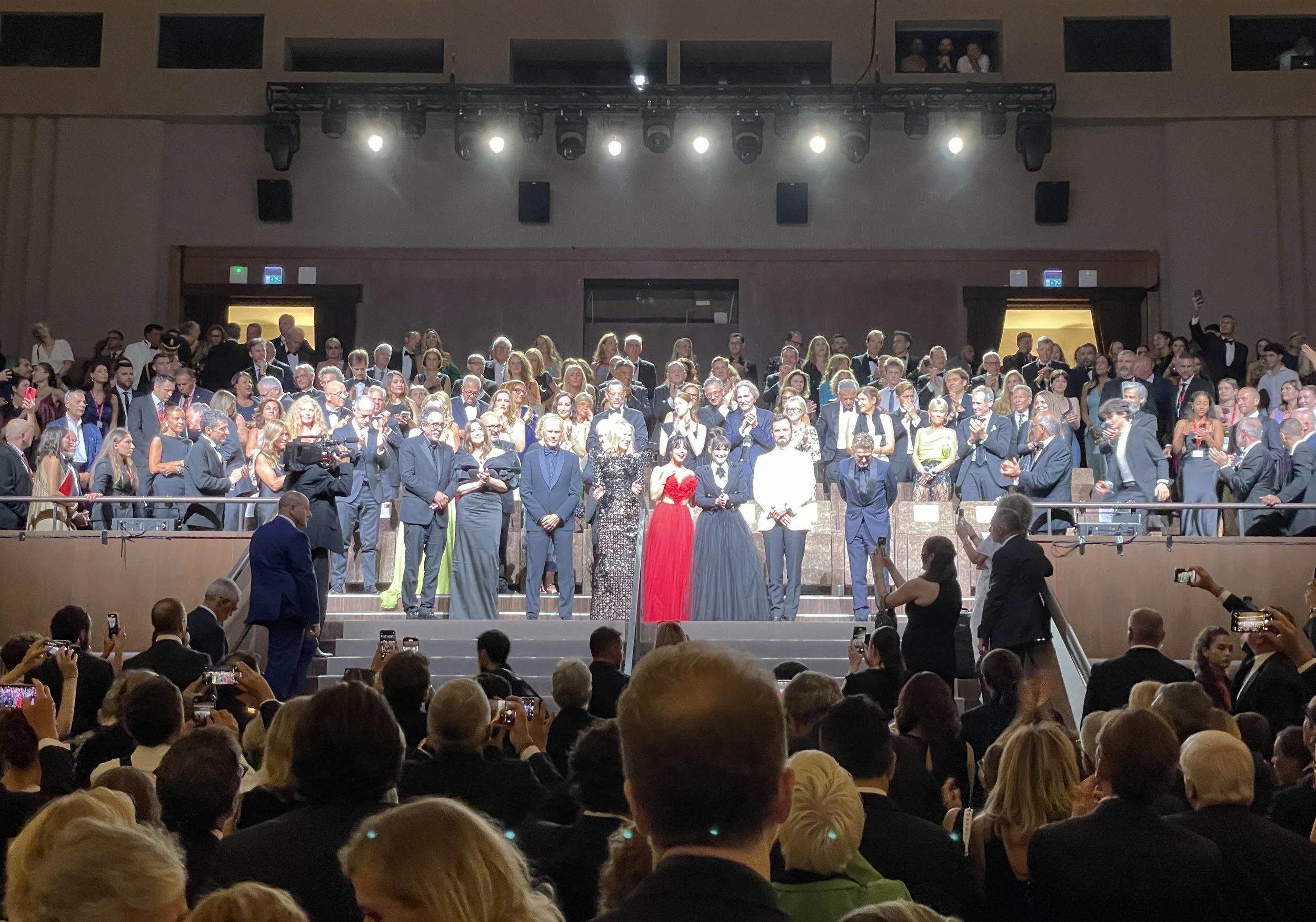
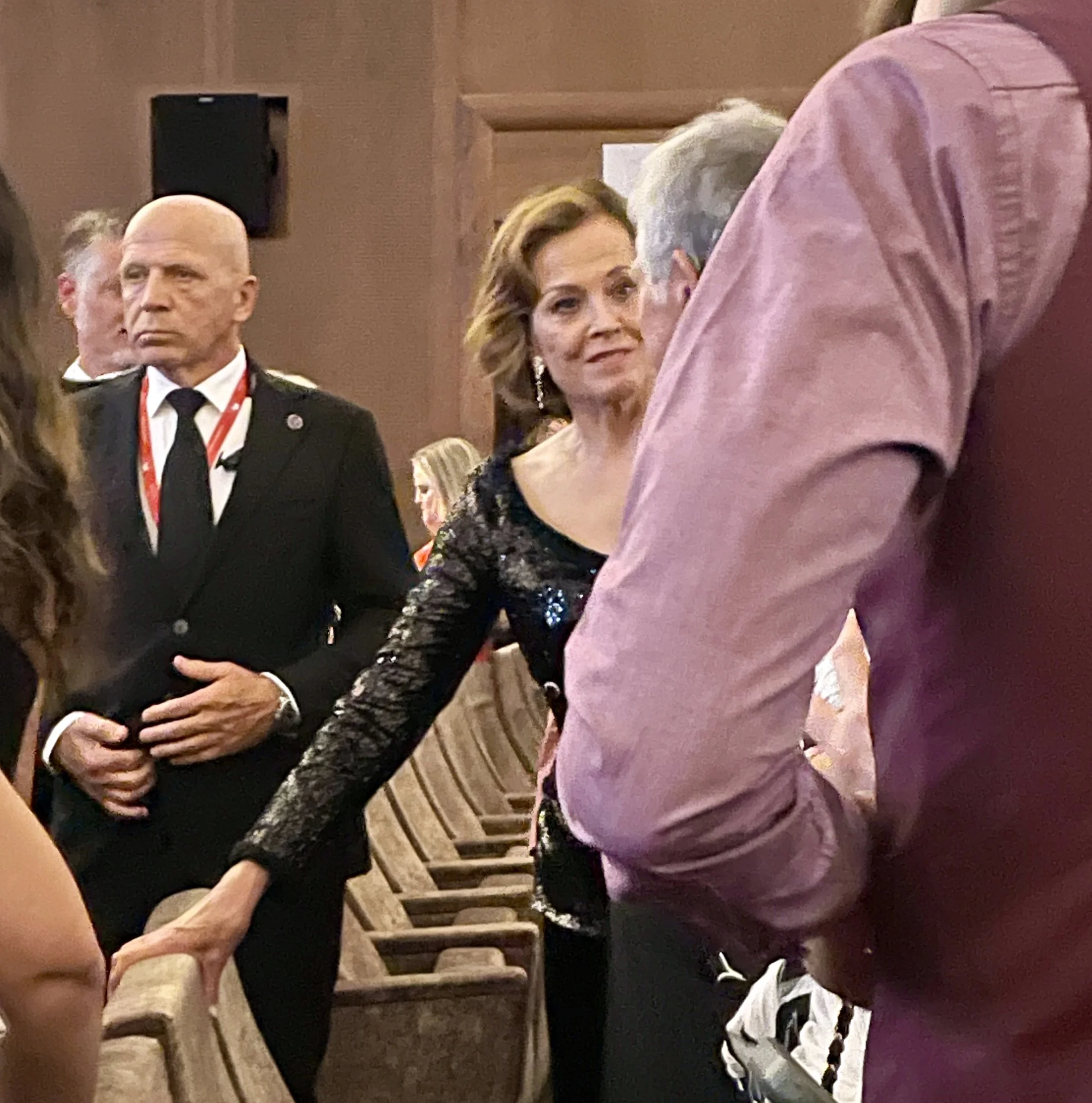
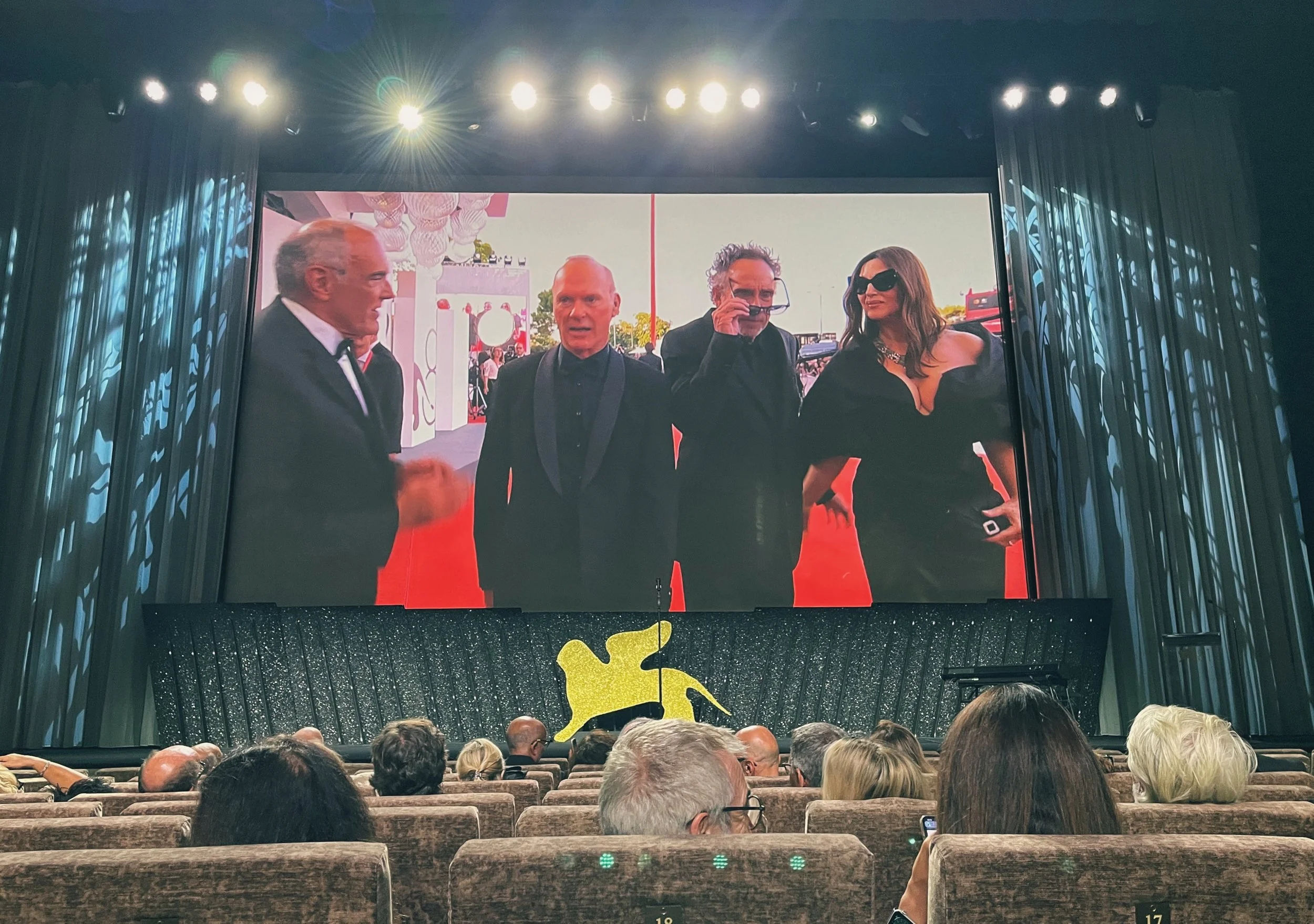
I tell the soldiers featured in the film where the premiere will be held. Everyone is in shock.
Russians at War in the Venice Film Festival’s big book.
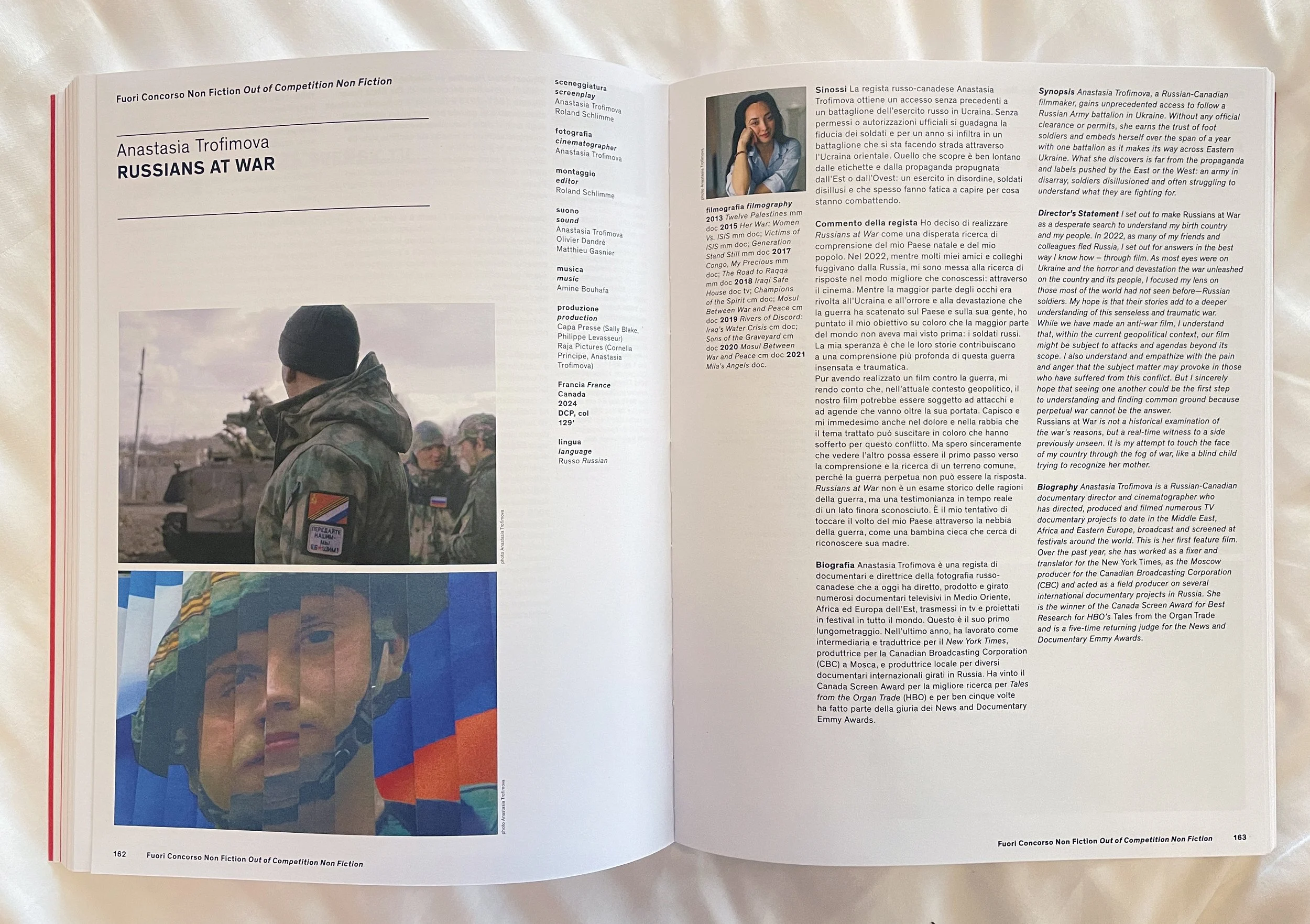
Our first mention in the media! And alongside major Hollywood films – pretty rare for a documentary.
‘Among other Venice films we’re hearing good things about are September 5 by Tim Fehlbaum, Athina Rachel Tsangari’s Harvest, doc Russians at War – Venice has another typically impressive docs lineup…’
– Deadline
September 5, 2024 – the day of the international premiere. The only day of the festival when it pours cats and dogs.
When it lets up, we run to the red carpet and even end up being featured on a Spanish entertainment channel.
My n-n-nerves are on edge.
At the press conference, a reporter from Current Time asks: ‘Is it ethical to humanize criminals?’
I respond: ‘I find it a bit of a strange question, if we can ‘humanize’ or ‘not humanize’ someone. So, are there lists of people who we can humanize and lists of those we can’t?’
The question about ‘humanizing’ certain groups will come up often – paradoxically, often from representatives of the Russian opposition media in exile.
The world’s first audience of Russians at War. They, too, braved the downpour to see a film that no one knows anything about yet. The theatre is so quiet… You can hear a pin drop.
I wonder what they’re feeling as they look at these unfamiliar places and faces…
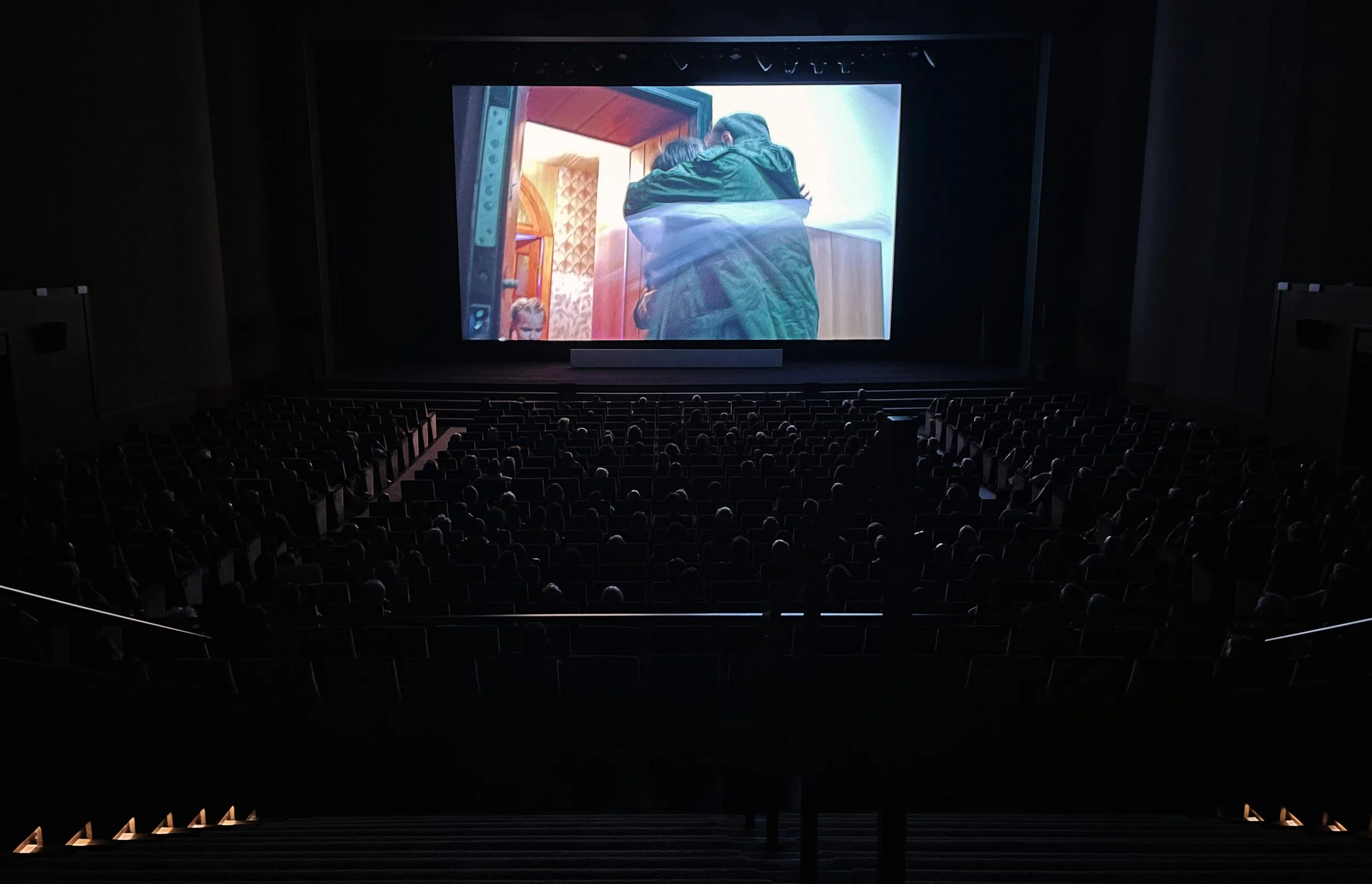
The credits roll. The audience stands, turns toward us and starts to clap. And keeps clapping…
Russians at War gets a 5-minute standing ovation at the world’s oldest and most prestigious film festival. We probably look dumbfounded, exchanging glances and asking each other: ‘What do we do?’ – ‘You stand up’ – ‘Let’s all stand’ – ‘Should we bow?’
The past two years flash before me: the sudden outbreak of war, meeting Santa Claus on the train, the snow crunching as I cross the border alone, nervously persuading everyone to let me film, the medics dragging the first casualty through the sticky mud, the return to a ‘peaceful life’ that felt foreign, the editing, arguments, anxiety and the faces — some of whom live only on film…
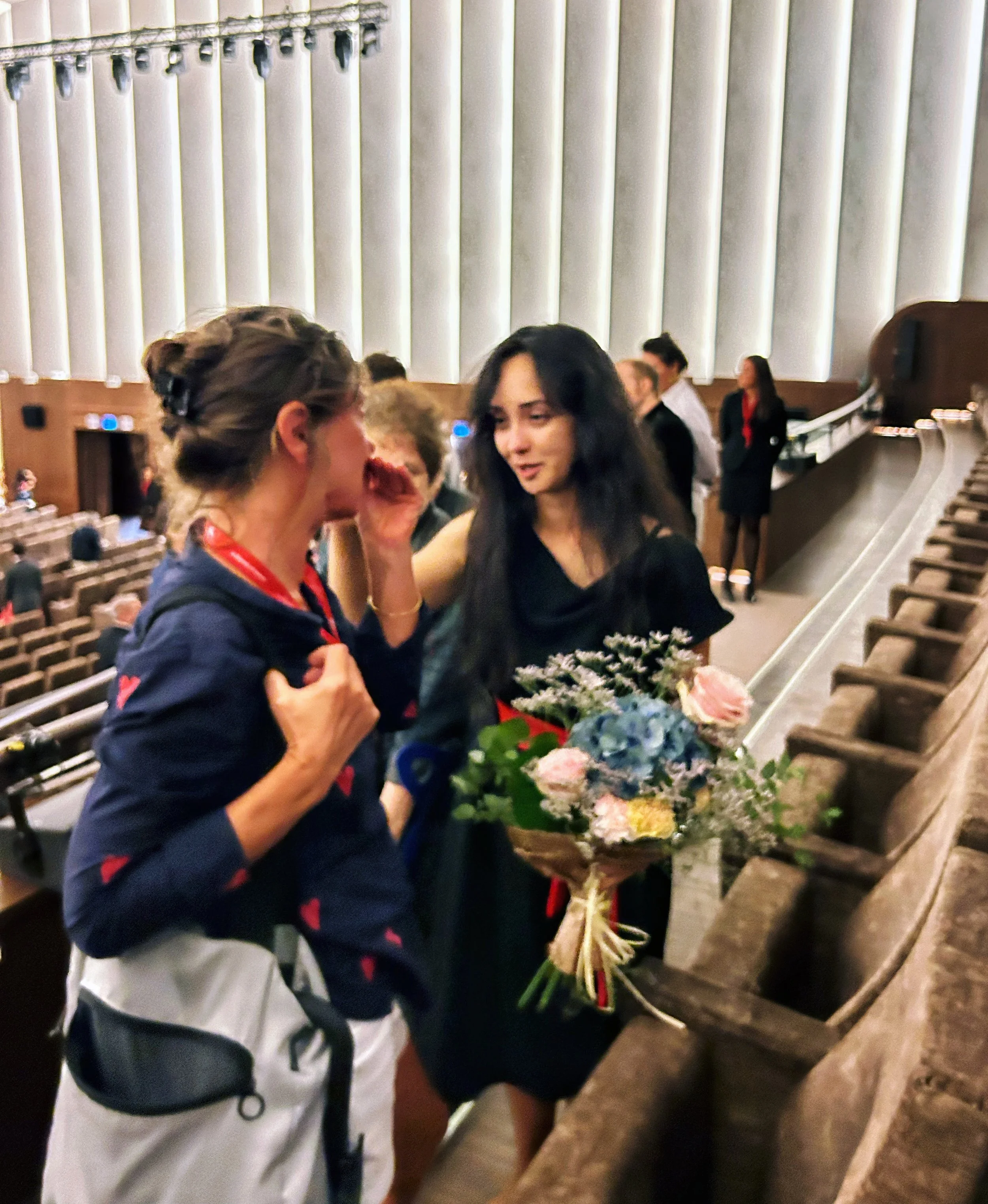
I told myself to stay strong, no matter what happens. But with hundreds of eyes watching, I was done. I burst into tears, hiding behind a bouquet, in that huge hall with its classic velvet curtains.
After that, everything was a bit of a blur, but I remember this lady. She was the first to approach me, also in tears, and say, ‘Half of my relatives are in Russia, half are in Ukraine – I can’t choose a side! This is the first film that doesn’t try to force me to.’
The reviews start coming in. First from the audience…
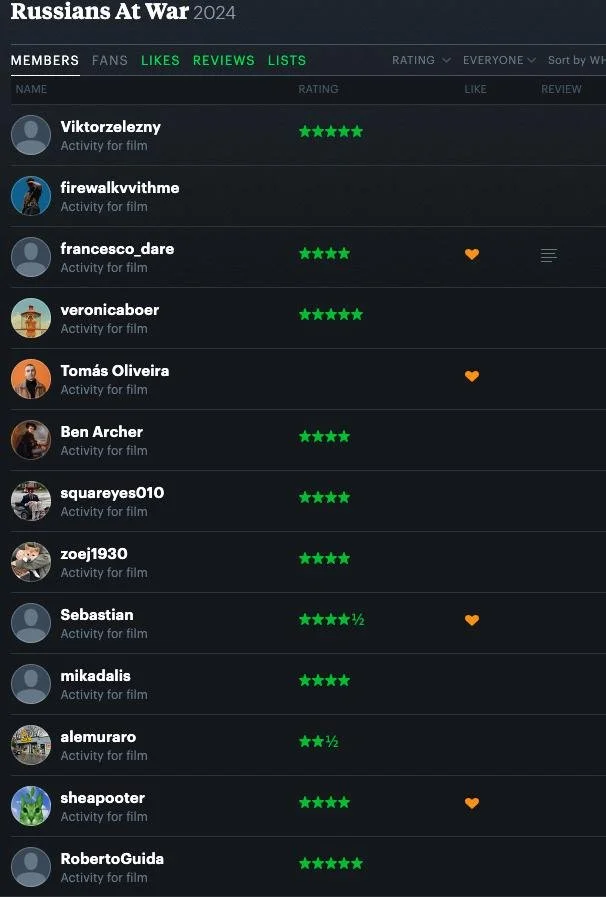
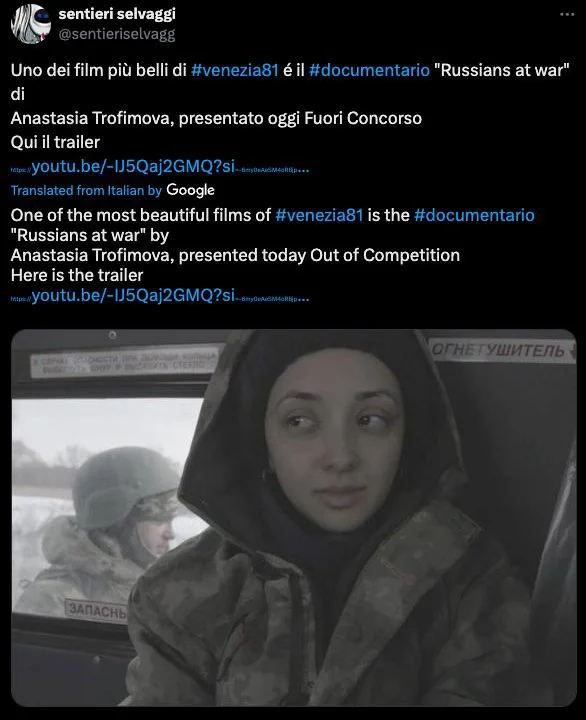
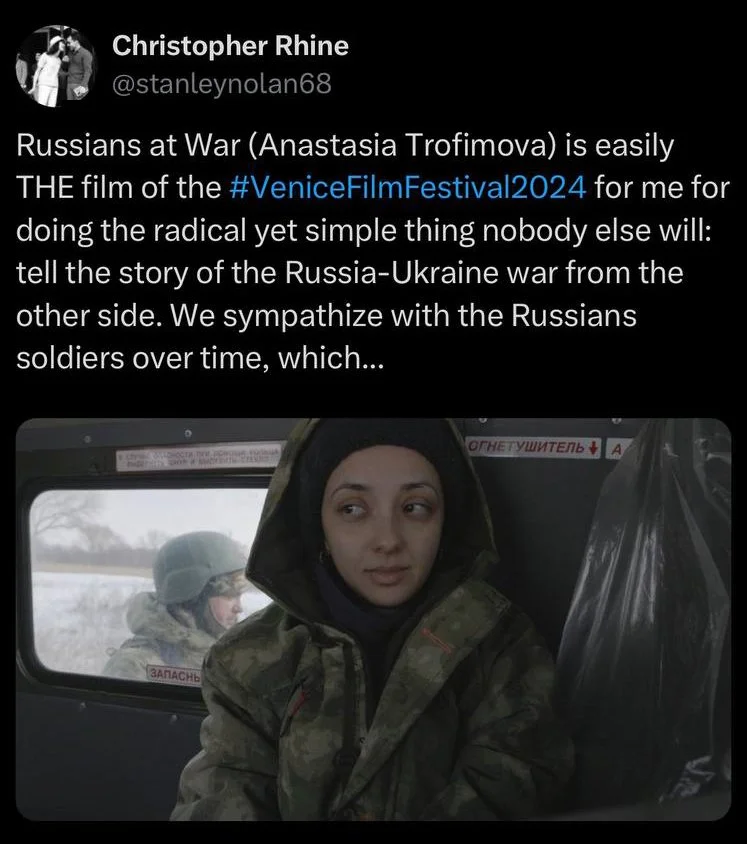
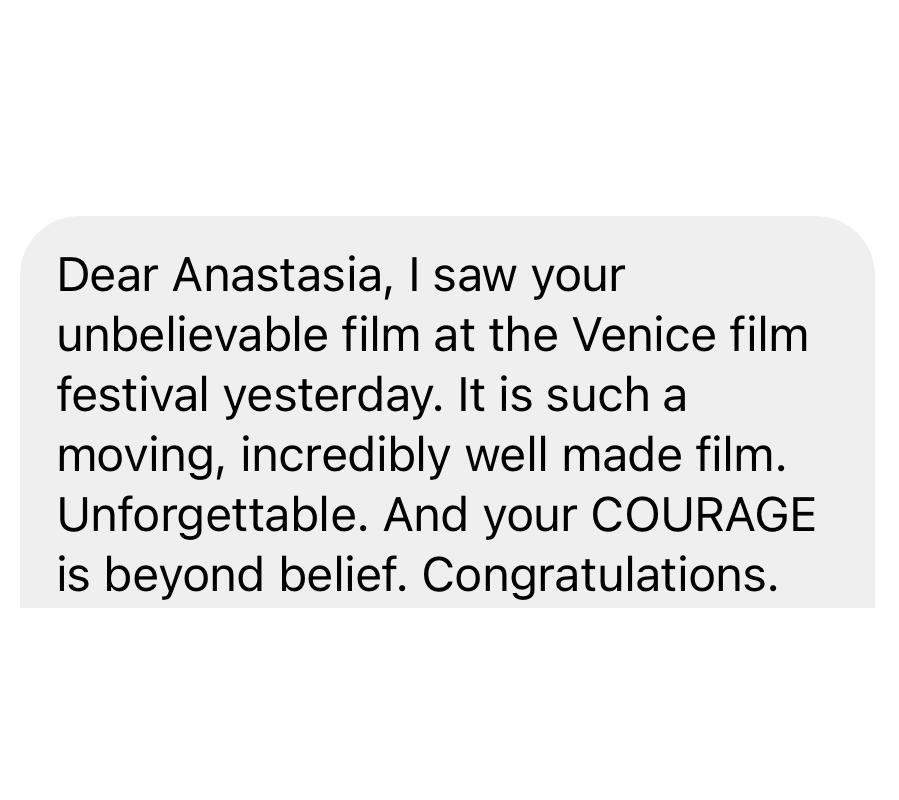
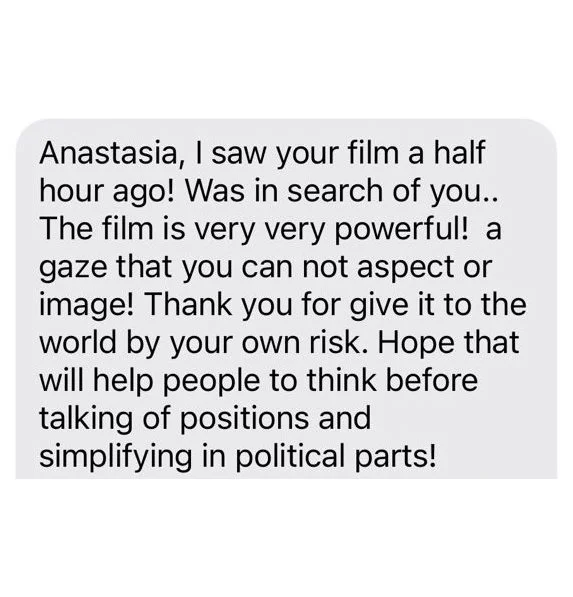
And then the press:
‘This film is deeply pacifist and received a long standing ovation at the Venice Film Festival…’
– TV5Monde
‘This film is a vital document of history.’
– ARD
‘95/100 RKS Film Rating. Comparisons to Platoon and All Quiet on the Western Front can be drawn here.’
– Set the Bar
‘The roots of war, its harrowing realities, and its consequences are explored in a number of films presented at this year’s Venice Film Festival, including an outstanding documentary that depicts the lives of Russian soldiers on the front lines.’
– AFP
‘Anastasia Trofimova has made a unique film, getting up close and personal with Russian soldiers, their sorrows and joys, at a distance no greater than a sisterly embrace. Both narratively and visually, it is an outstanding work. Through Trofimova’s lens, the soldiers are, just as she intended, neither monsters nor heroes, but the most ordinary of men.’
– Novaya Gazeta Europe
‘…The film was well received precisely because the director managed to strike the crucial balance between journalistic objectivity, her own perspective on events, and a sense of responsibility toward the characters; what had seemed like a terrible risk — their dehumanization — did not occur. …And the fact that Russians, be it soldiers, volunteers, medics or conscripts, were given the chance to appear on screen as human beings is truly priceless, and it seems to be the most important feature of this film.’
– Business FM.RU
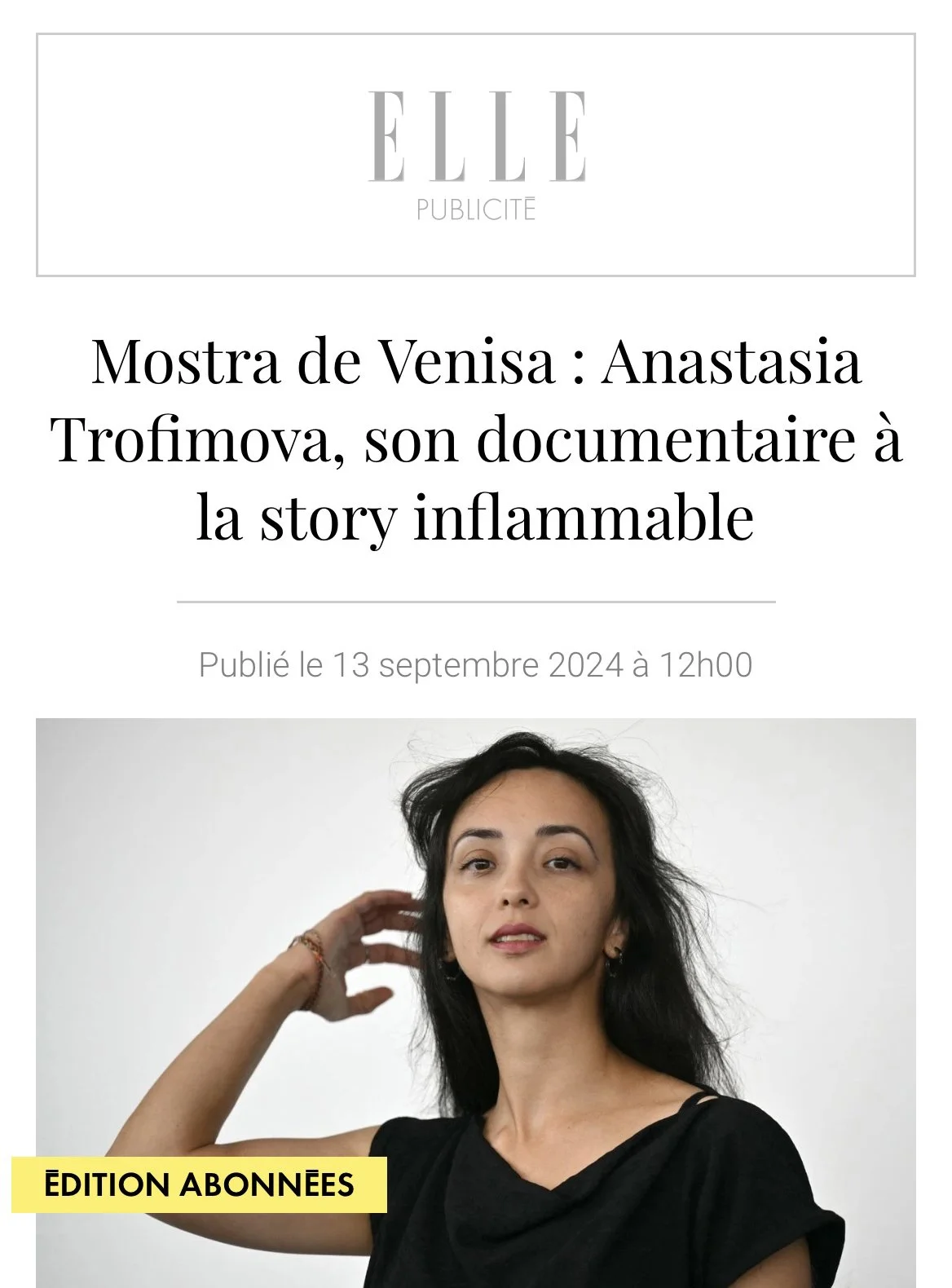
…And even in Elle Magazine!
‘It all started at the Venice Film Festival, where she nearly eclipsed George Clooney and Amal's fiery hair, Brad Pitt’s makeover and Nicole Kidman as ‘baby girl’. Anastasia Trofimova, a slender 37-year-old woman, presented her documentary Russians at War.’
Debates over Russians at War shake the Russian-speaking world, both in and out of Russia.
At the center of the storm is the question posed by the Current Time correspondent: is it ethical to ‘humanize’ Russian soldiers? Paradoxically, this question will be raised most often by the Russian opposition media in exile.
The debate around Russians at War becomes larger than just a debate about a film. It morphs into a proxy war over guilt, empathy, responsibility and identity. It exposes the divide between the Russians who left and the Russians who stayed, with each side increasingly convinced the other has failed some fundamental test of humanity.
And yet... most of those arguing haven’t even seen the film.
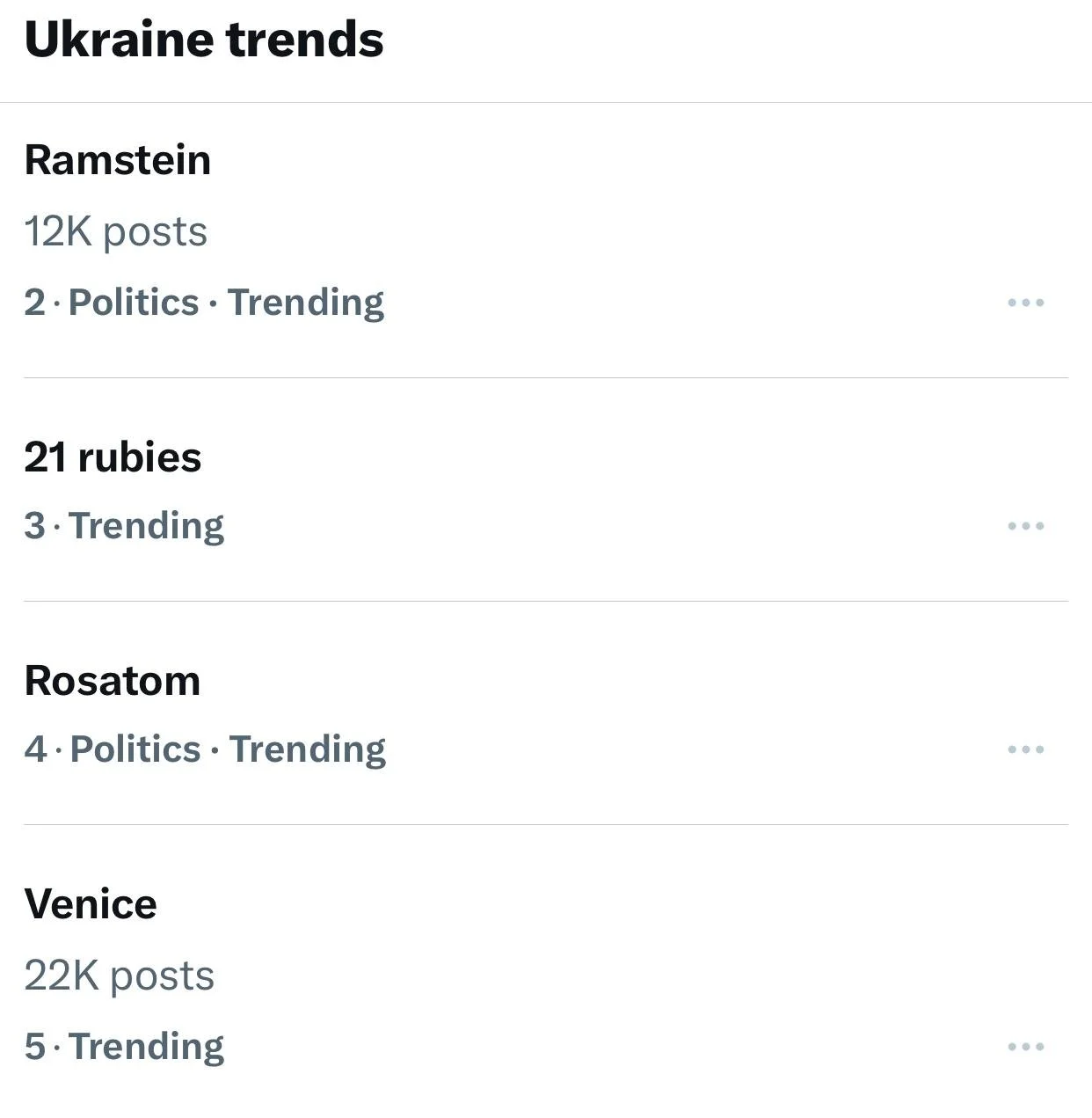
Meanwhile, the Venice premiere becomes the fifth most trending topic in Ukraine…
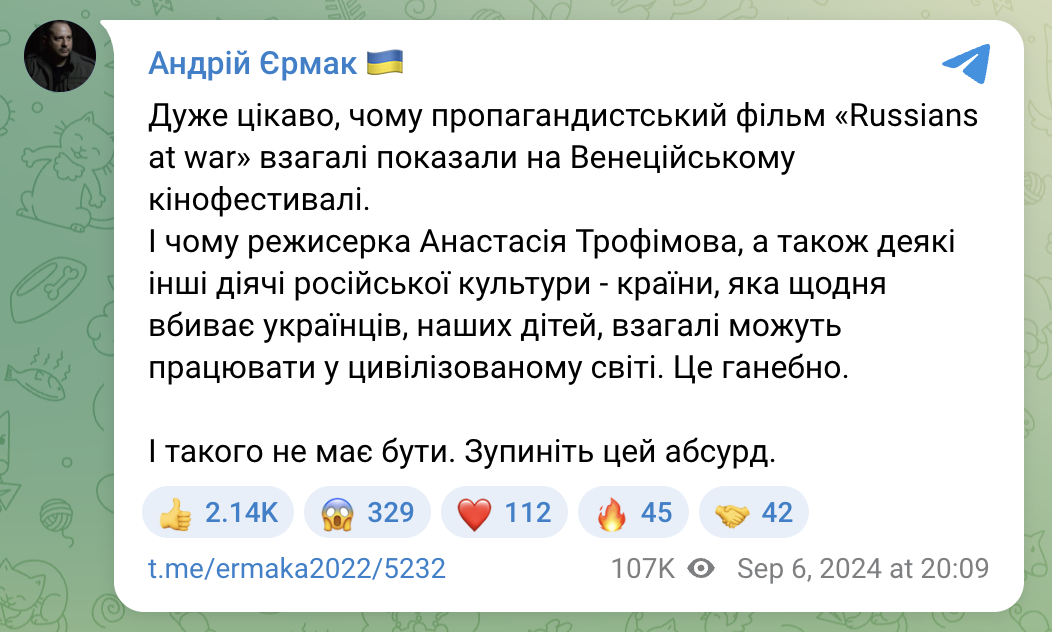
Andrey Yermak (the now-former head of Pres. Zelenskyy’s office) calls for a ban on Russians at War and all Russian cultural figures. (He had not seen the film.)
‘It’s very interesting why the propaganda film Russians at War was even shown at the Venice Film Festival.
And why is it that director Anastasia Trofimova, as well as certain other figures from Russian culture – a country that kills Ukrainians, our children, on a daily basis – are even allowed to work in the civilized world? It’s shameful.
And this shouldn’t be happening. Stop this absurdity.’
TIFF
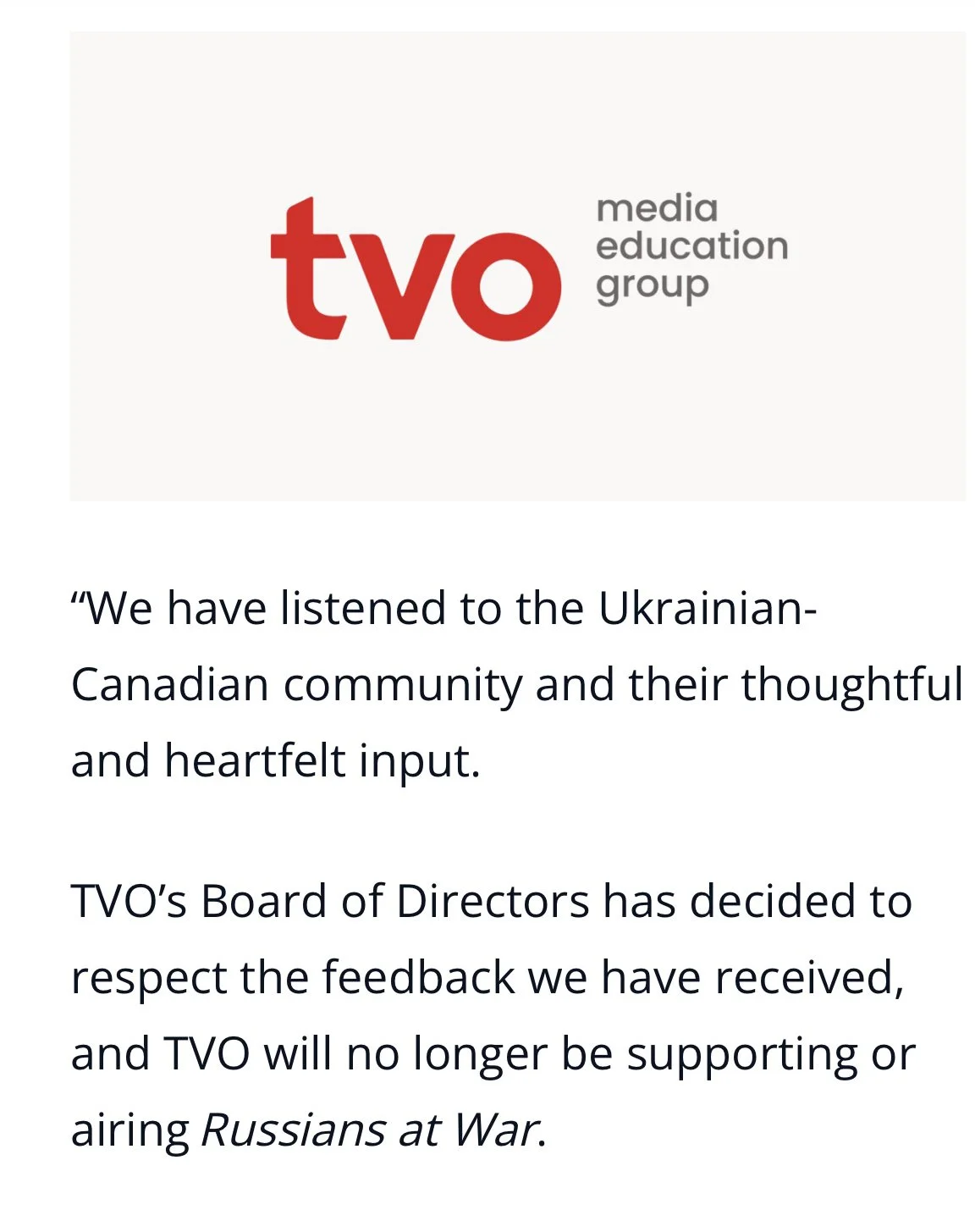
After Venice, Russians at War is set to screen at the Toronto International Film Festival (TIFF) and be broadcast on TV Ontario (TVO).
A week before the screening, both TVO and TIFF receive demands for its cancellation from:
Ukraine’s Ministry of Foreign Affairs and the Ministry of Culture
Ukrainian Ambassador and Consul in Canada
Ukrainian-Canadian Congress (UCC) and other Ukrainian organizations and politicians in Canada
… and online attacks from the ‘NAFO’ movement
(None of them have seen the film.)
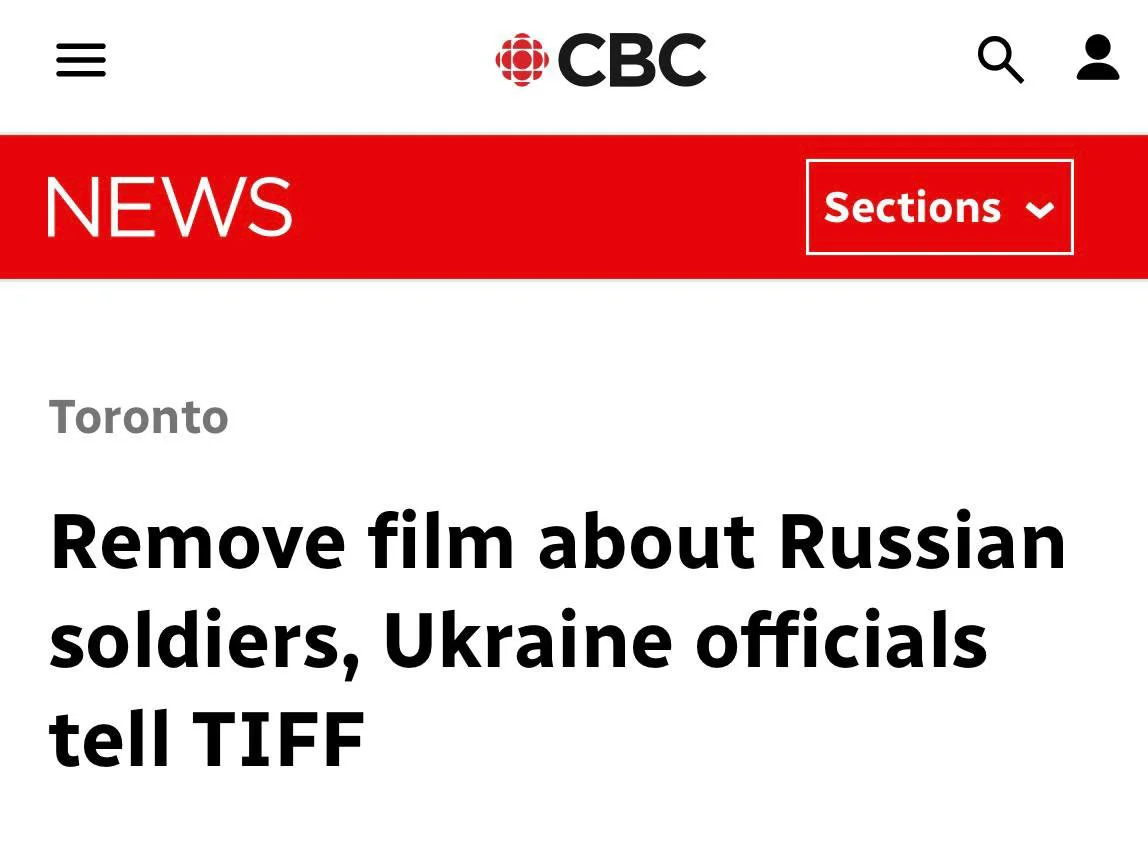
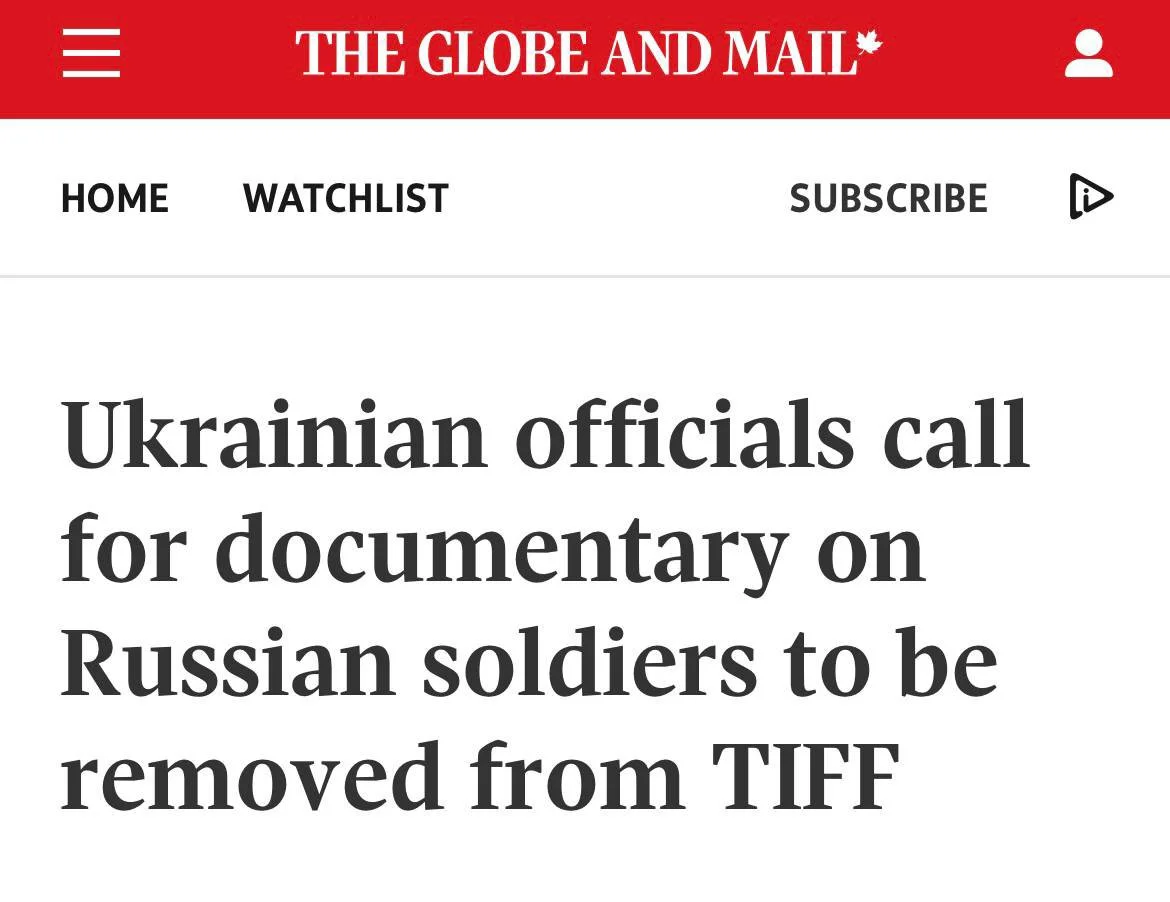
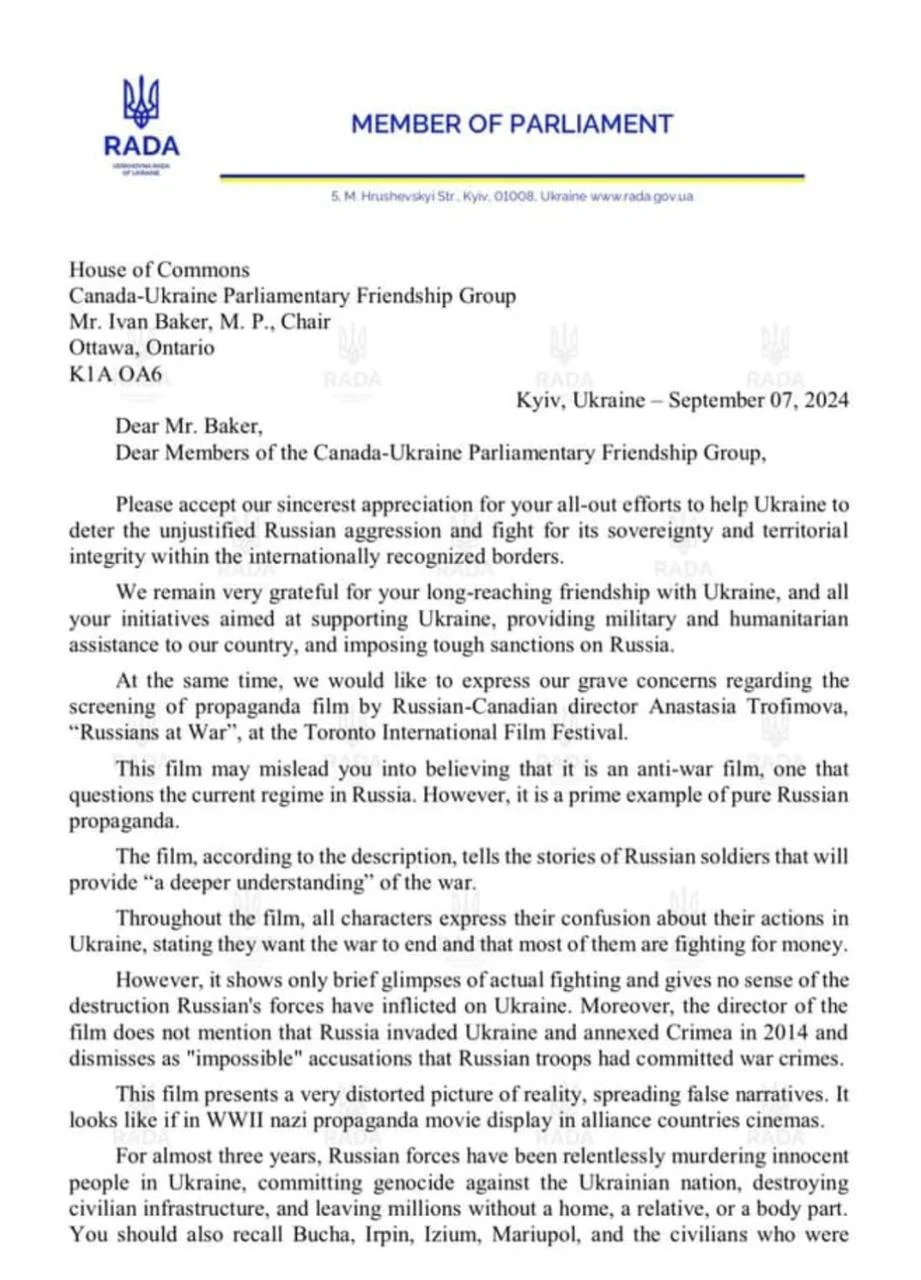
Four days before the screening.
The Ukrainian Parliament sends an official request to the Canada-Ukraine Parliamentary Friendship Group to ‘use all your influence in the (Canadian) Parliament’ to stop the screenings of Russians at War.
(None of them have seen the film.)
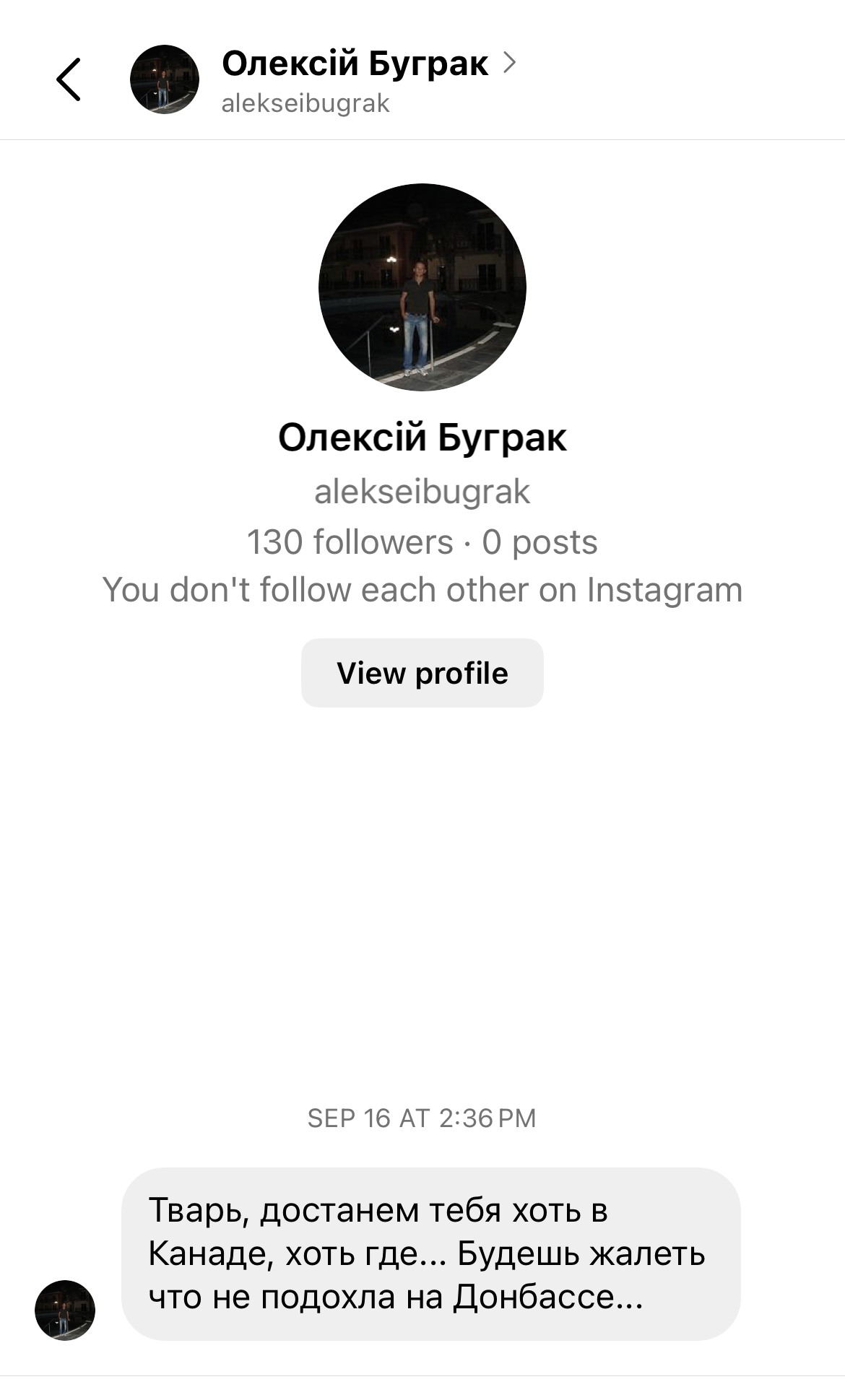
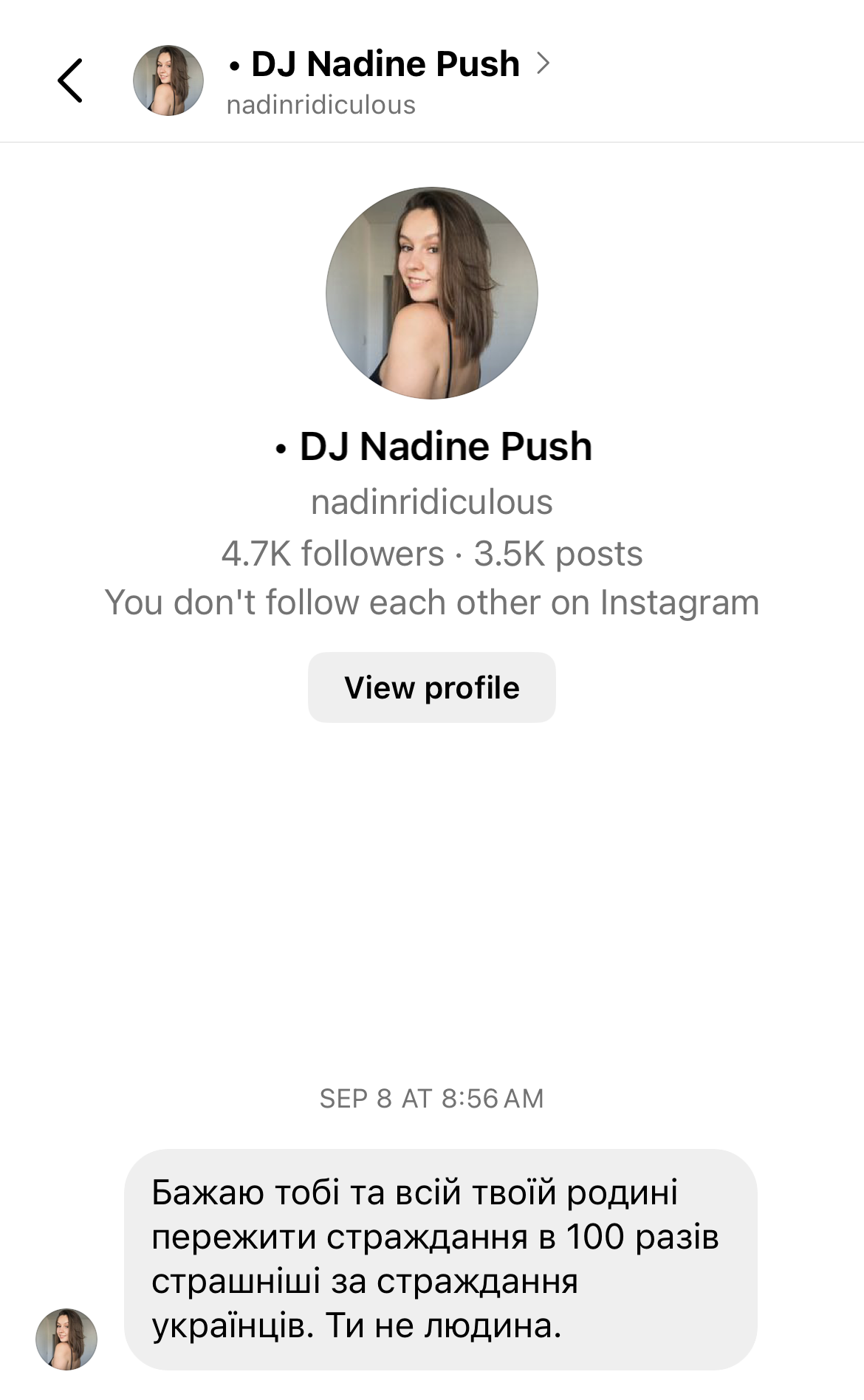
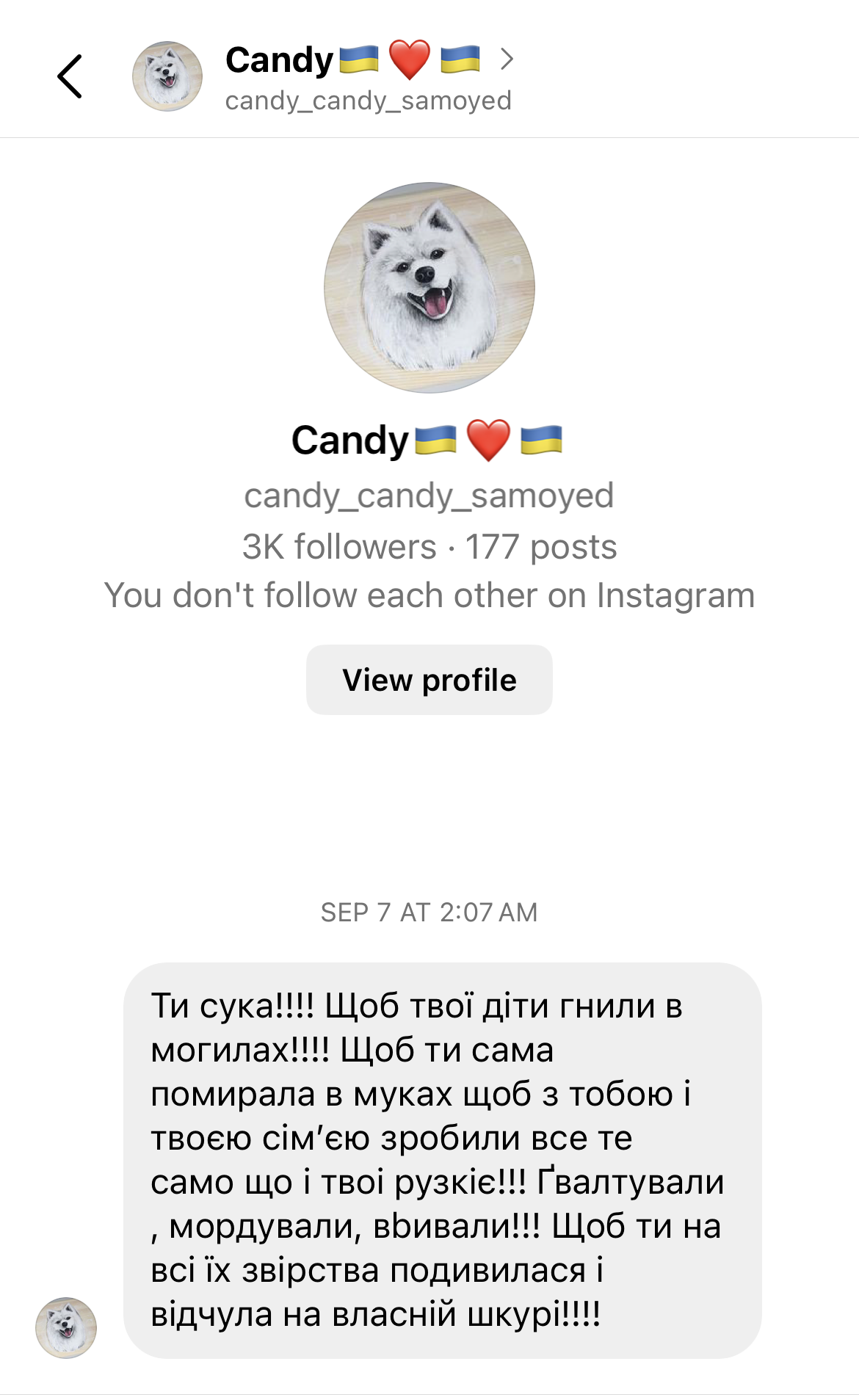
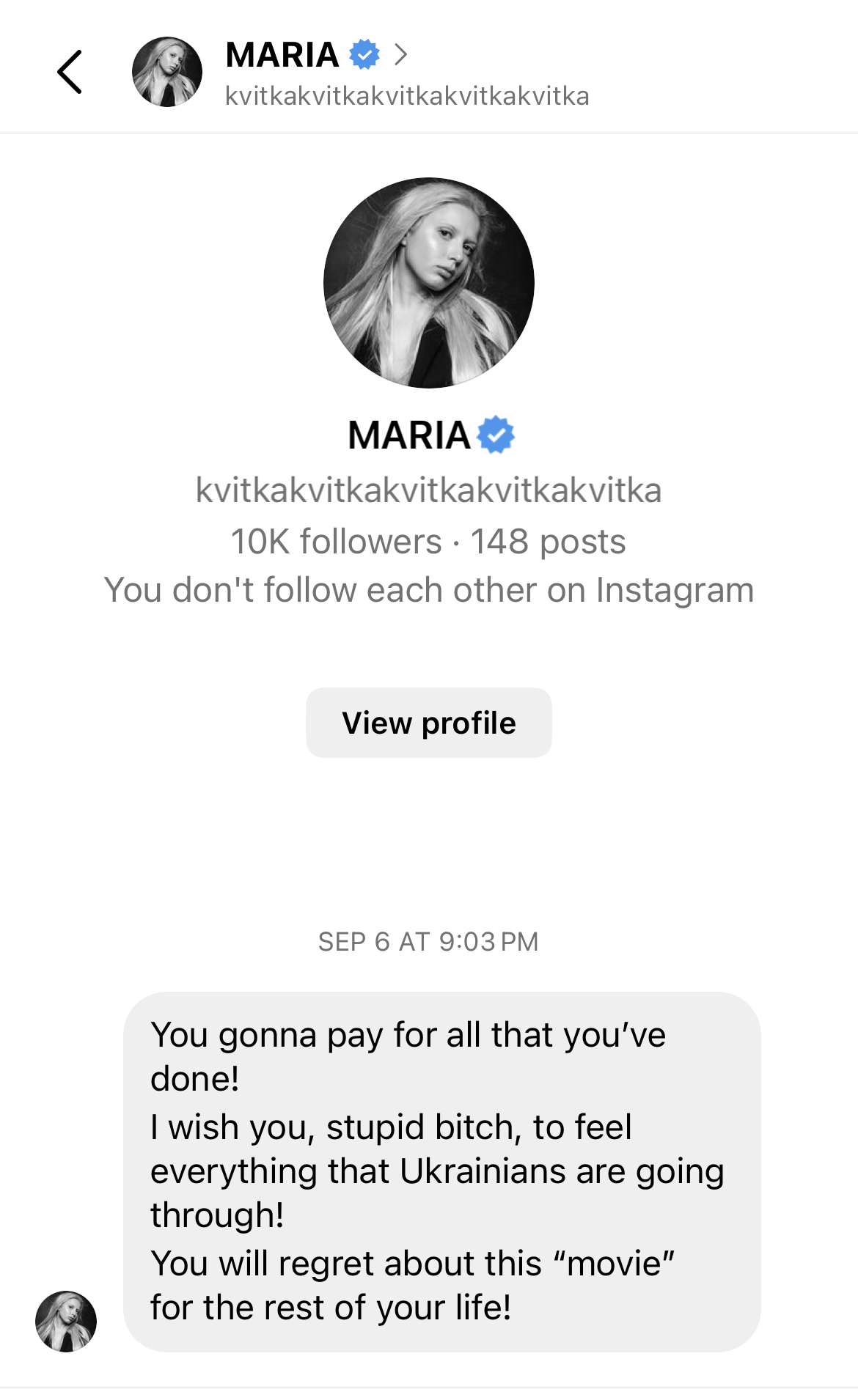
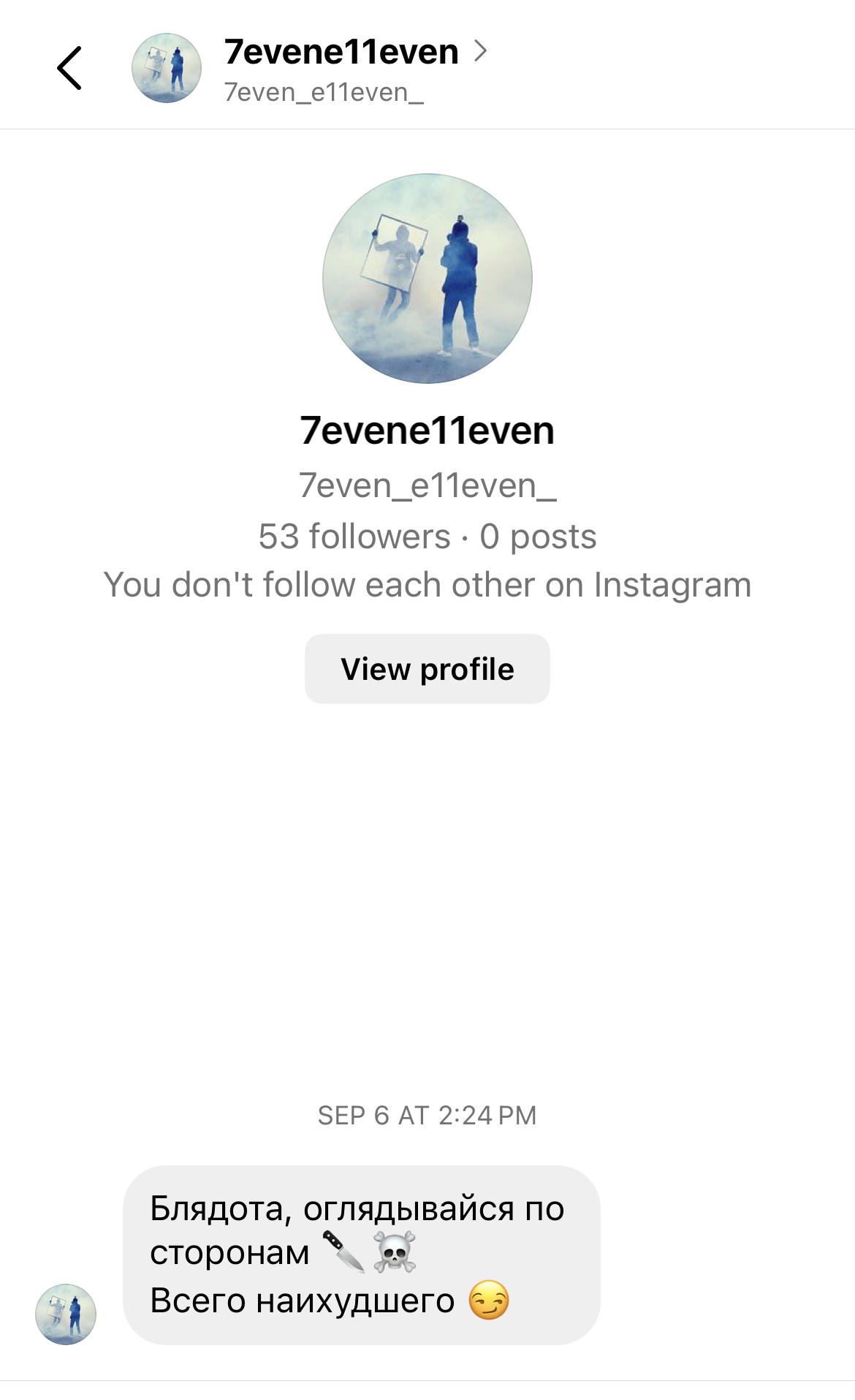
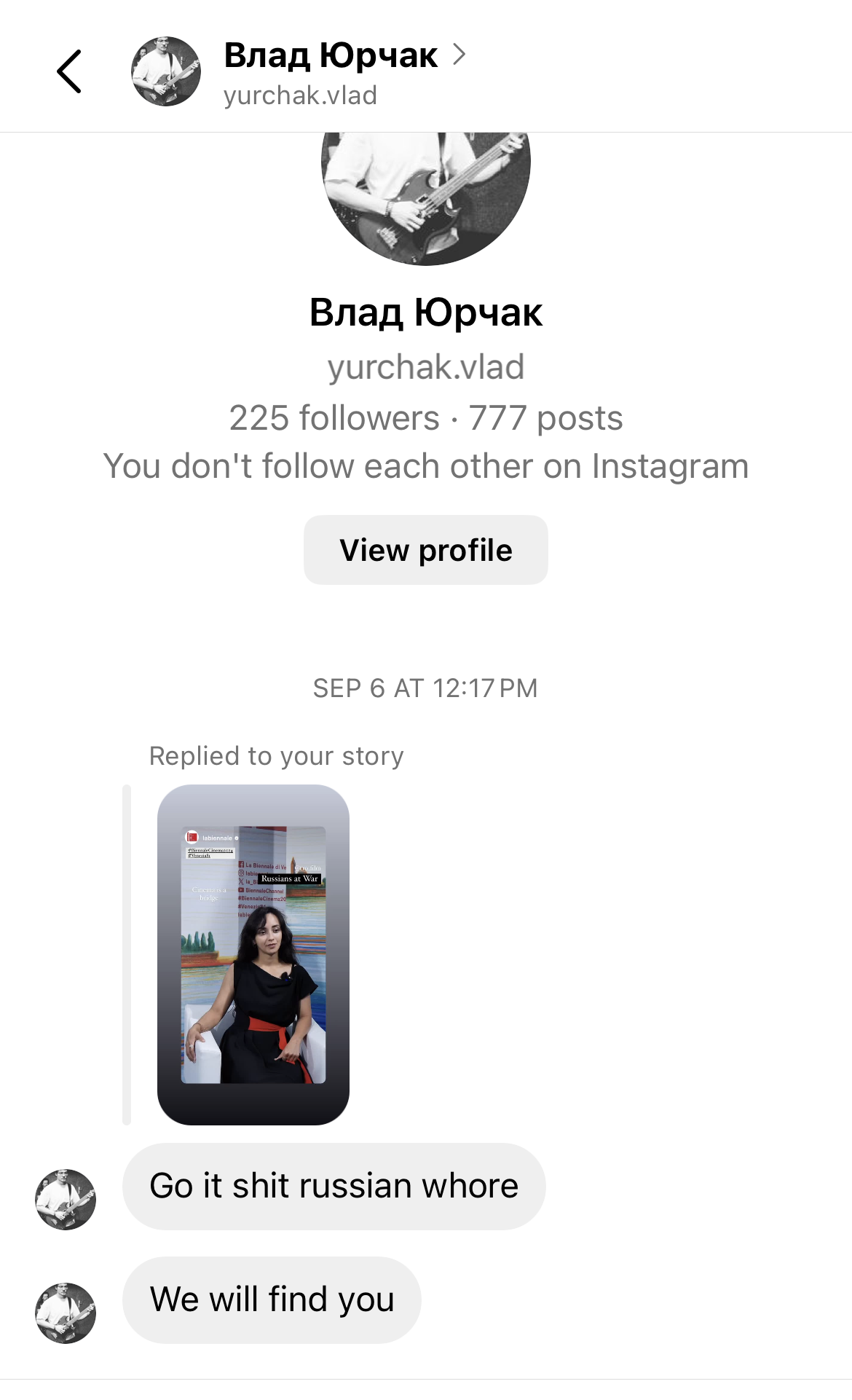
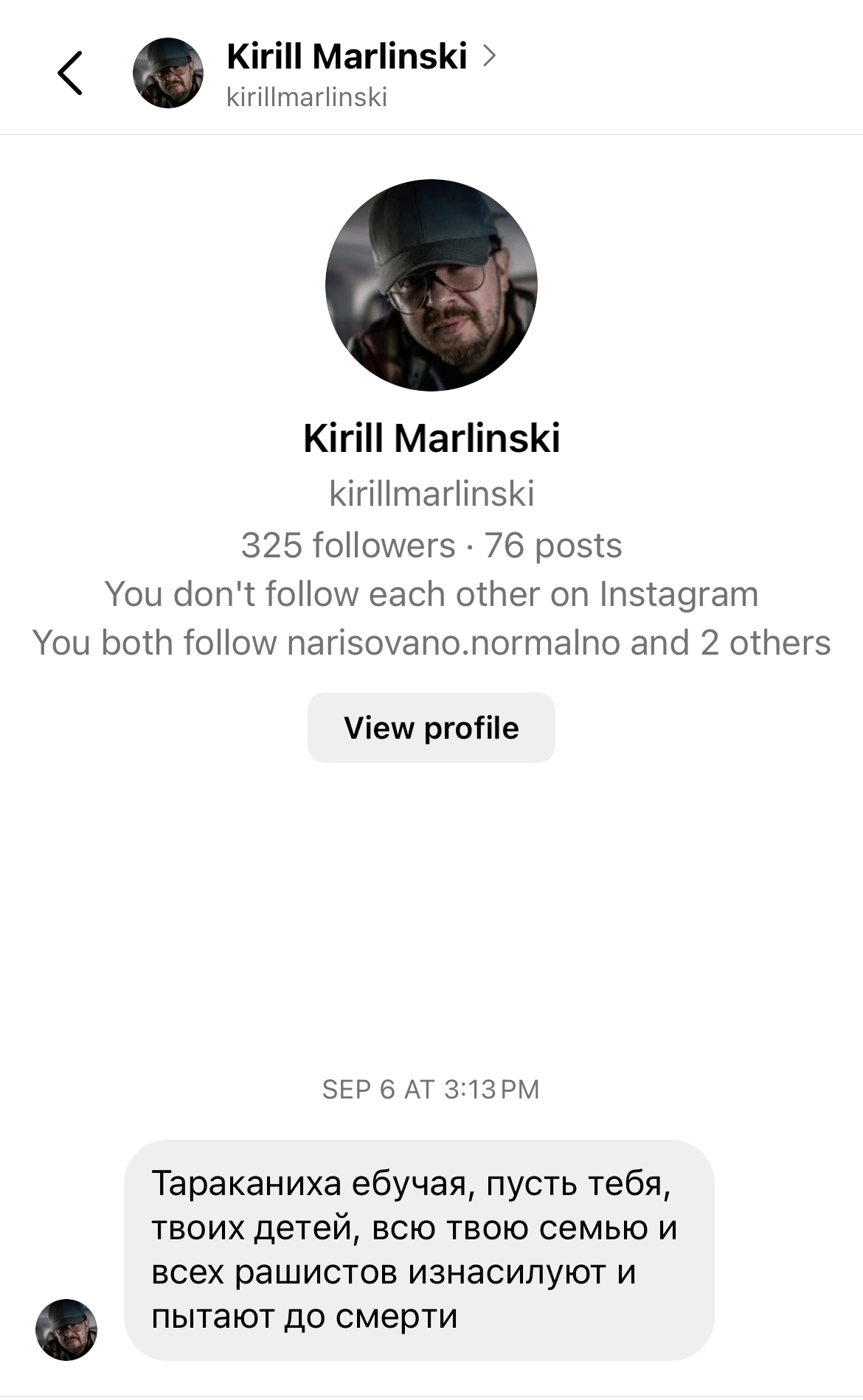
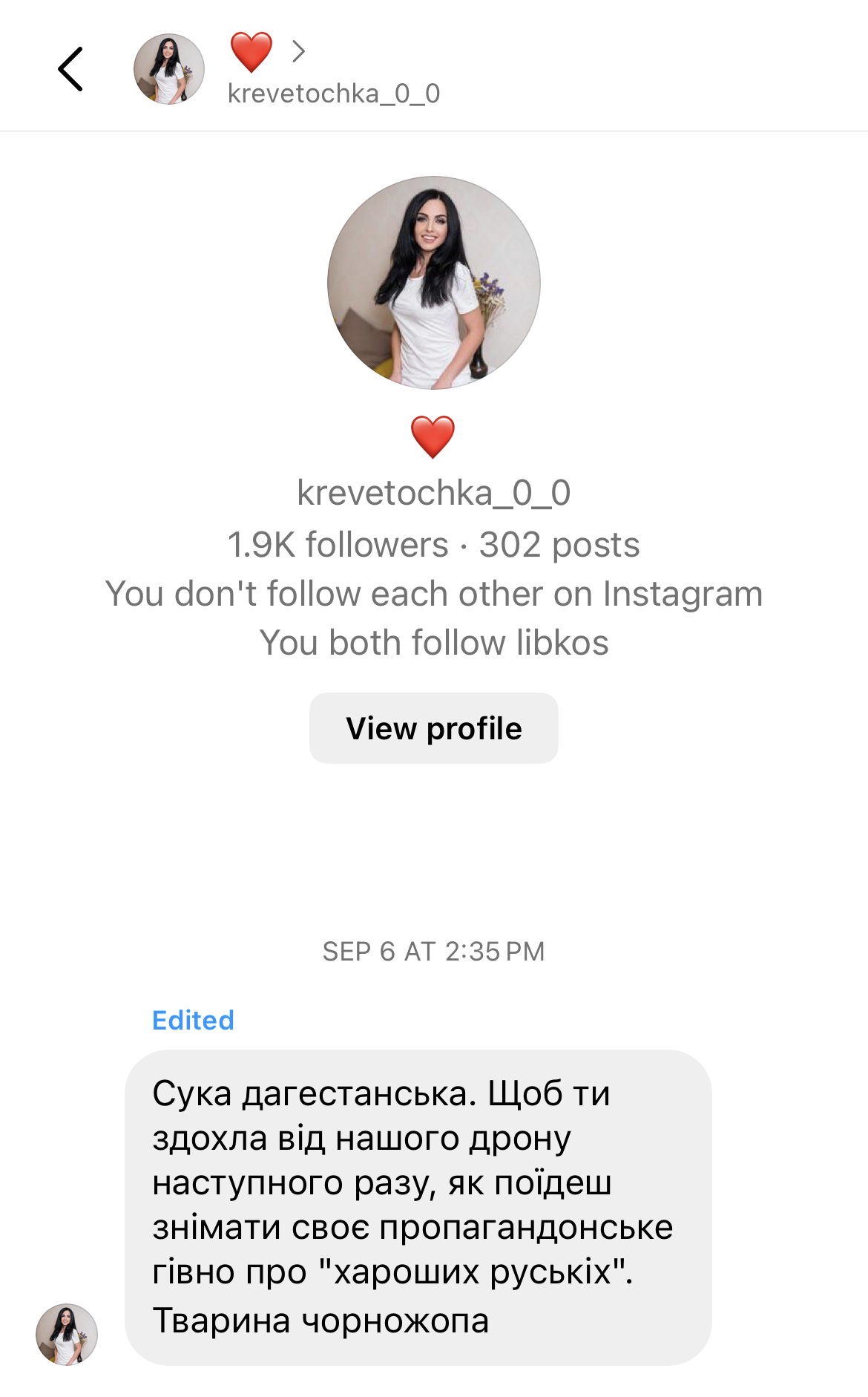
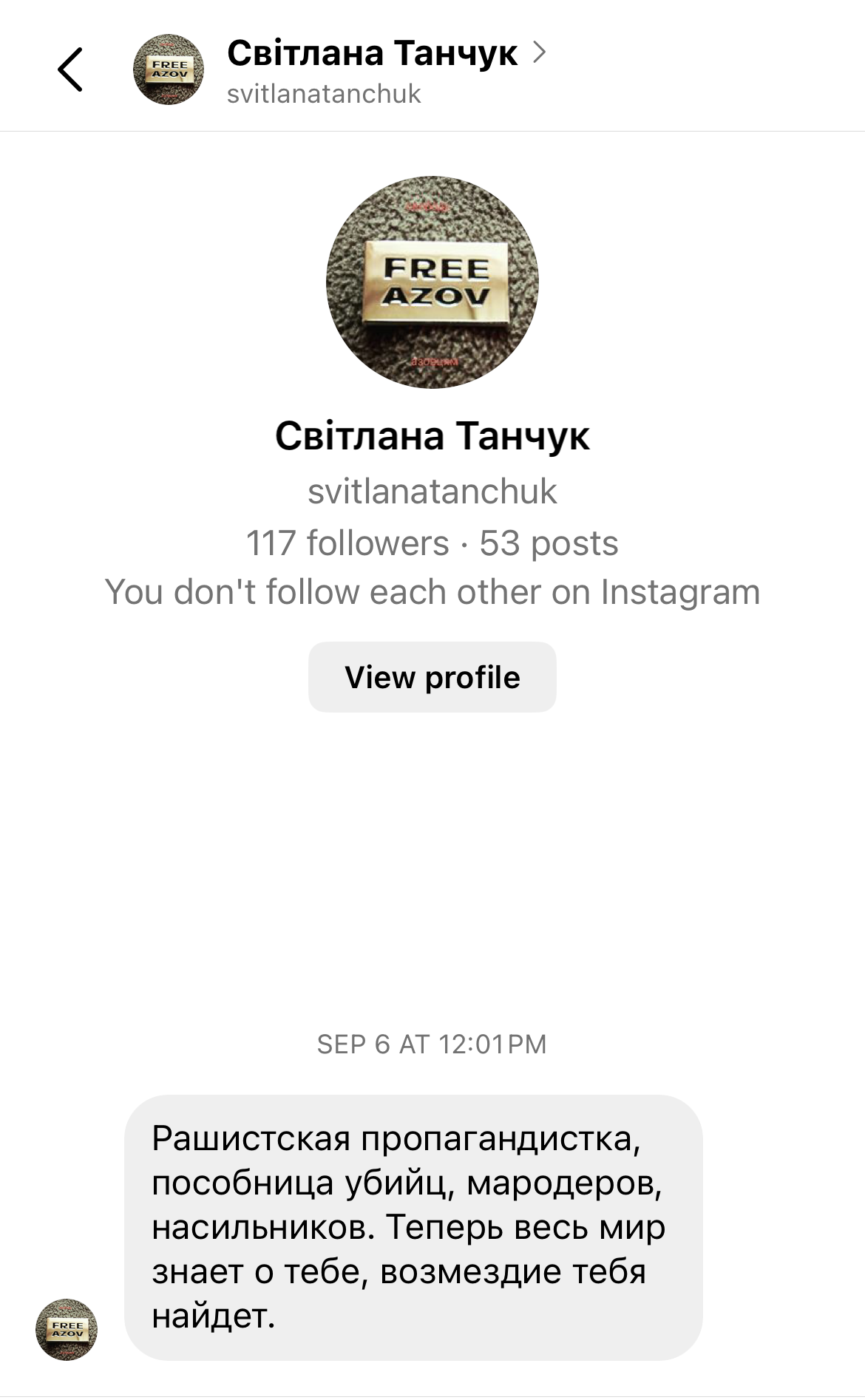
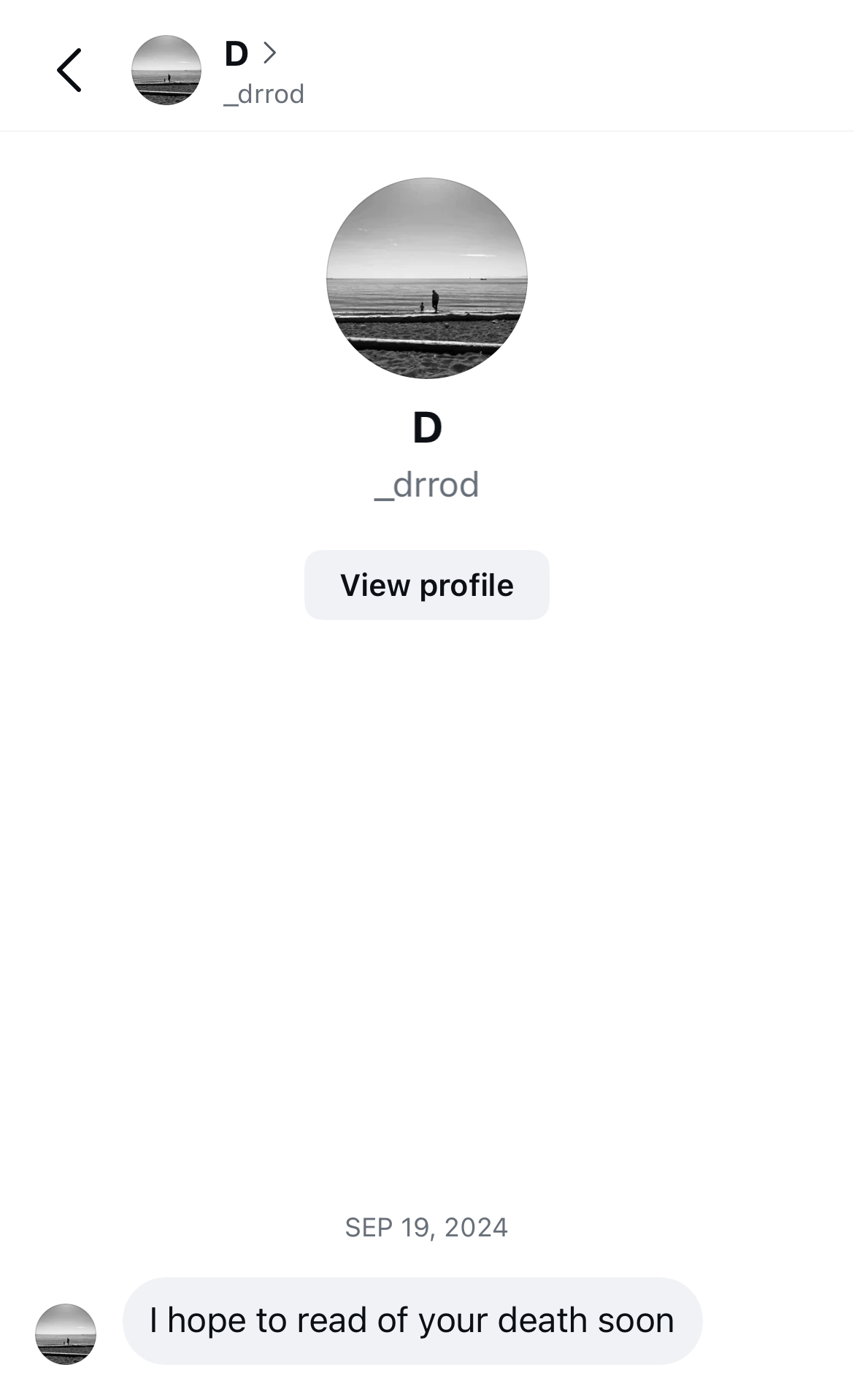
I get threats online.
‘You beast, we’ll get you, be it in Canada or anywhere… You’ll regret you didn’t die in Donbass…’
‘You fucking cockroach, may you, your children, your family and all your rashists be raped and tortured to death’
‘You Dagestani bitch. May you die from our drone when you go film your propagandist shit about ‘good Russians’. Black assed whore’
‘I wish you and your family to get it 1000 times worse than Ukrainians do. You’re not a human.’
‘You bitch!!!! May your children rot in their graves!!! And you to die in agony and everything be done to your family that you and your Russians do!!!...’
‘Whore, watch your step. All the worst’
‘You’re gonna pay for what you’ve done! I wish you, stupid bitch, to feel everything that Ukrainians are going through! You will regret about this ‘movie’ for the rest of your life!’
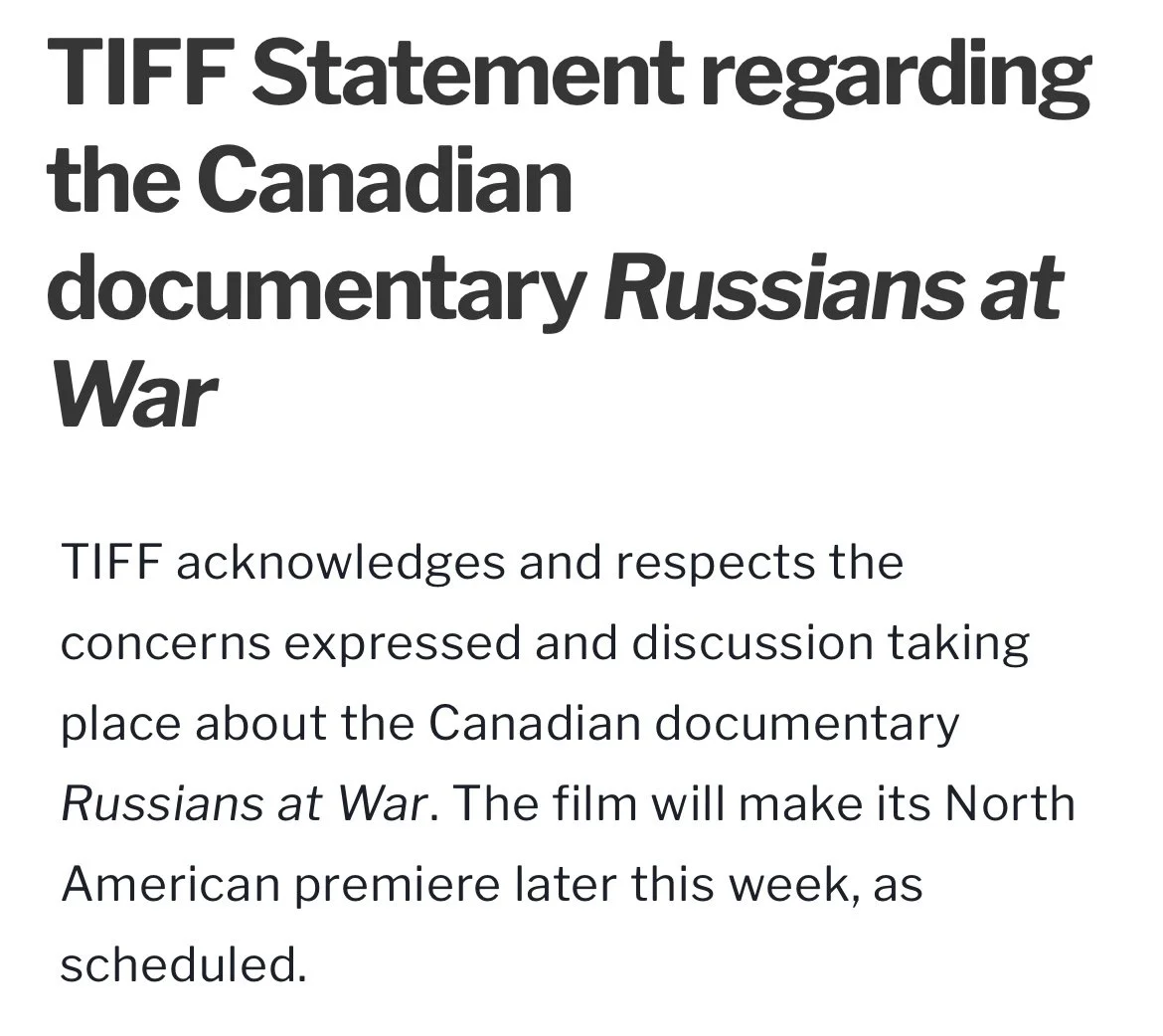
Despite the pressure, TVO and TIFF state that screenings will go as planned.
Suddenly, Canada’s Deputy Prime Minister (of Ukrainian descent), Chrystia Freeland, says she shares the Ukrainian diplomats’ ‘grave concerns’. This is unprecedented: a Canadian politician of such caliber is openly pressuring cultural institutions against screening a Canadian film she hadn’t even seen.
Hours after Chrystia Freeland’s remarks, TVO’s Board of Directors announces it won’t air Russians at War.
TIFF is standing by the film.
It’s two days before the TIFF screening.
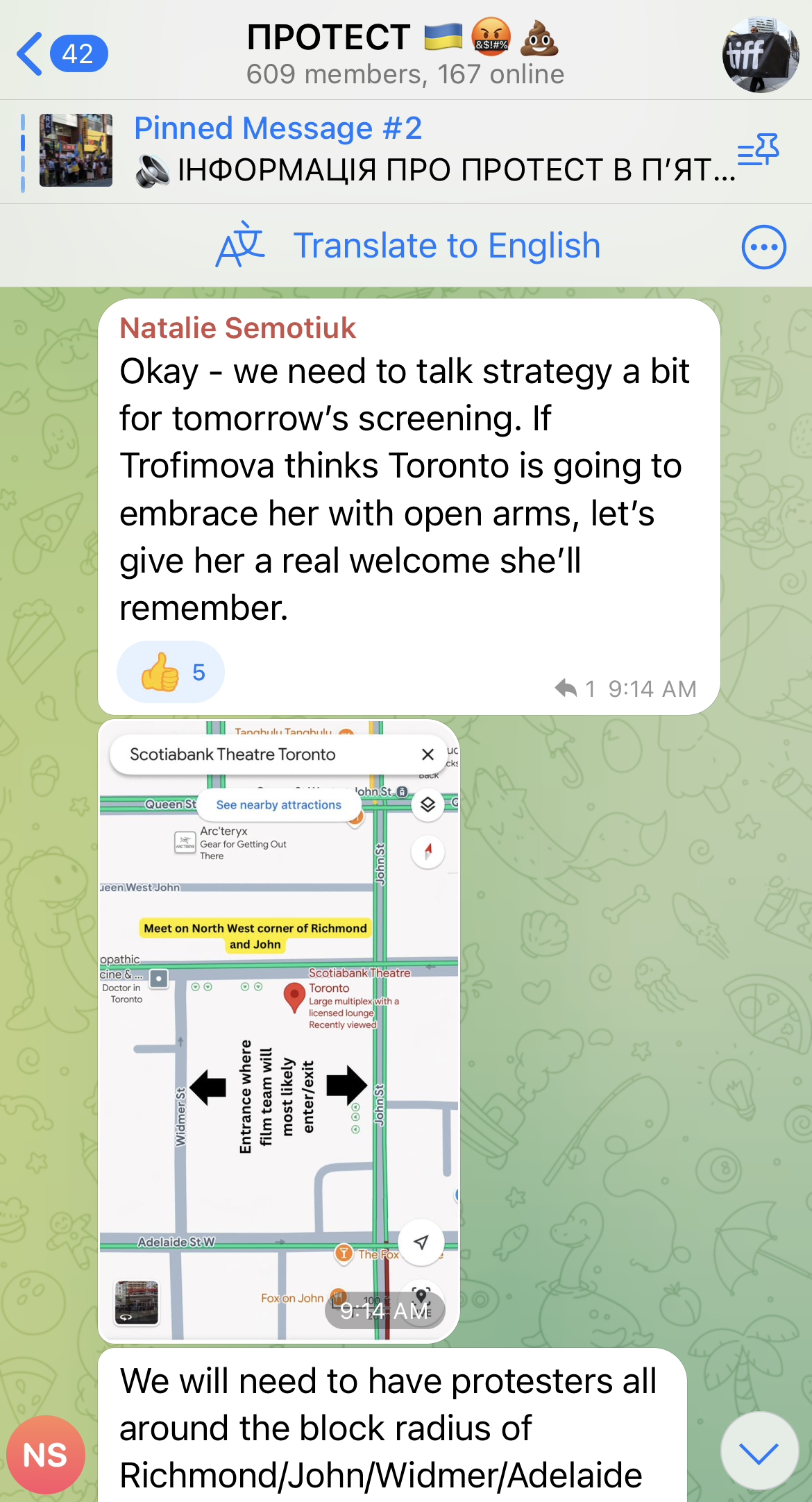
The Ukrainian protesters’ group on Telegram is debating on how to disrupt TIFF screenings: some propose buying up tickets, others – pulling the fire alarm. Some talk about burning down the theatre and share maps of the building, marking entrances where they can intercept me.
They also share TIFF’s management’s contacts and urge a flood of calls and emails.
(None of them have seen the film.)
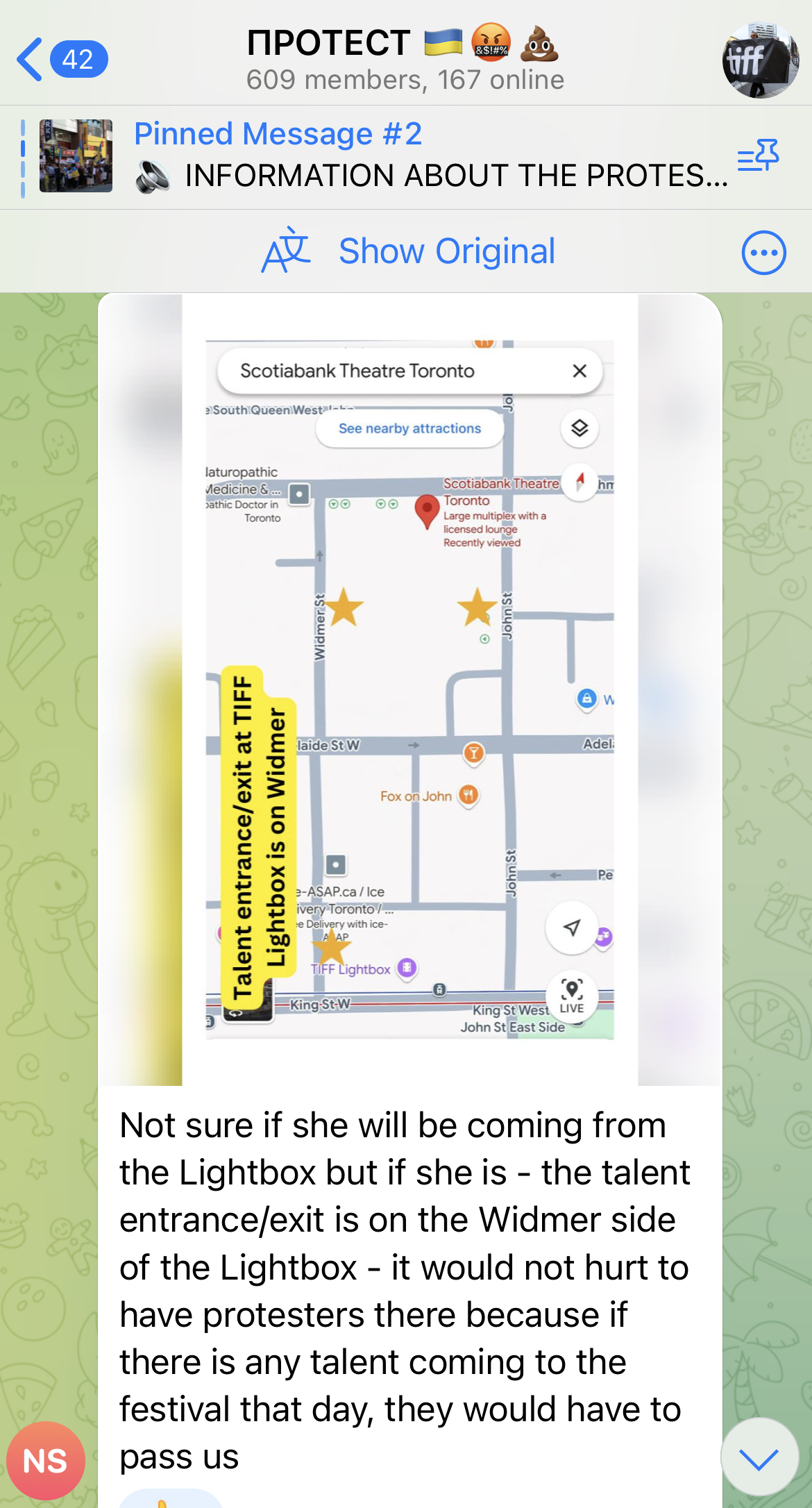
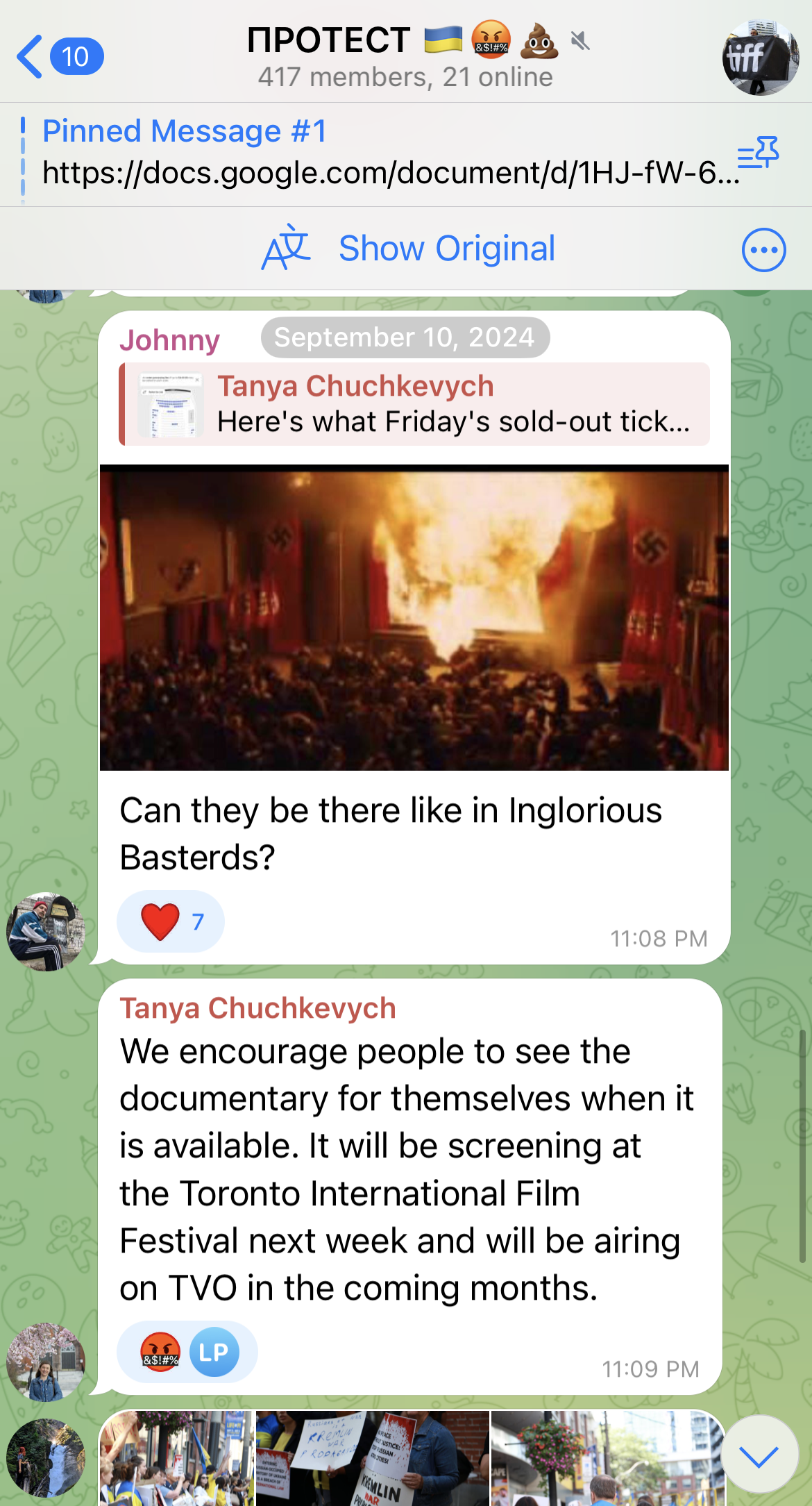
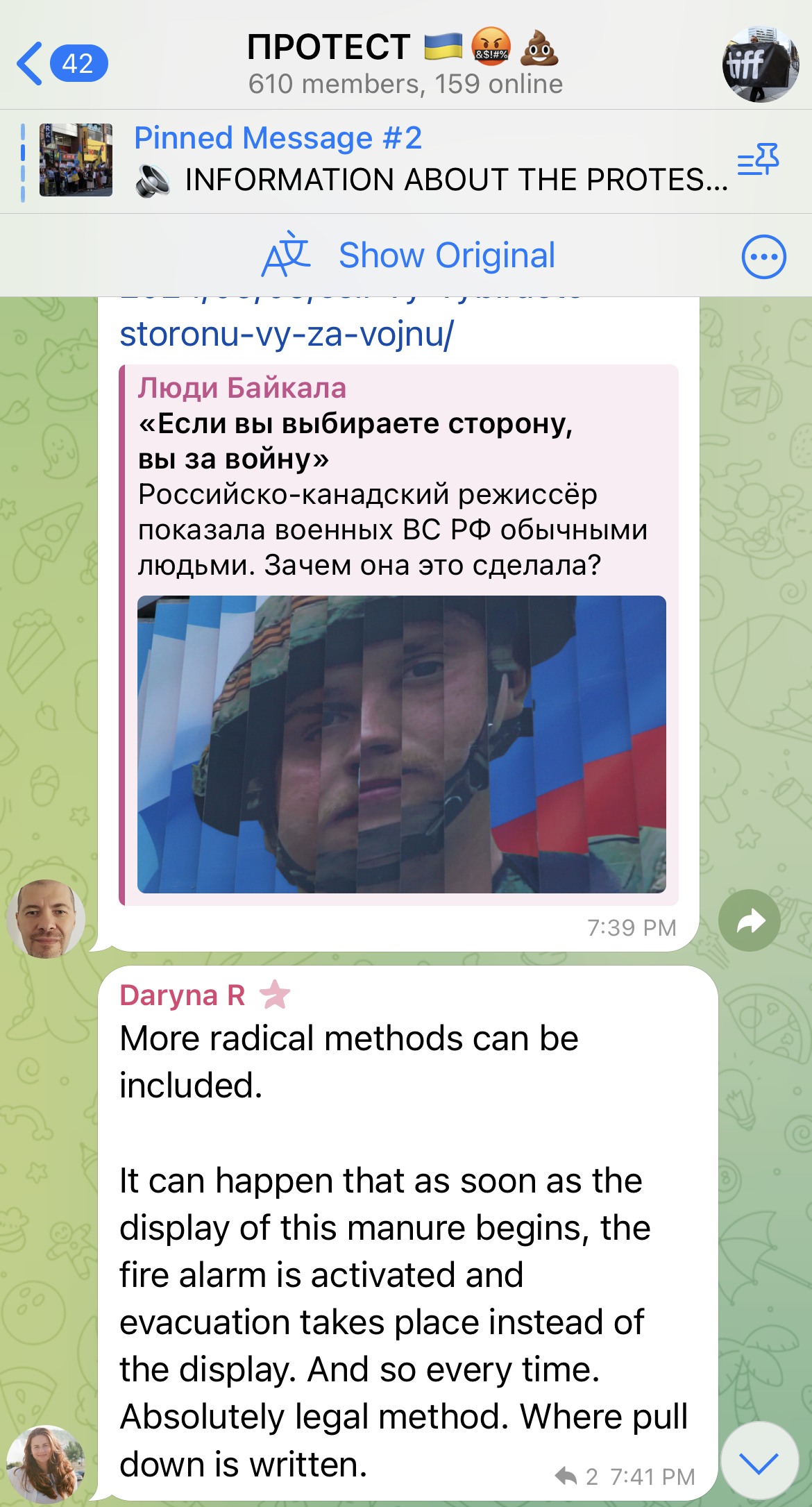
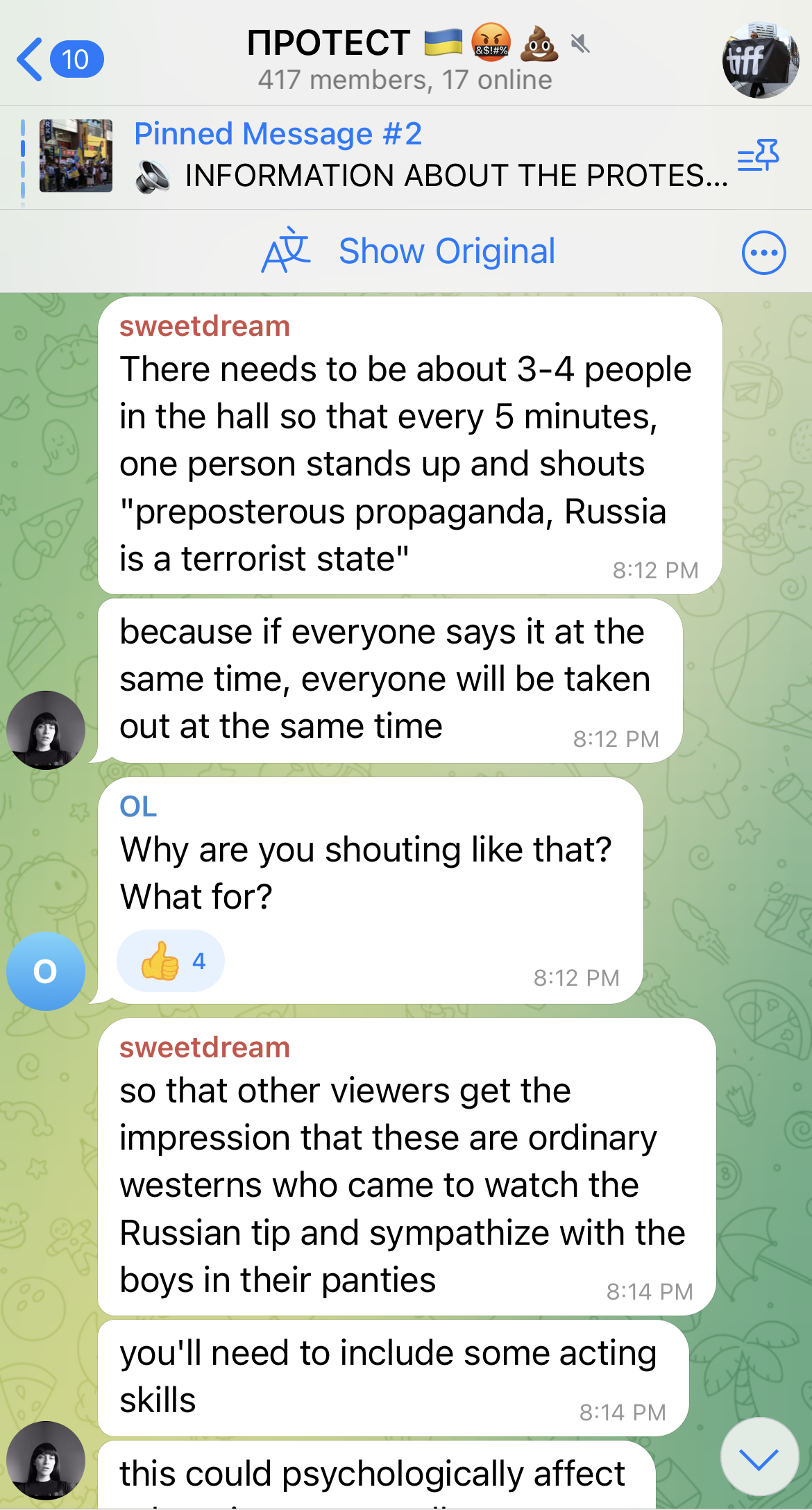
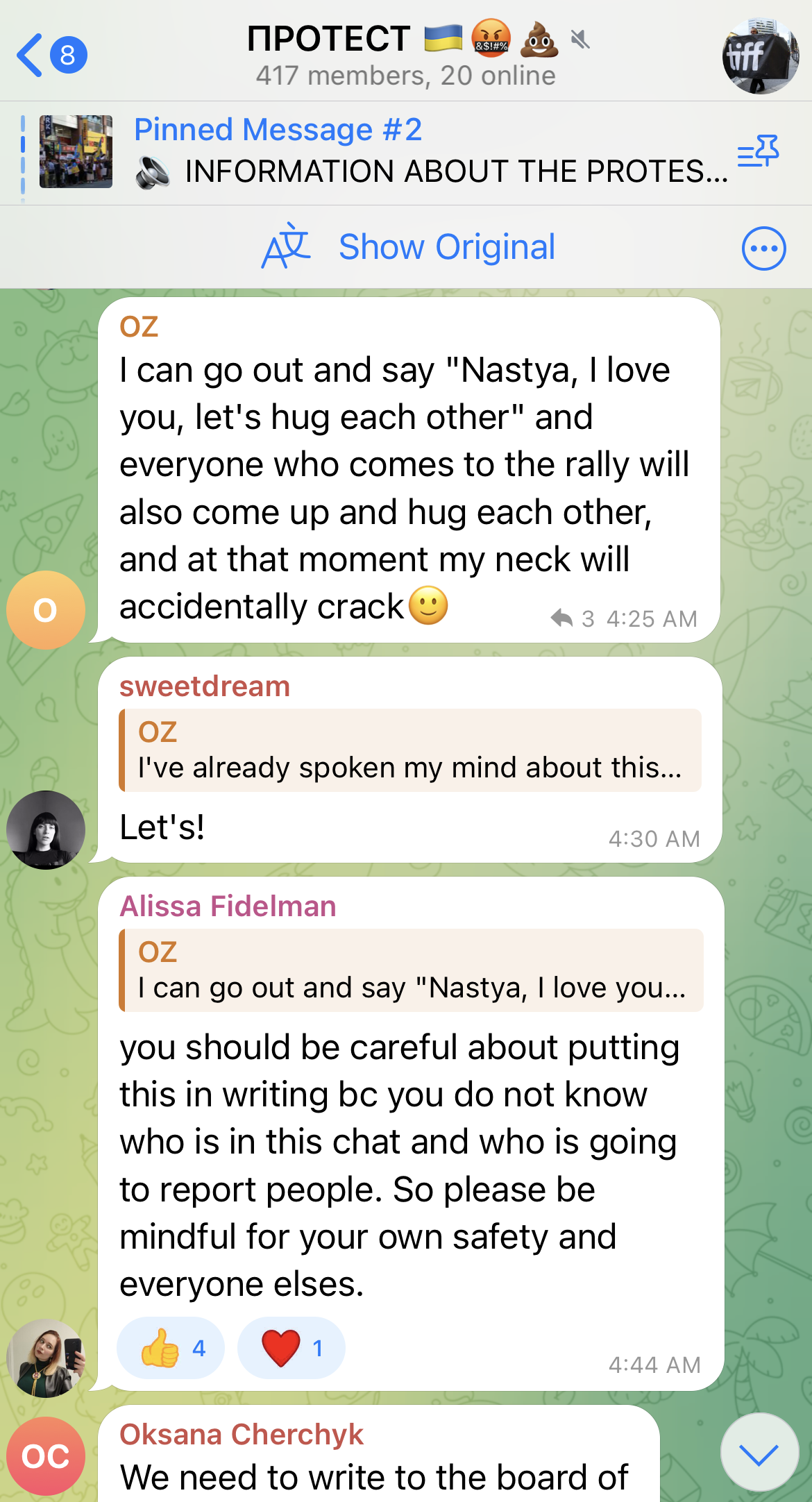
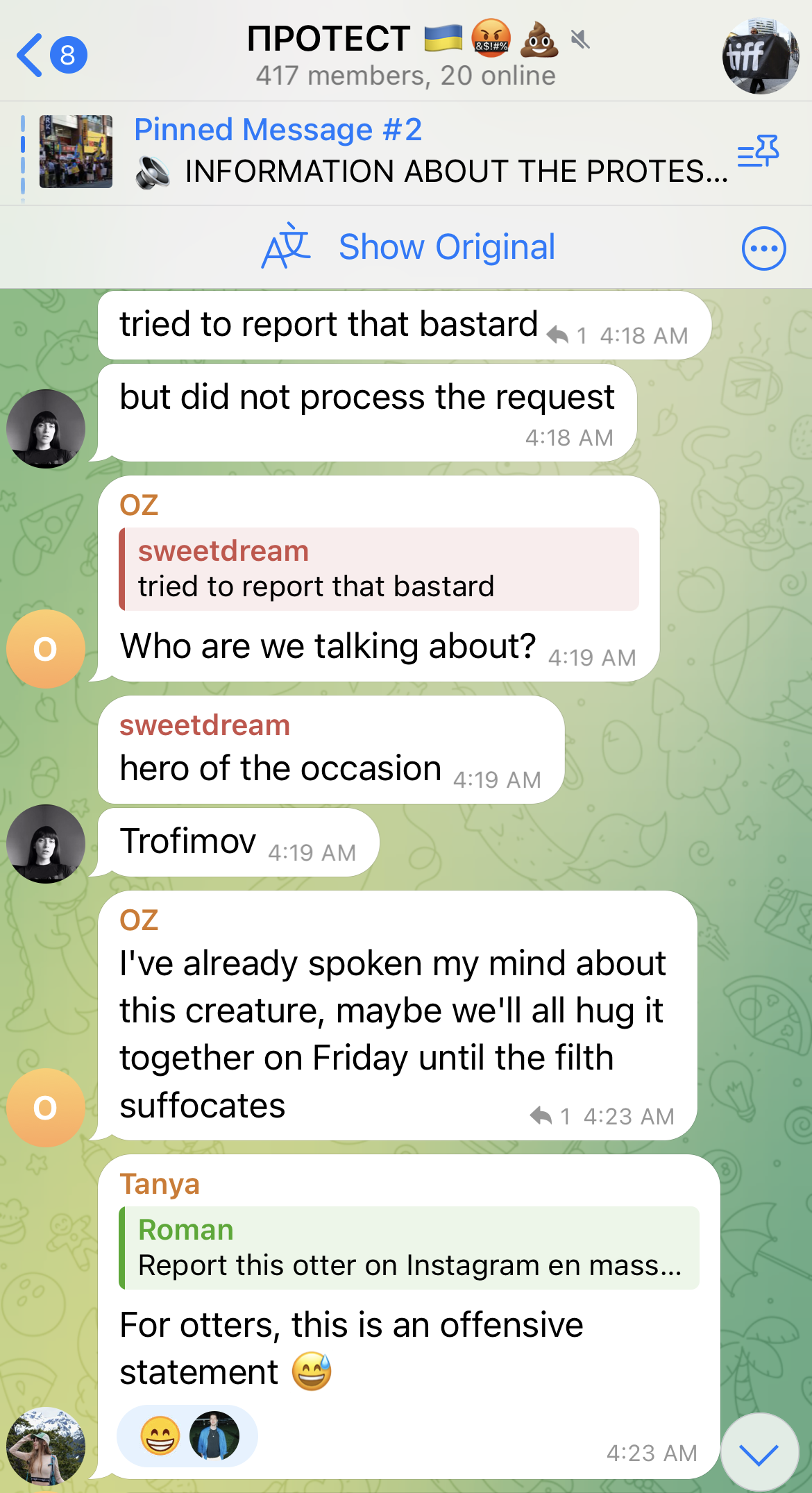
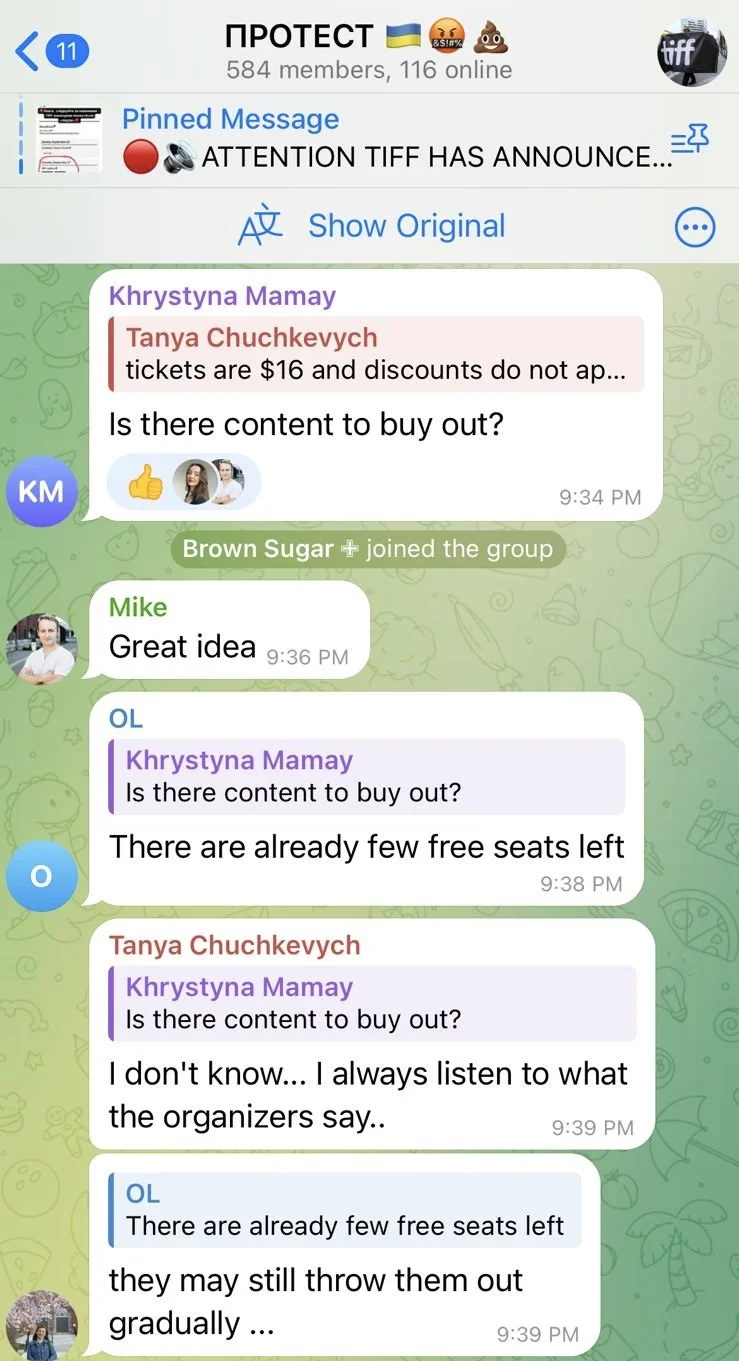
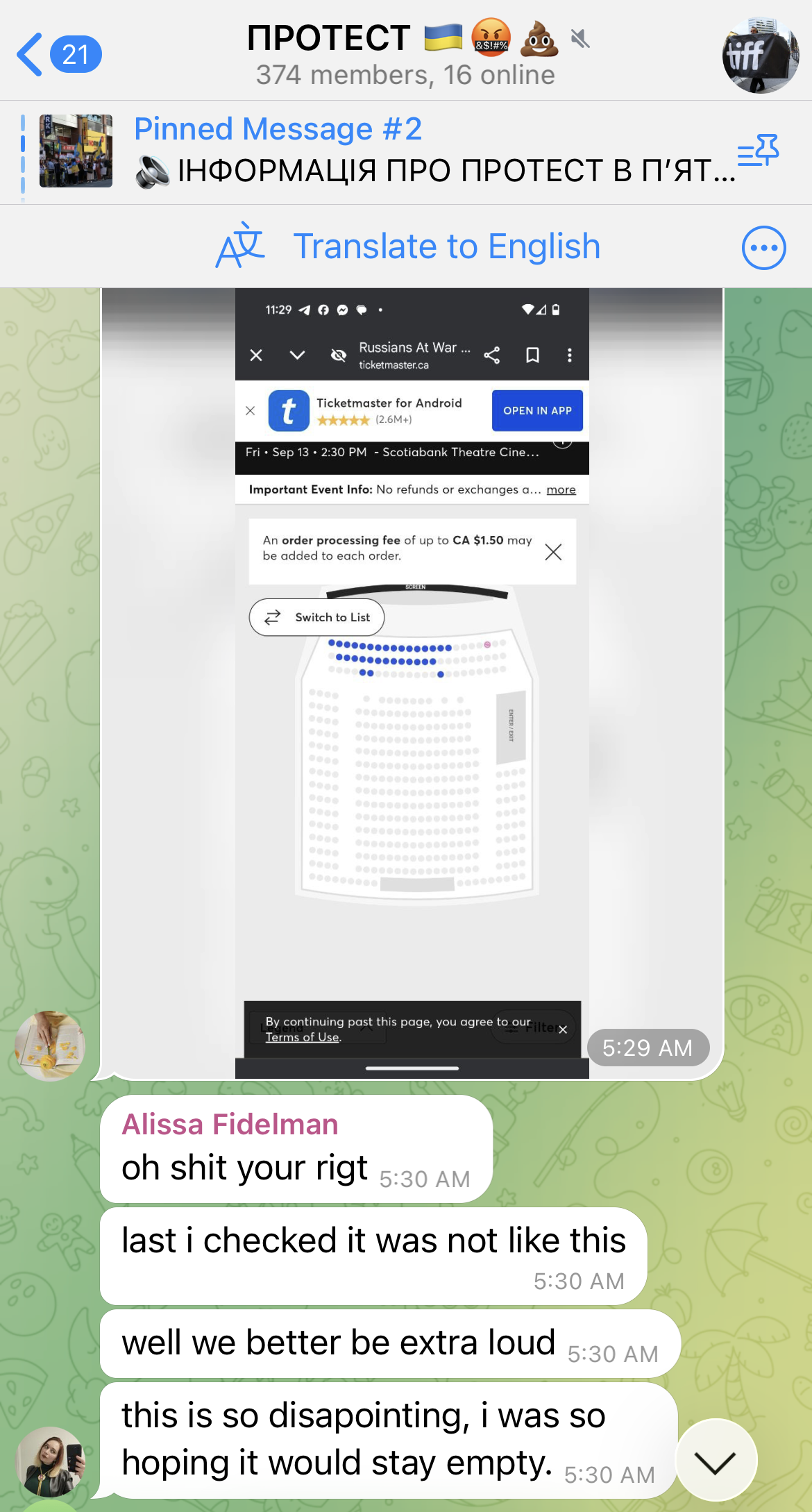
TIFF’s staff and management receive over 2,800 calls and messages with insults and threats, including rape (!) – if they screen Russians at War. (Similar to those I’ve received.)
The festival’s security advisors conclude that the threat level from the Ukrainian-Canadian diaspora is too high. So, the day before the screenings are to take place, they get postponed.
This decision is unprecedented: in its 49 years, TIFF had never postponed a film for security reasons.
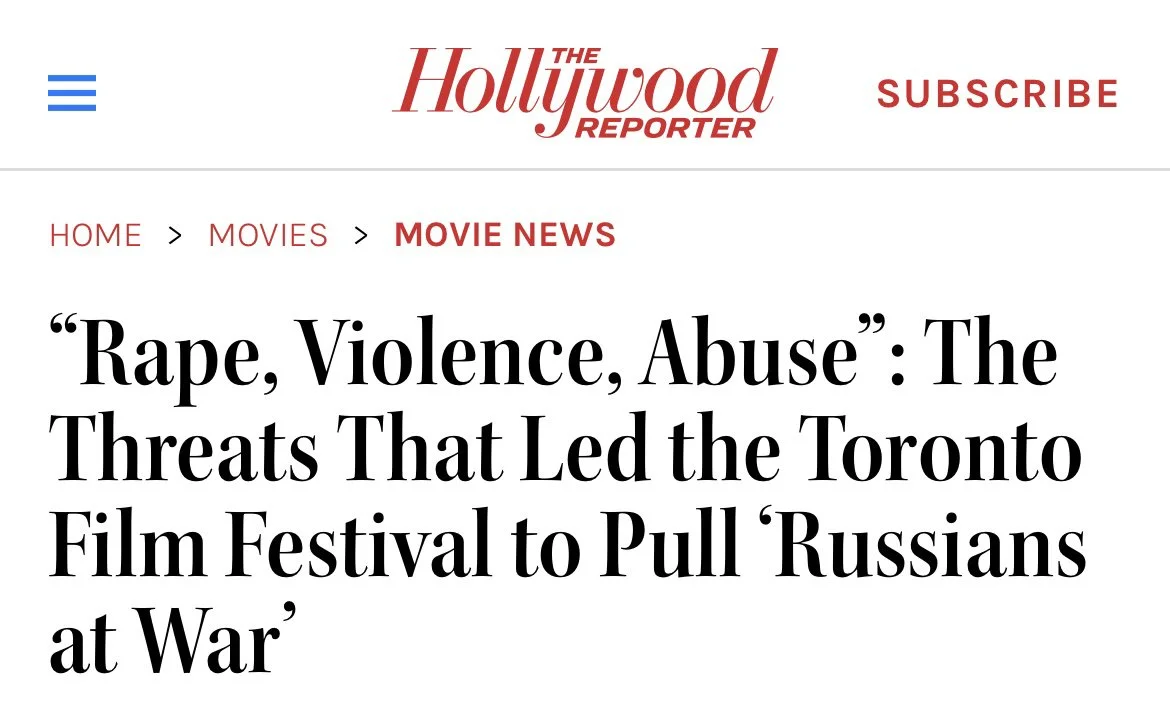
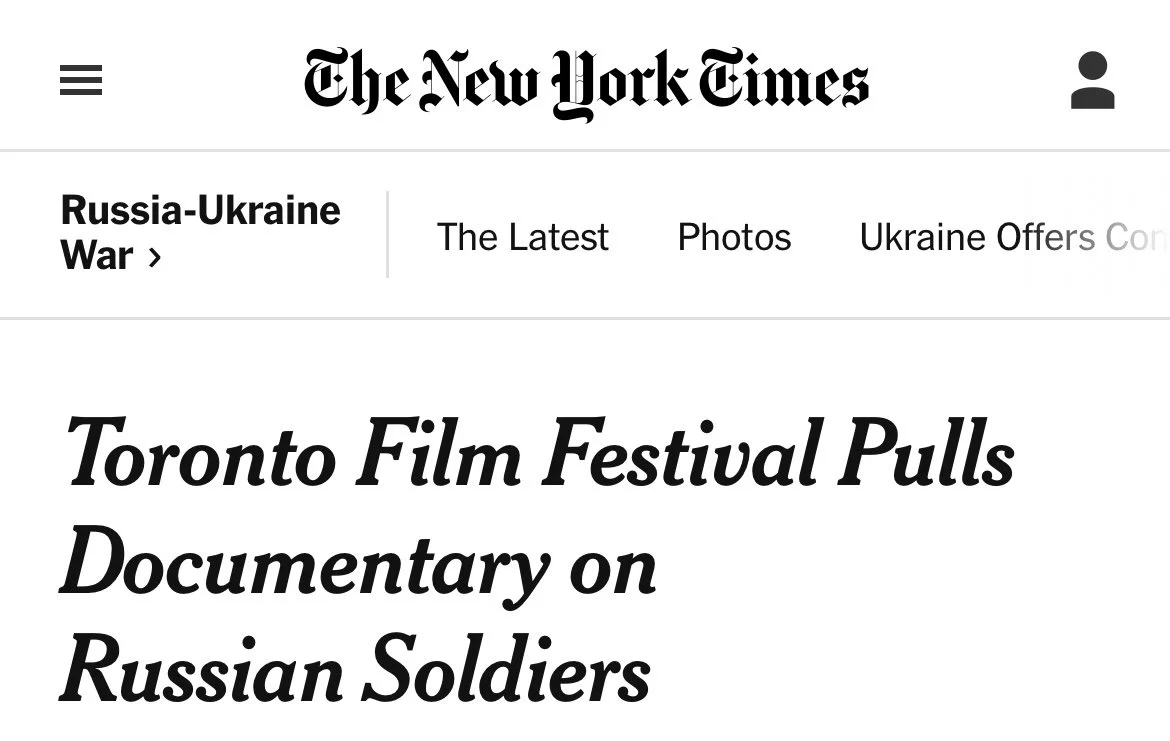
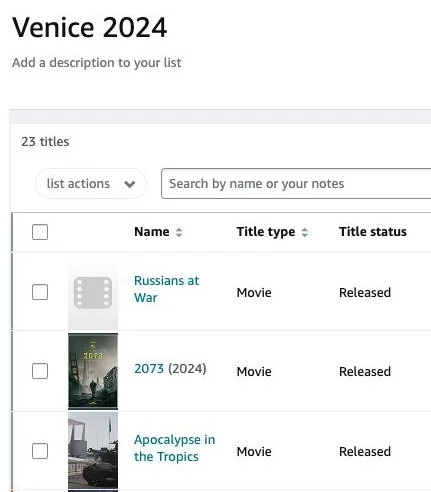
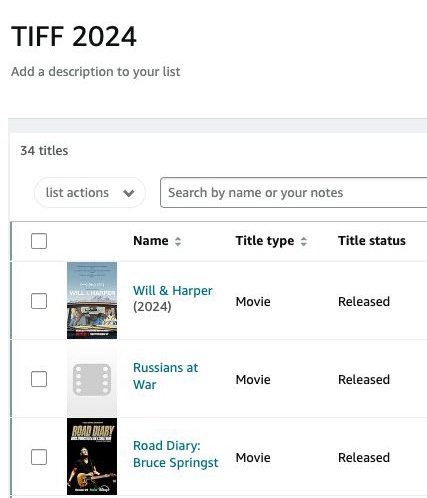
Russians at War becomes the most mentioned film from the Venice and Toronto Film Festivals, according to IMDb’s algorithm.
A few tense days go by and…
TIFF secures a separate theater, police presence and announces a new screening date for Russians at War!
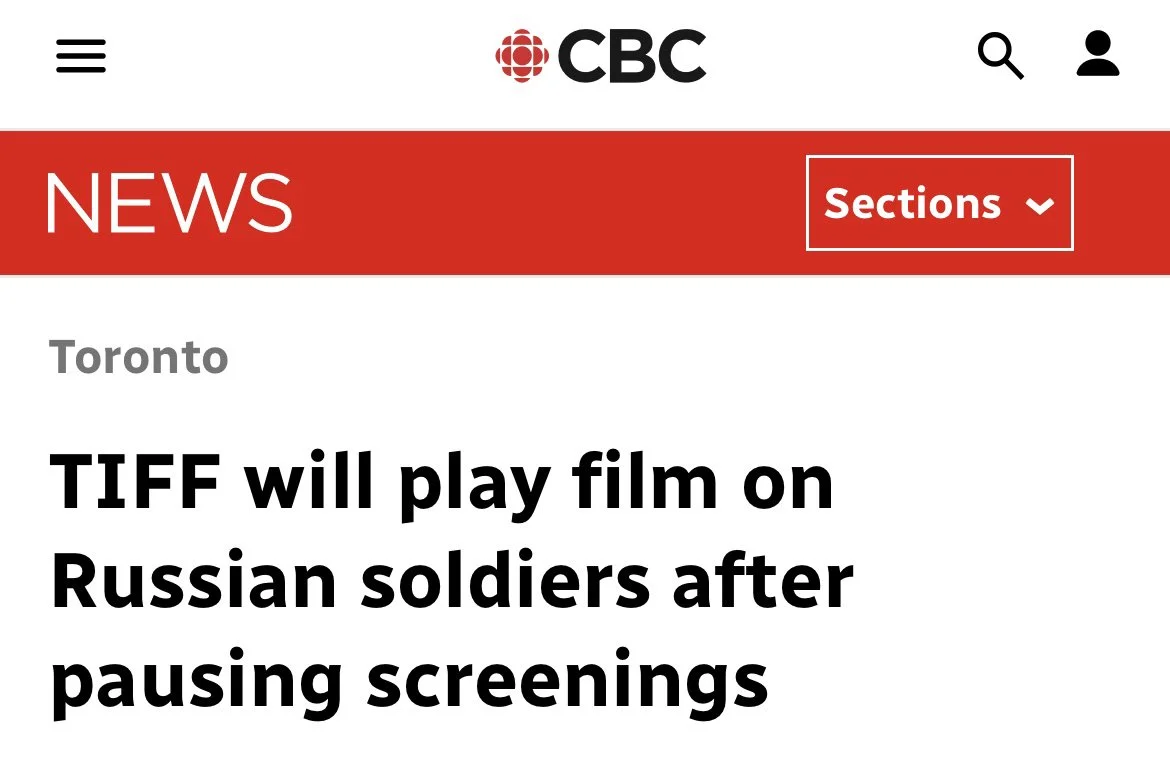
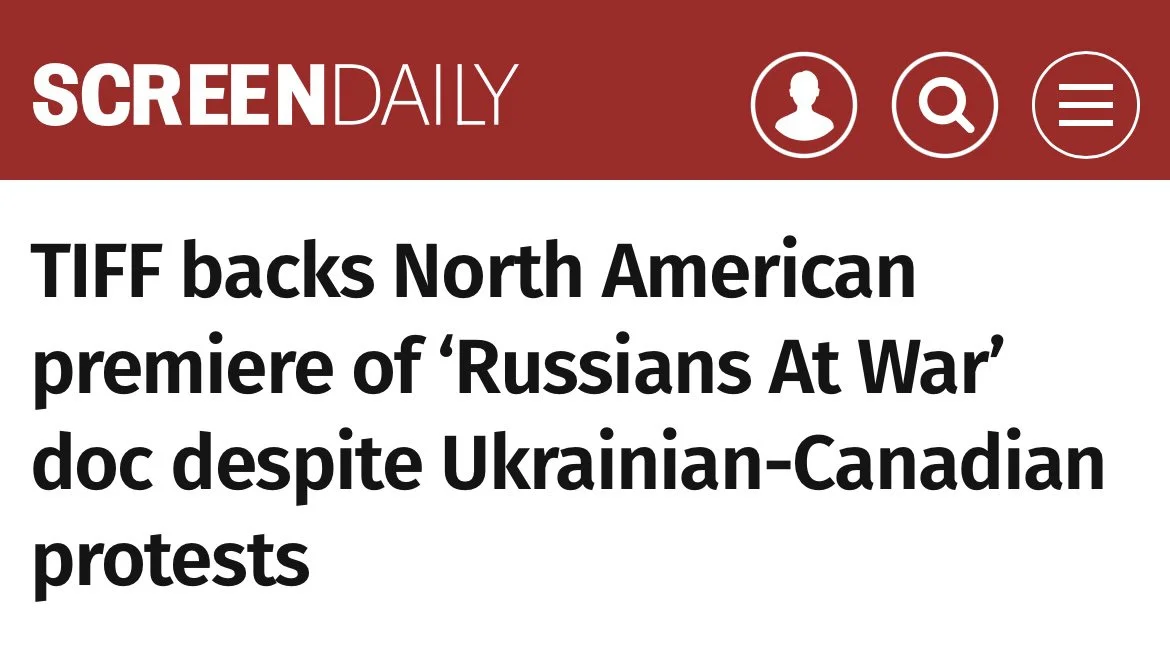
Russians at War becomes a top news story in Canada (with over 1,500 media mentions in a week).
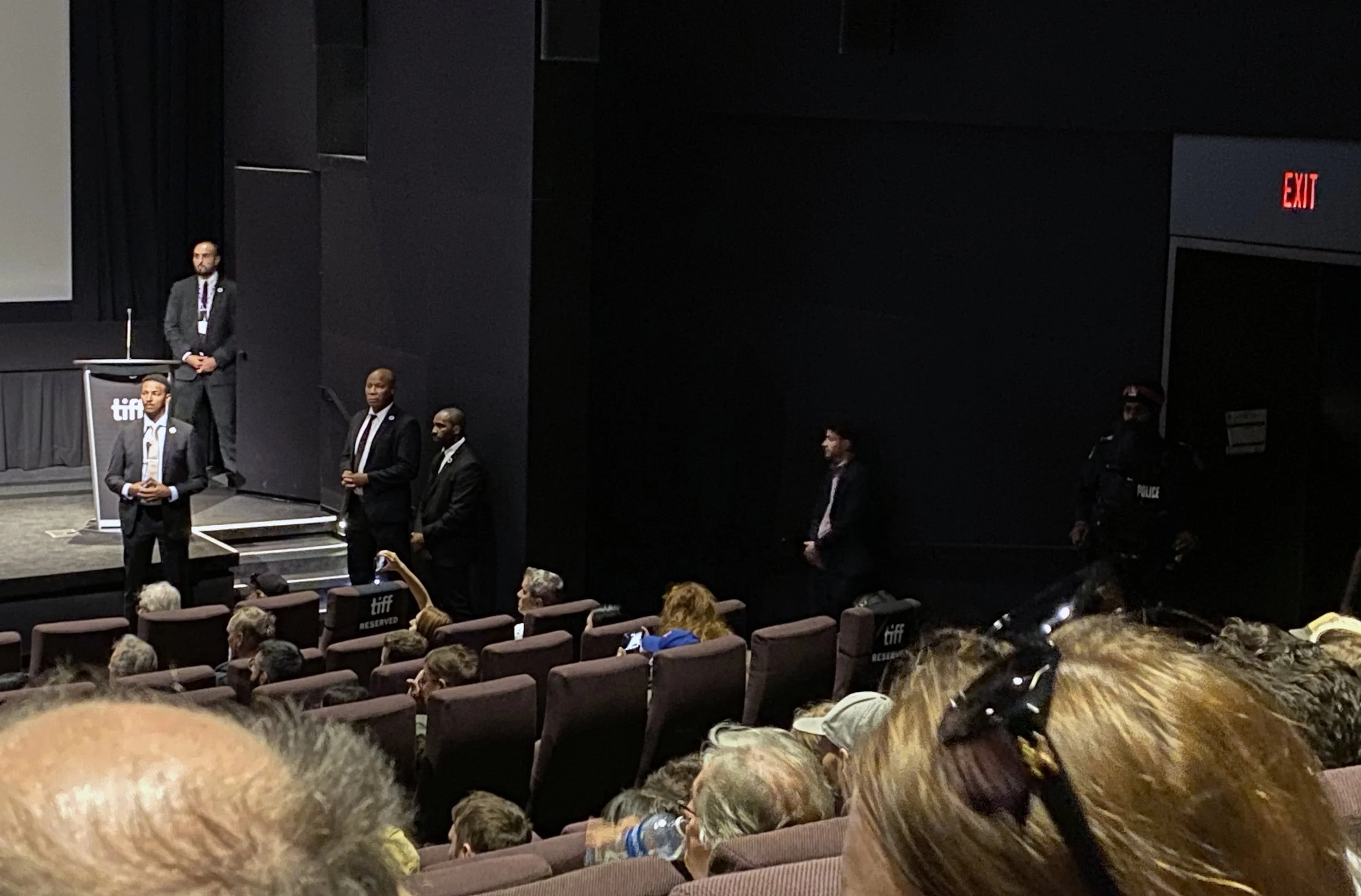
The day of the North American premiere. TIFF’s security requests us to arrive a few hours before the screening to avoid Ukrainian protesters.
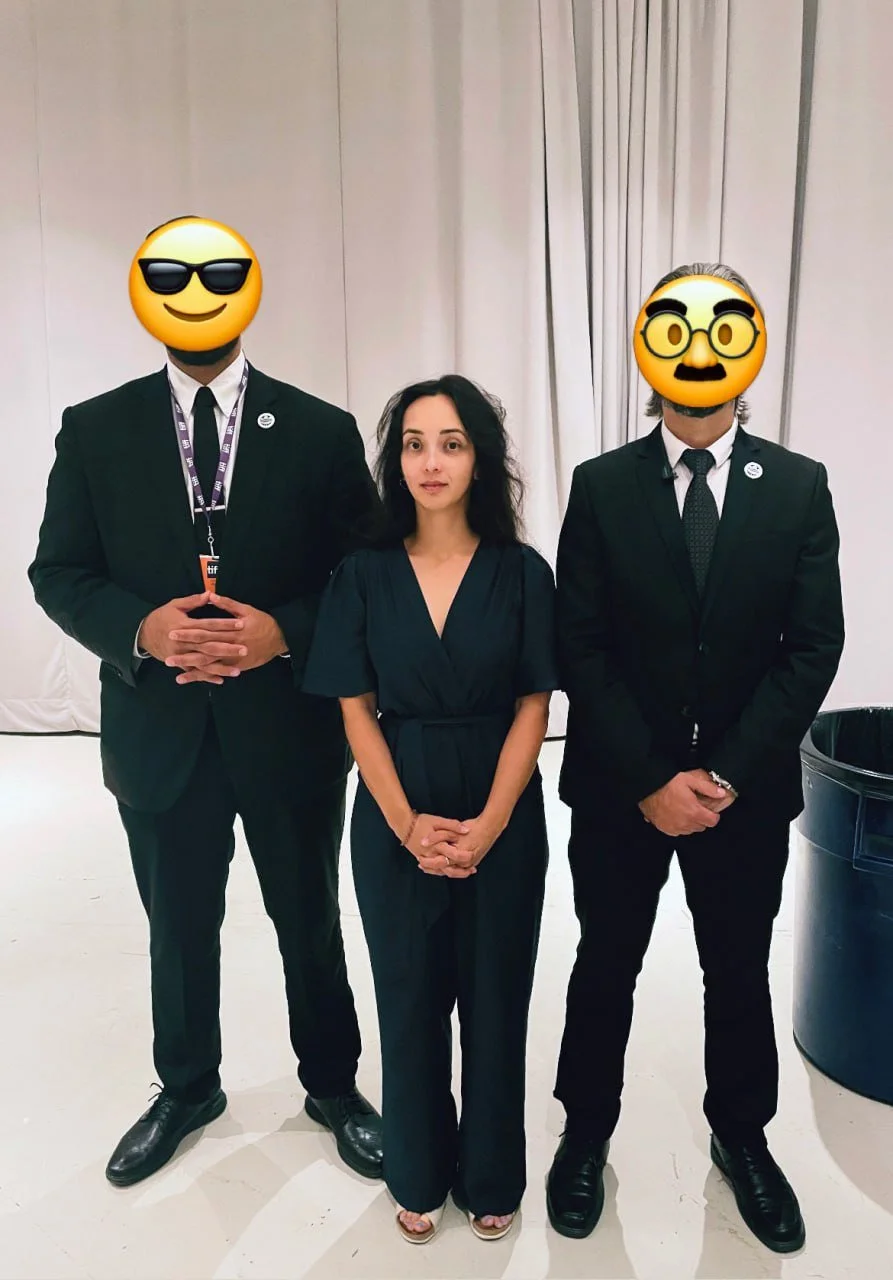
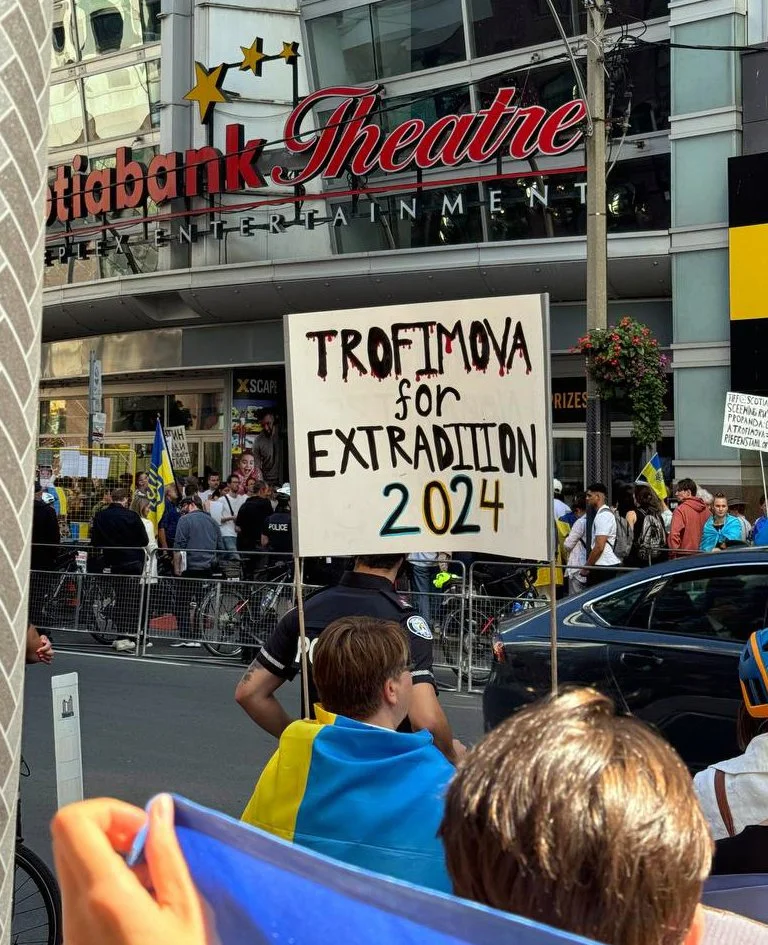
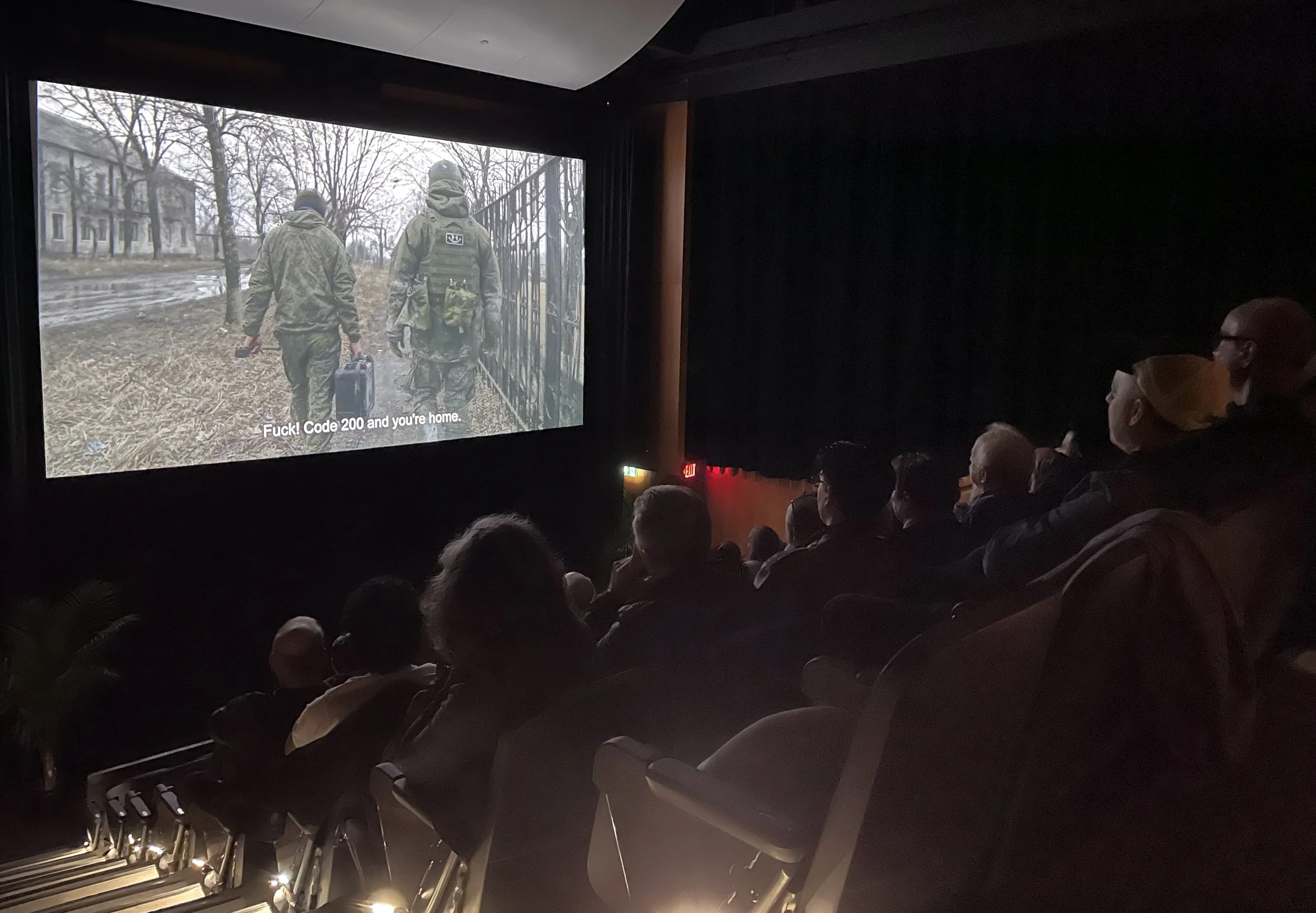
The theater is cordoned off by Toronto police. Having filmed in Iraq, Syria and the Democratic Republic of Congo, I’m assigned bodyguards for the first time in my life – in Toronto. Security is checking bags and confiscating posters, liquids and any suspicious items.
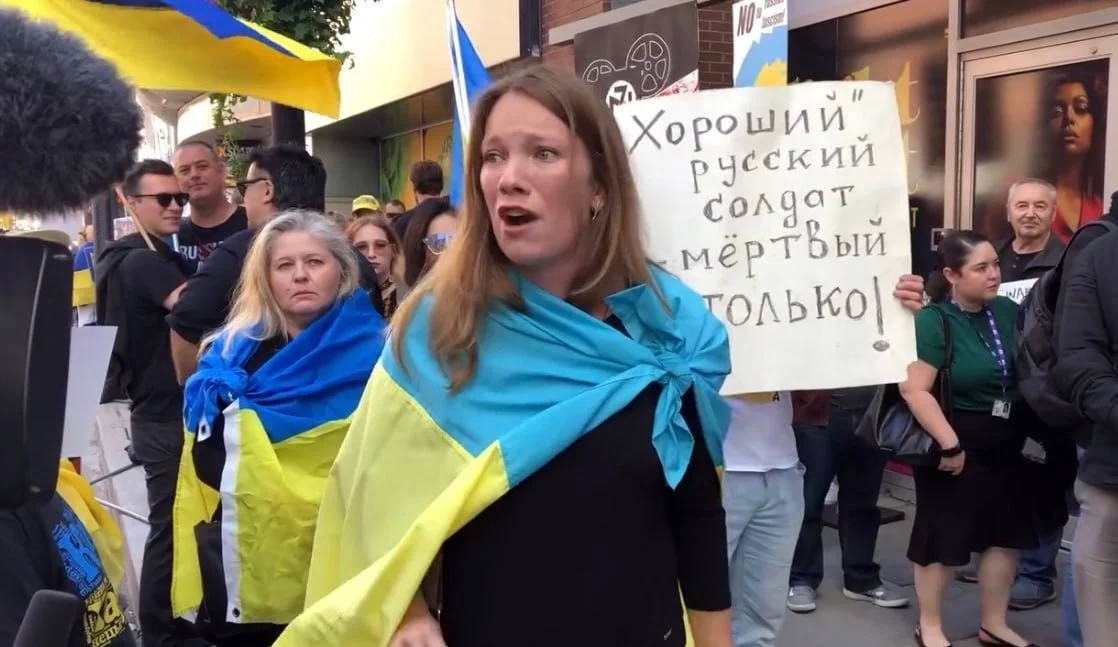
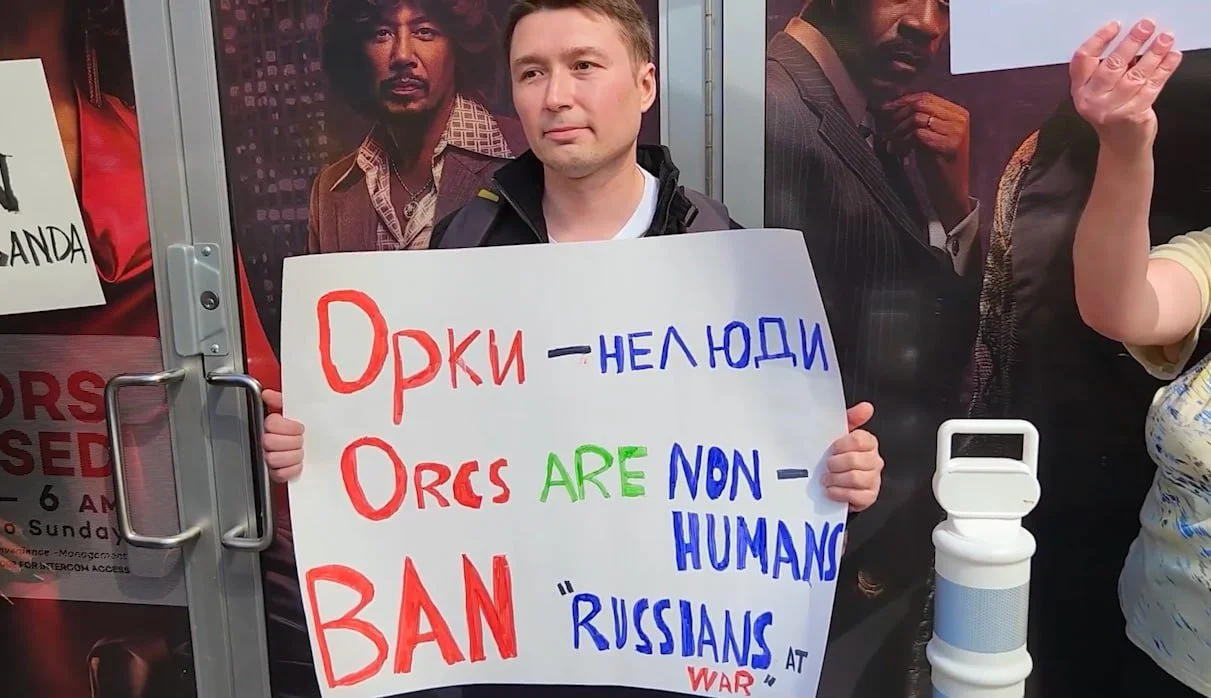
Both shows are sold out. There are 200-300 Ukrainian protesters outside the theater. They shout ‘shame’ at people entering. (None of them have seen the film.)
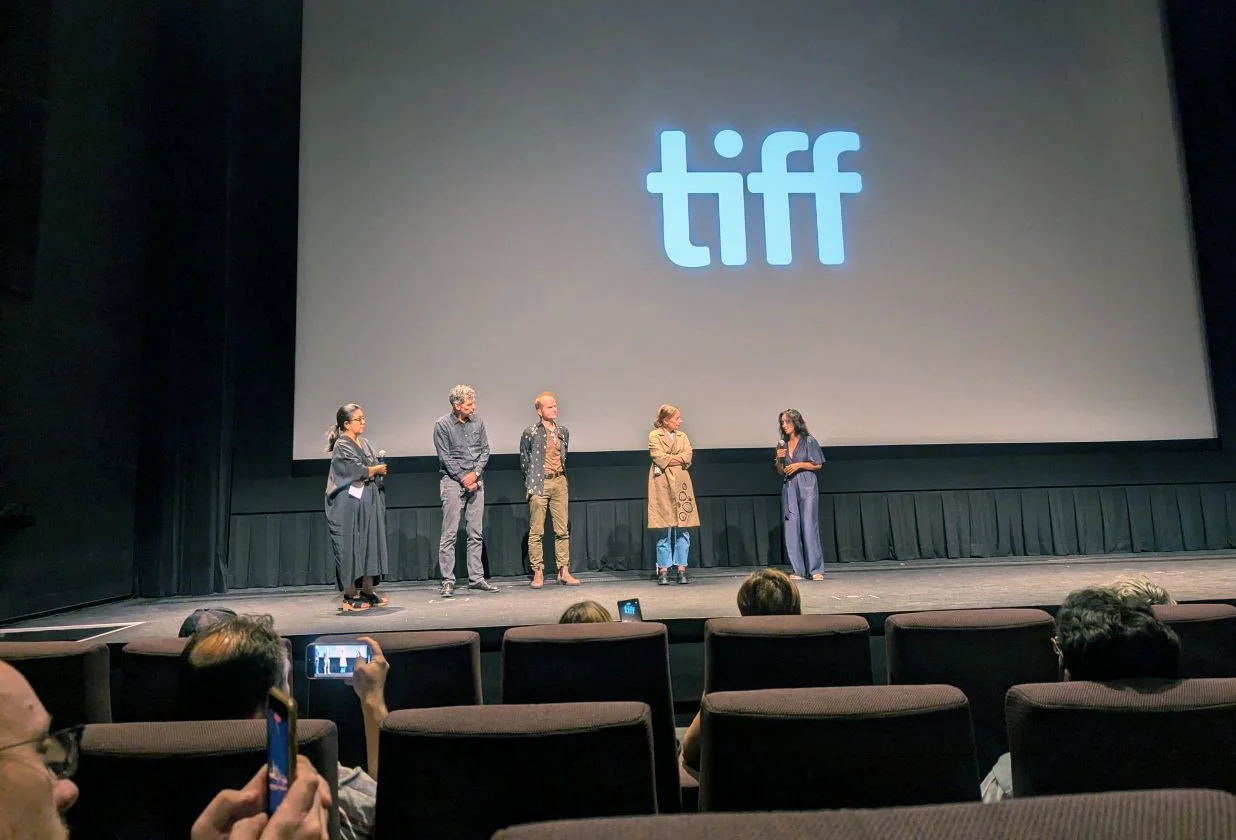
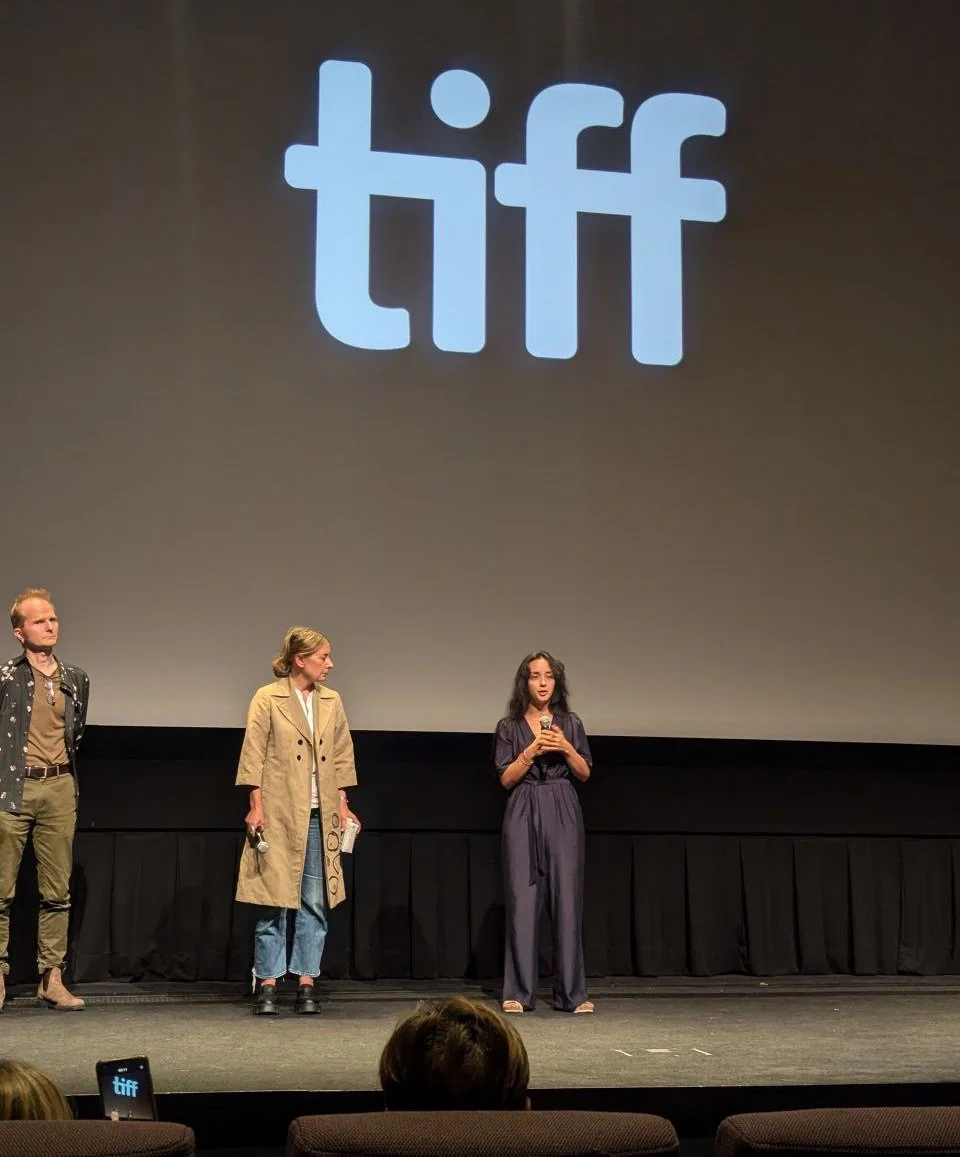
Opening remarks by Cameron Bailey, TIFF CEO.
A full house and two fantastic screenings. Phew!
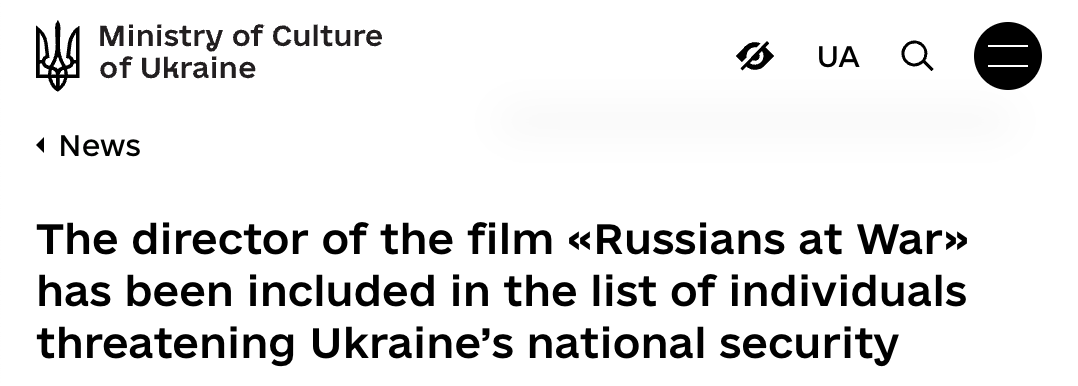
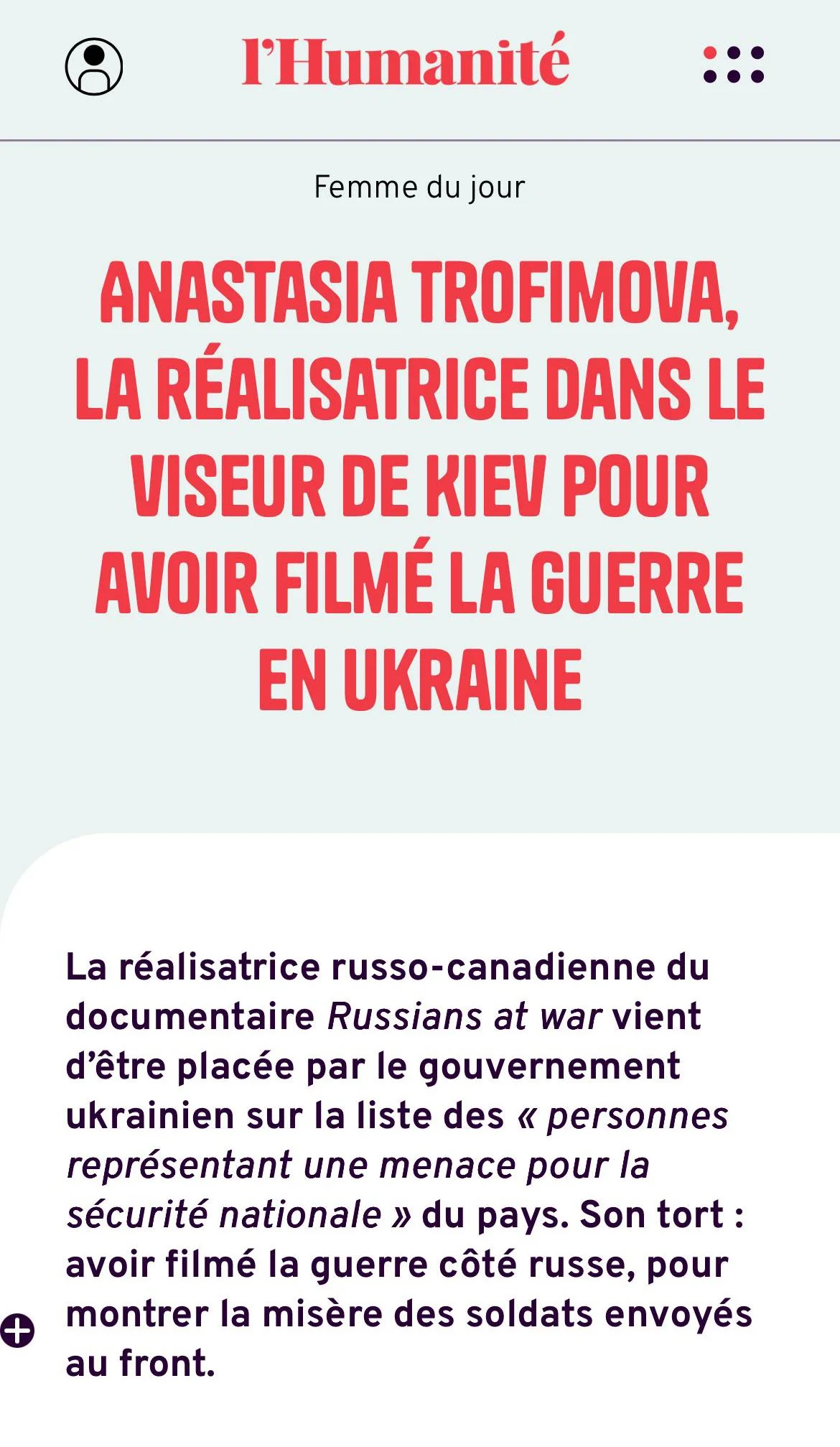
That same night, the Ukrainian Secret Service adds me to its list of ‘threats to national security.’
One of the reasons? ‘Unacceptable neutrality.’
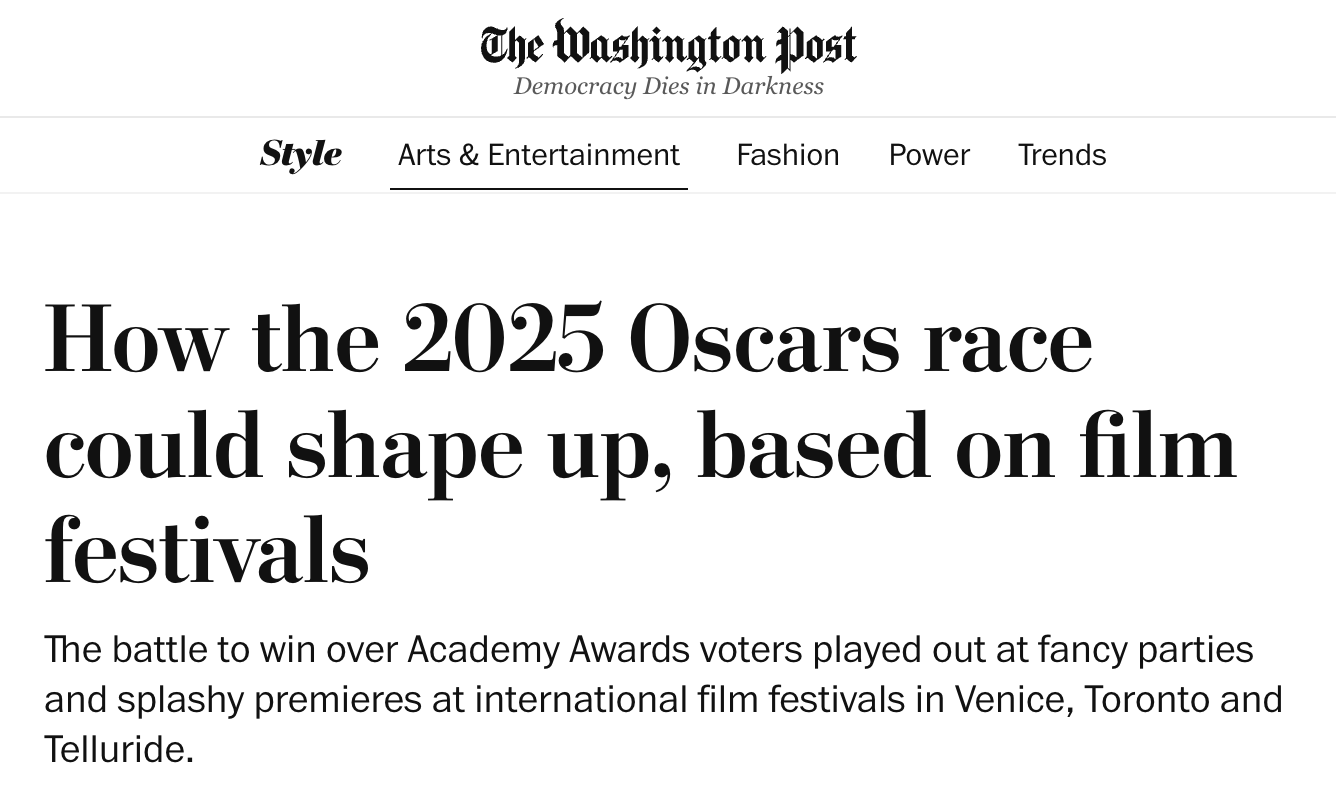
‘How the 2025 Oscars race could shape up, based on film festivals: In a field full of political docs, festival standouts include… Russians at War, an antiwar film that embeds with Russian troops on the front line in Ukraine, which screened in Venice but was pulled from TIFF before its North American premiere because of threats to the venue and festival staff.’
– The Washington Post
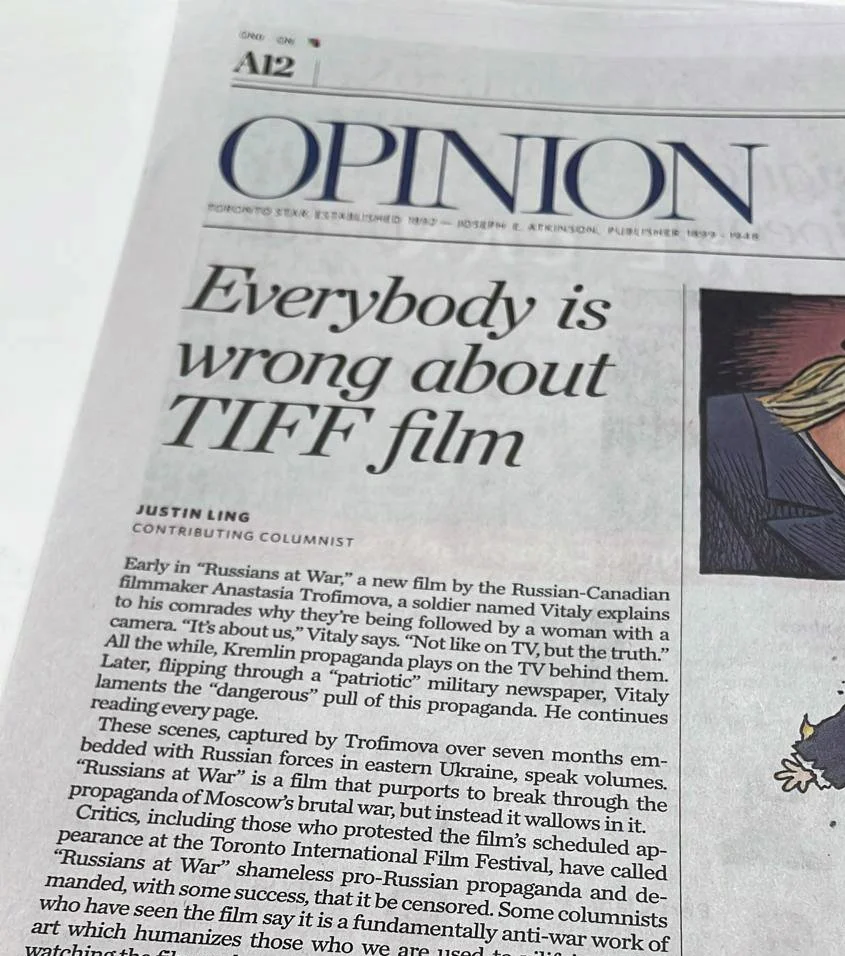
An overview of the Canadian press:
‘Russians At War might be one of the most profoundly sad but nuanced commentaries on war since 1985’s Come and See.’
– In the Seats
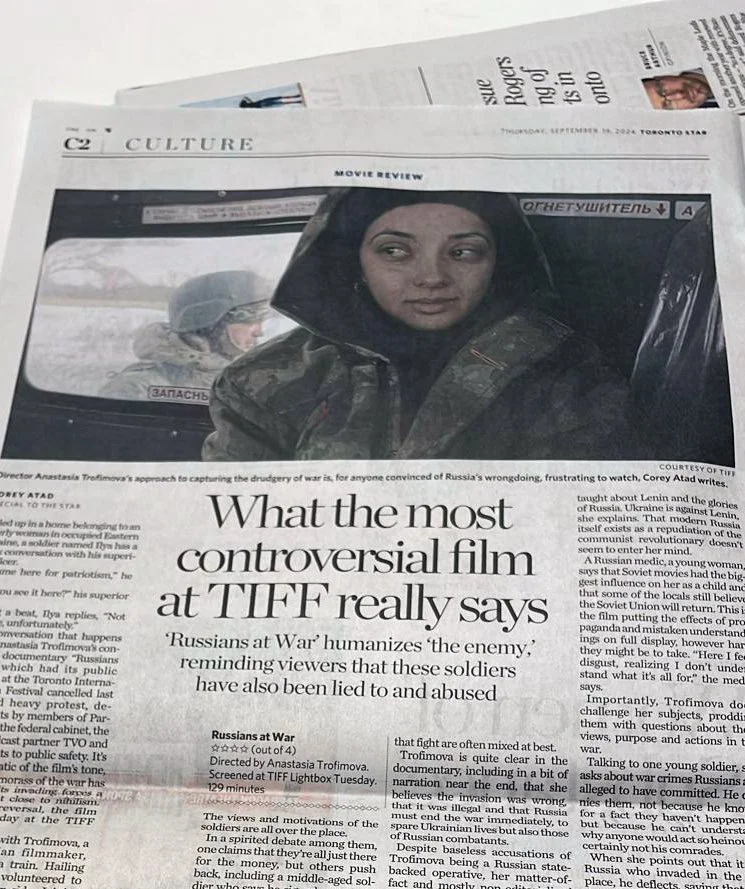
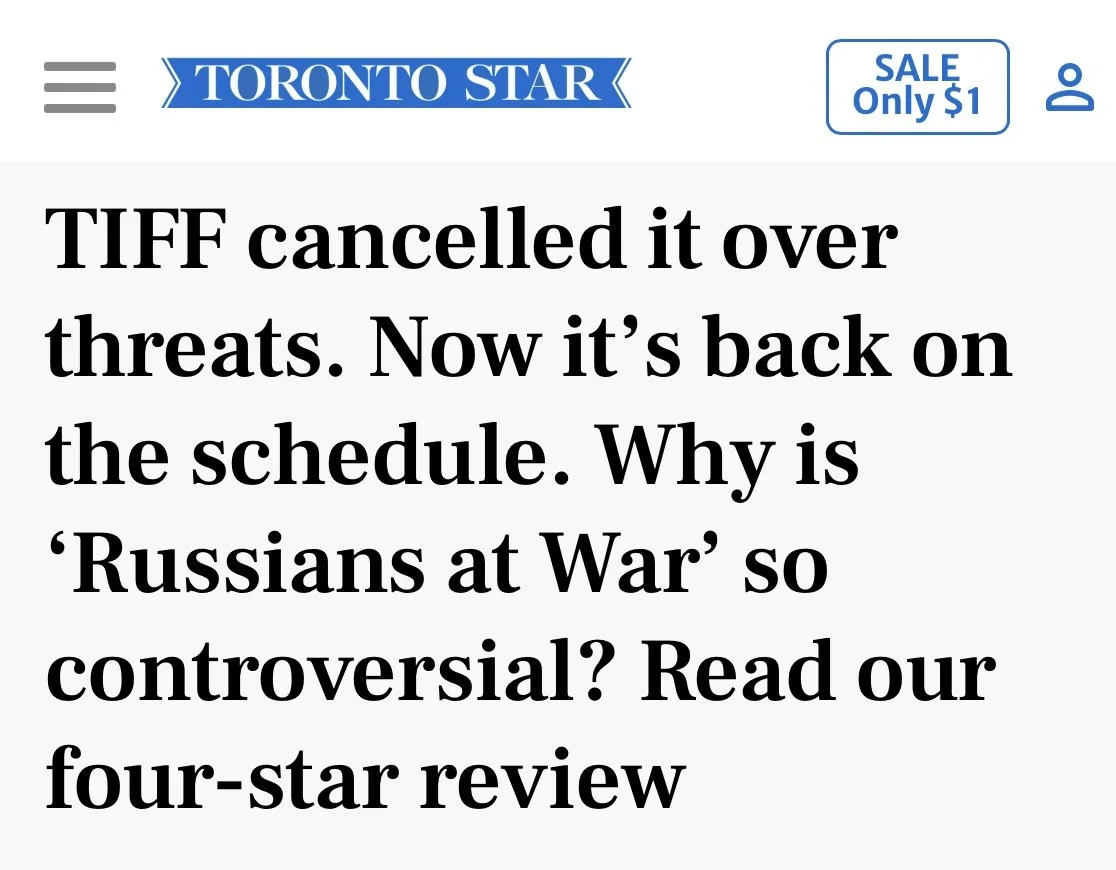
‘4 stars (out of 4). Russians at War is, despite the controversy surrounding it, an excellent and bracing documentary. Its observational honesty is its great feat, sharing the harrowing experiences of soldiers easily demonized in the West and glossed over by state media at home.’
– Toronto Star
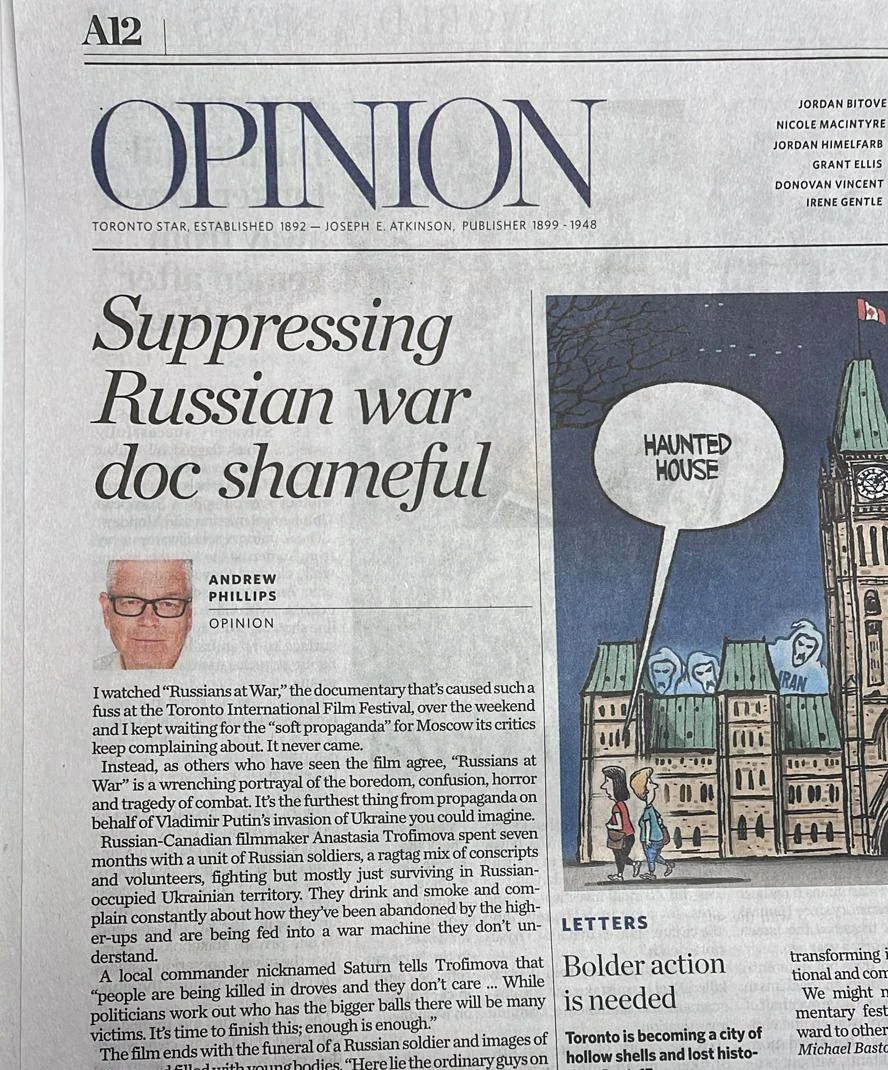
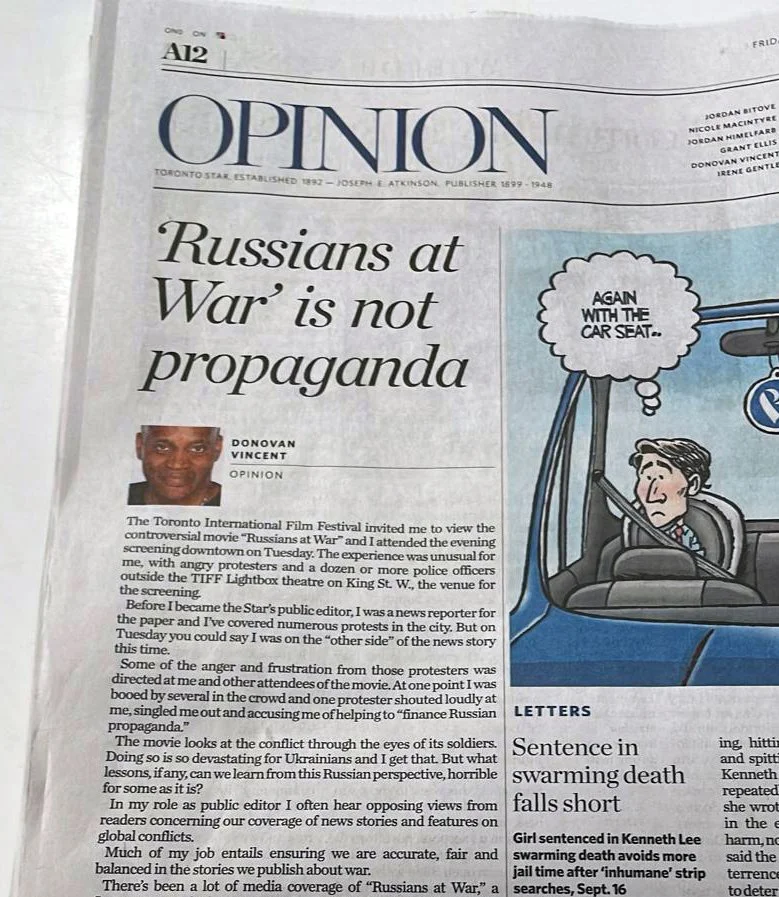
‘Russians at War is a brave and exceptional documentary. It shows, unvarnished, the horrors of the war, including some of the most horrific footage you will ever see on a big screen… The only ‘propaganda’ this documentary serves sup is an anti-war message that should be delivered as far and wide as possible… And a talented filmmaker, without an official posting or even a press pass, followed them almost all the way to the front so that we could know about it. And be outraged. Not at the film; at the war. Censoring art is never a good idea. But keeping this film under wraps is denying the public of more than the experience of seeing an excellent movie. It is restricting access to a vital message: an unforgiving indictment of war.’
– Globe and Mail
‘Russians at War affords remarkable access to tell a human story… Russians at War goes back to that personal element of All Quiet on the Western Front – perhaps the greatest of anti-war works…’
– POV Magazine
‘Russians at War is a documentary that cries out to be seen… None of the ugliness, the gruesomeness of war, is whitewashed in this documentary… It serves the purpose of every side in a war to demonize the enemy. But Trofimova has tried, valiantly, to depict the humanity of the enemy, documenting in real time the sobering realities so poignantly rendered in classic movies such as All Quiet on the Western Front — the German remake of which won four Oscars last year.’
– Toronto Star
‘In one of the craziest press releases I’ve seen in recent times, the Ukrainian-Canadian Congress not only accused TIFF of ‘providing a platform for whitewashing … genocide’; it also suggested the film might violate the Criminal Code’s prohibition against advocating genocide. Only a purebred lunatic could suggest such a thing, having seen the film.’
– National Post
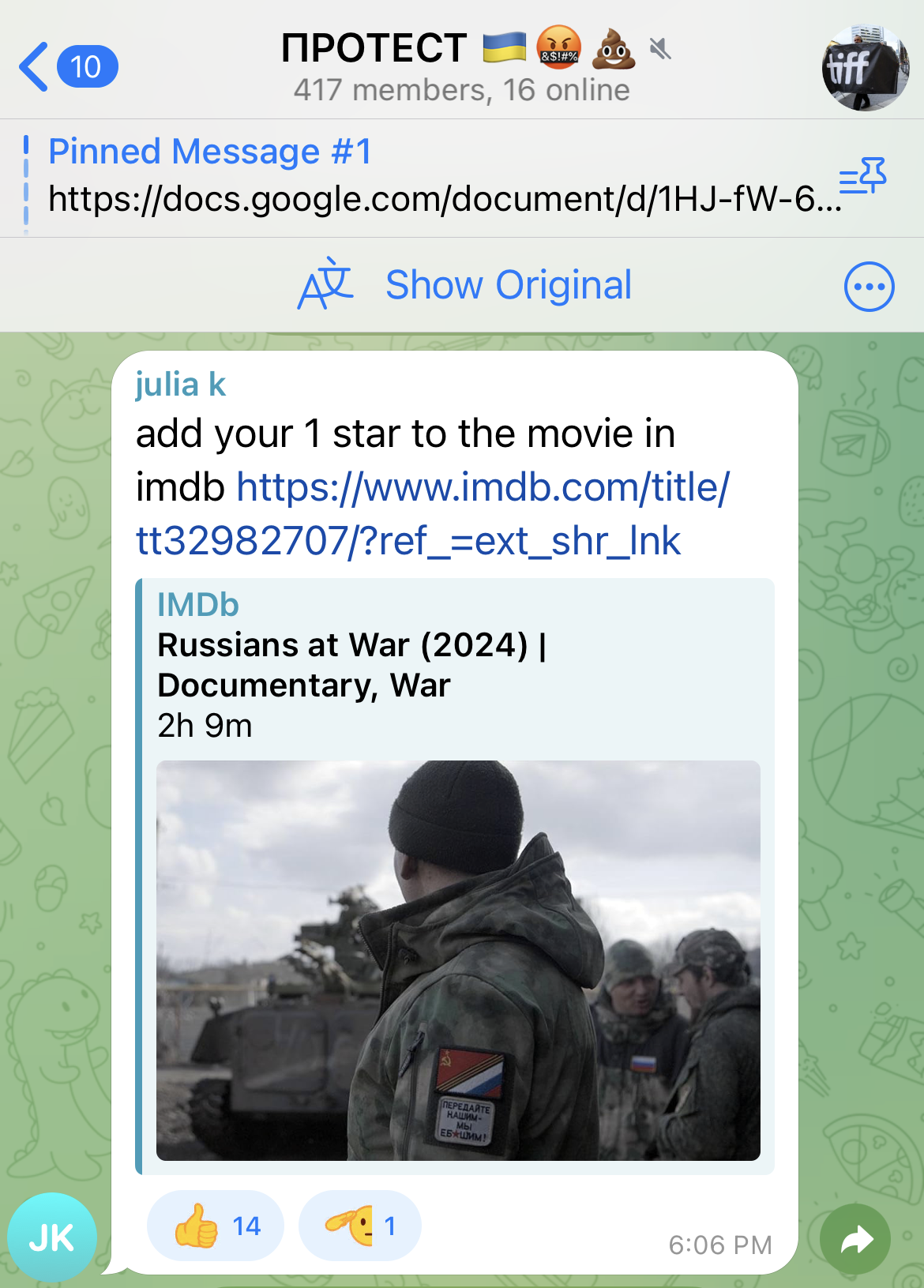
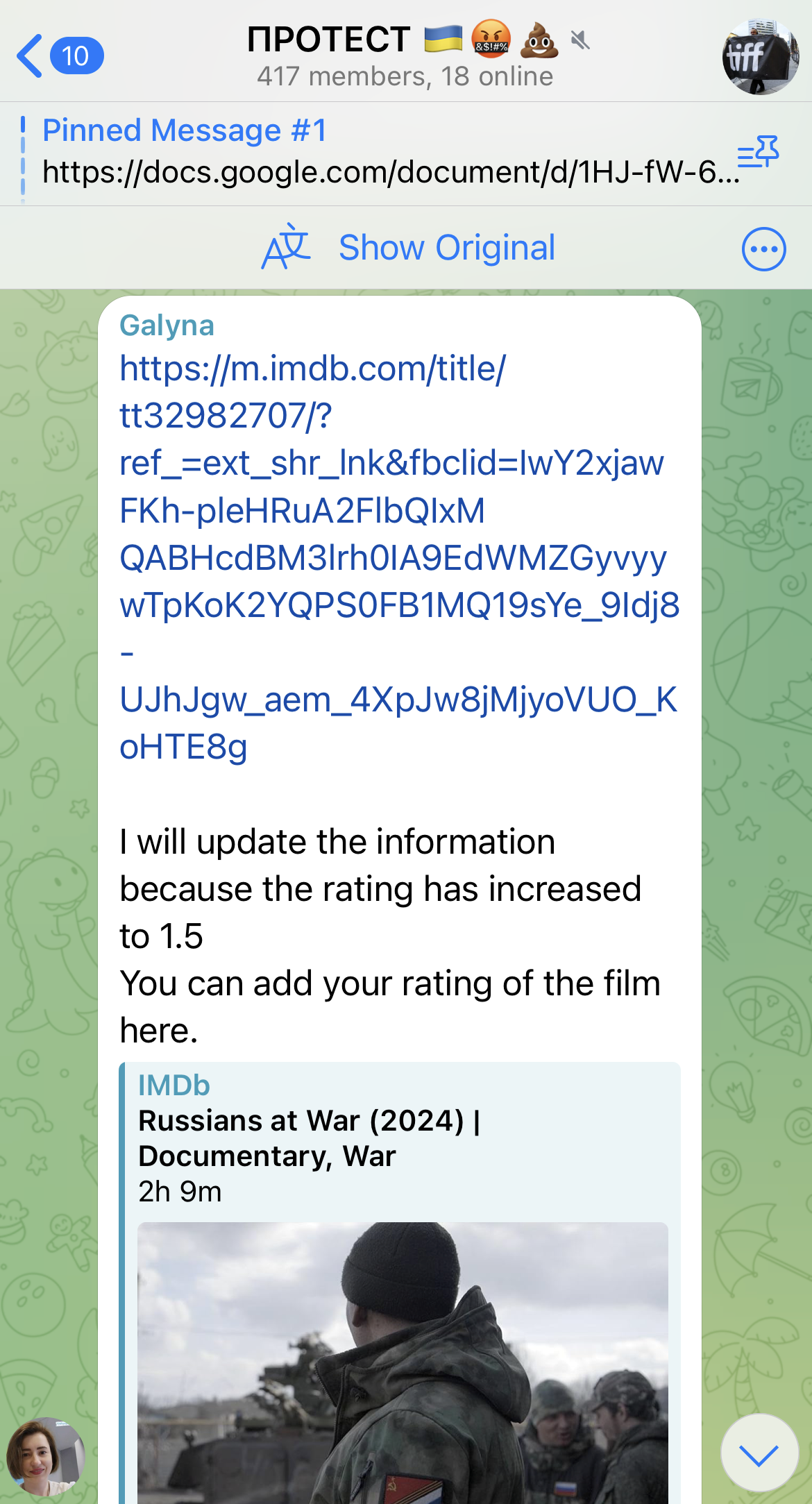
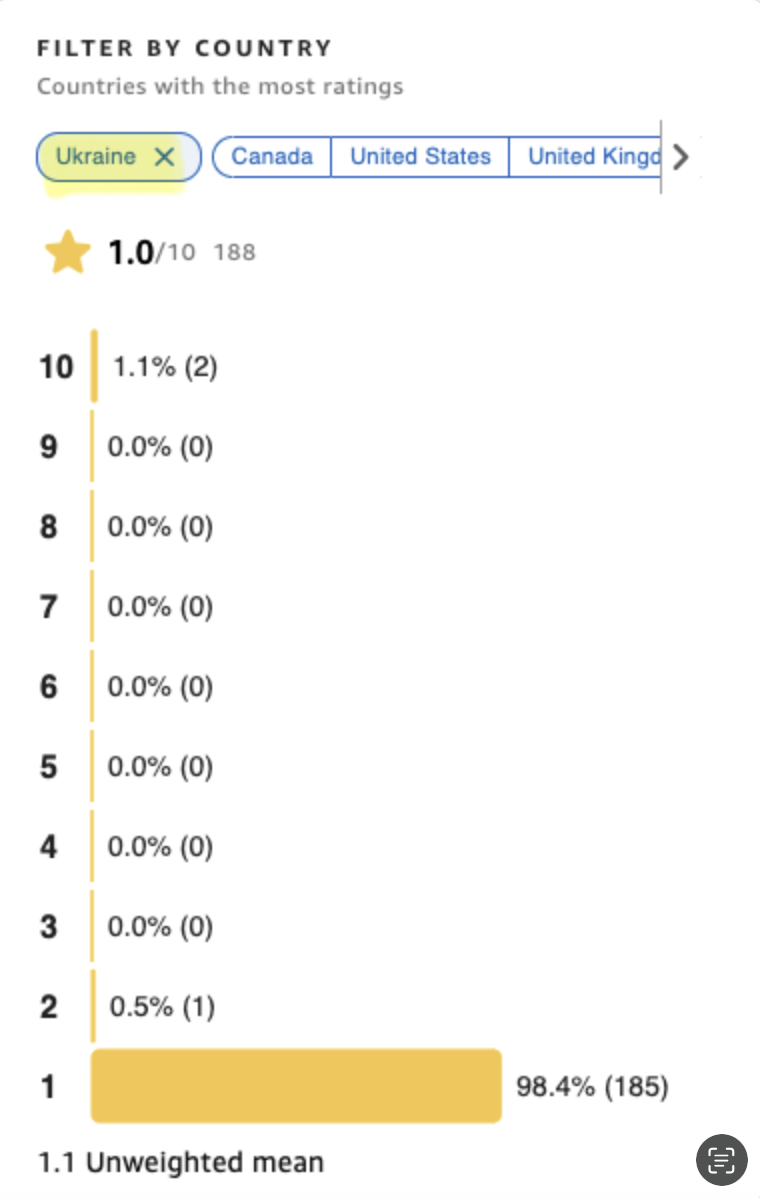
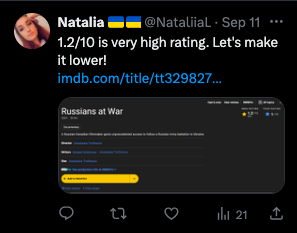
Ukrainian accounts lower the film’s rating on IMDb.
(None of them have seen the film.)
An overview of the Ukrainian press.
(None of them have seen the film.)
‘’One cannot be so tolerant towards Russians and think of their feelings’, – an interview with Ukrainian producer Anna Palenchyuk who had fought for the cancellation of Russians at War in Canada’
– Vot Tak
‘Putin’s orcs get their chance’
– Exler
‘How a film humanizes the Russian soldiers: in Venice they showed Russians at War’
– GlavnoeinUA
A Ukrainian government official speaks on Ukrainian TV about the ‘victory’ of getting the film off air on TVO and pushing for an investigation through Ukrainian-Canadian partners – in Canada.
At Ukraine’s request, the Ukrainian Canadian Congress (UCC) files a complaint with Canadian security services, to investigate me and Russians at War. The complaint is read at a Parliamentary hearing on ‘creeping Russian influence.’ (!)
However, the UCC’s complaint is ignored by the RCMP and other state institutions.
A review by cinema bloggers.
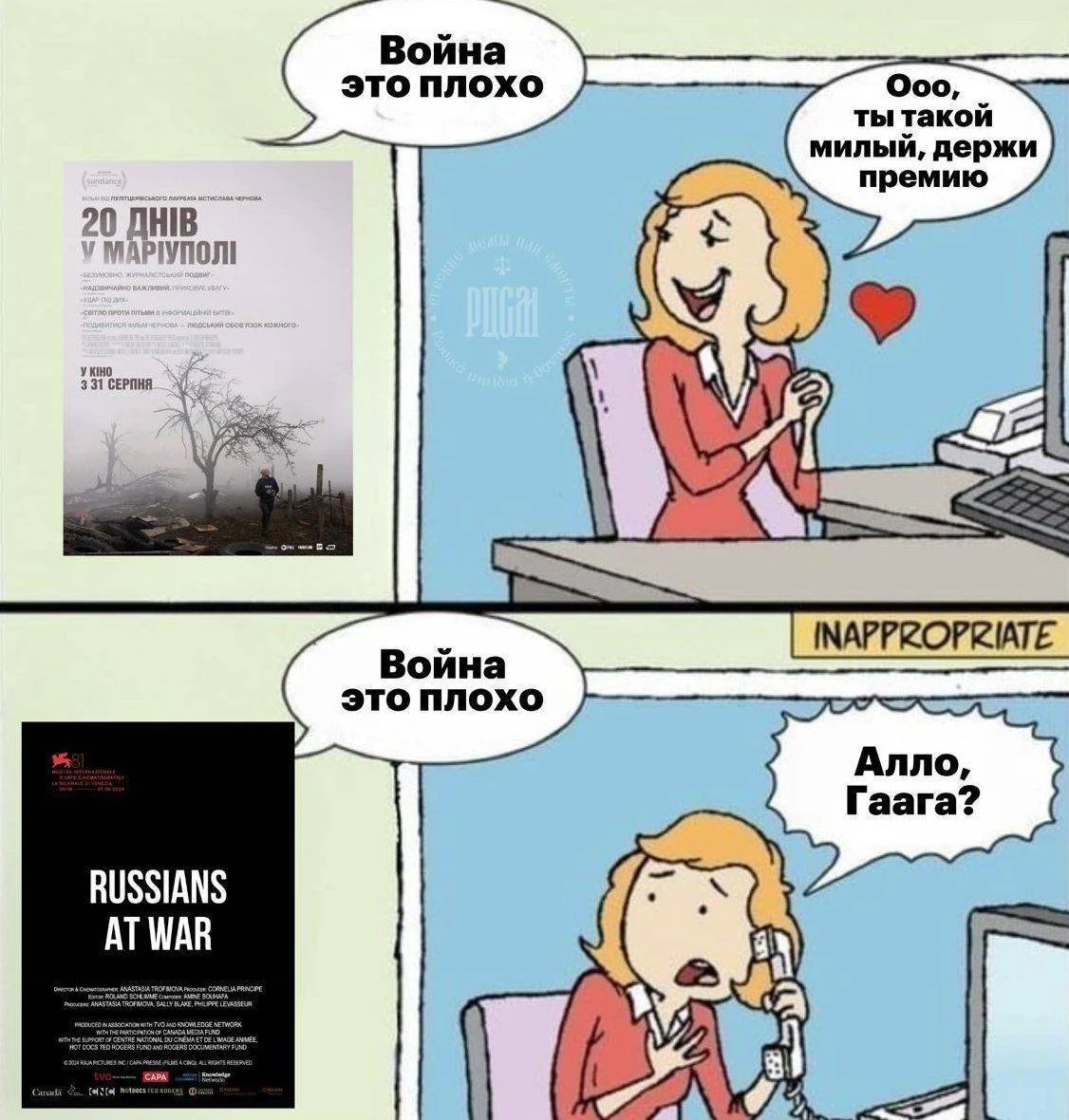
We’re a meme!
20 Days in Mariupol:
– War is bad.
– Aw, you’re so sweet, here’s an award.
Russians at War:
– War is bad.
– Hello, the Hague?
IDFA, LUNENBURG, WINDSOR, ZURICH, ATHENS, MUMBAI
Despite the emotional rollercoaster, the screenings in Toronto were a huge success. Seems like things are easing up… But not for long.
IDFA notifies us that it’s revoking its invitation.
Minus one.
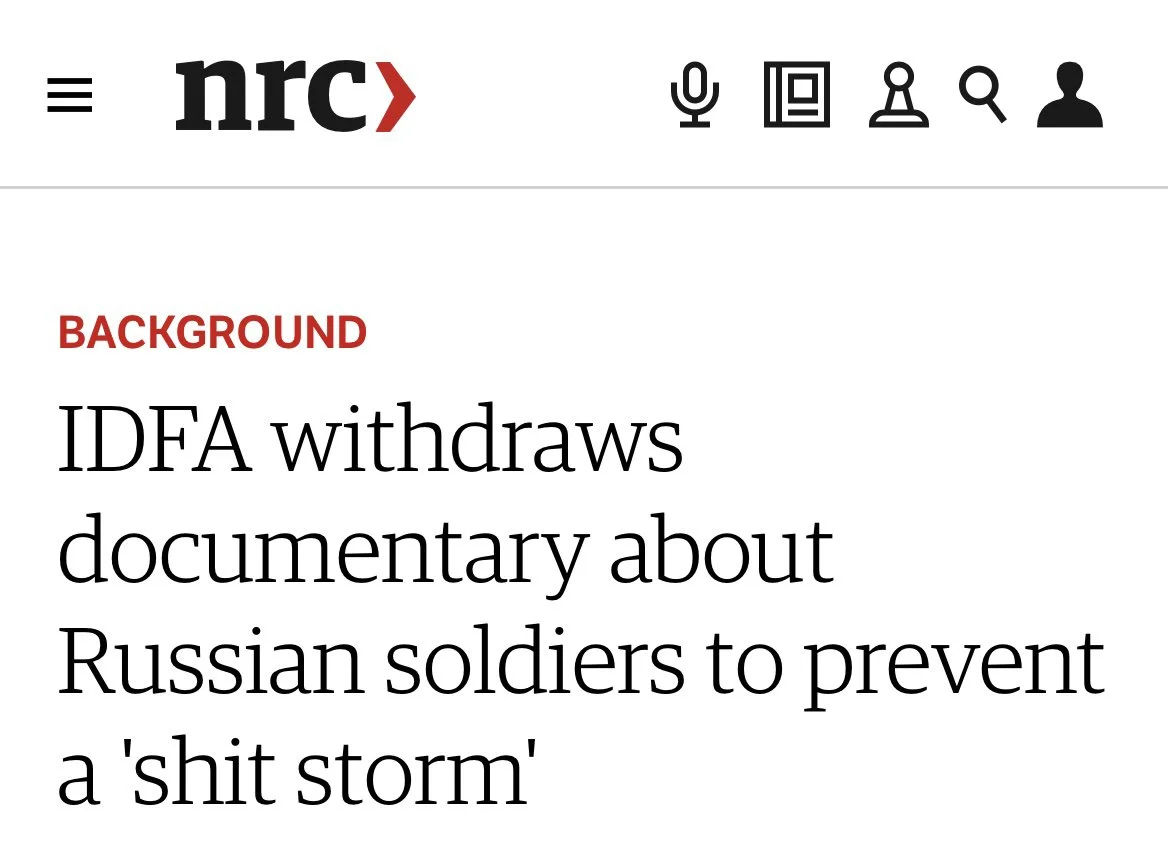
Threats and pressure begin at upcoming film festivals. It’s the same playbook as with TIFF: through Ukrainian political leaders, local interest groups and an online defamation campaign.
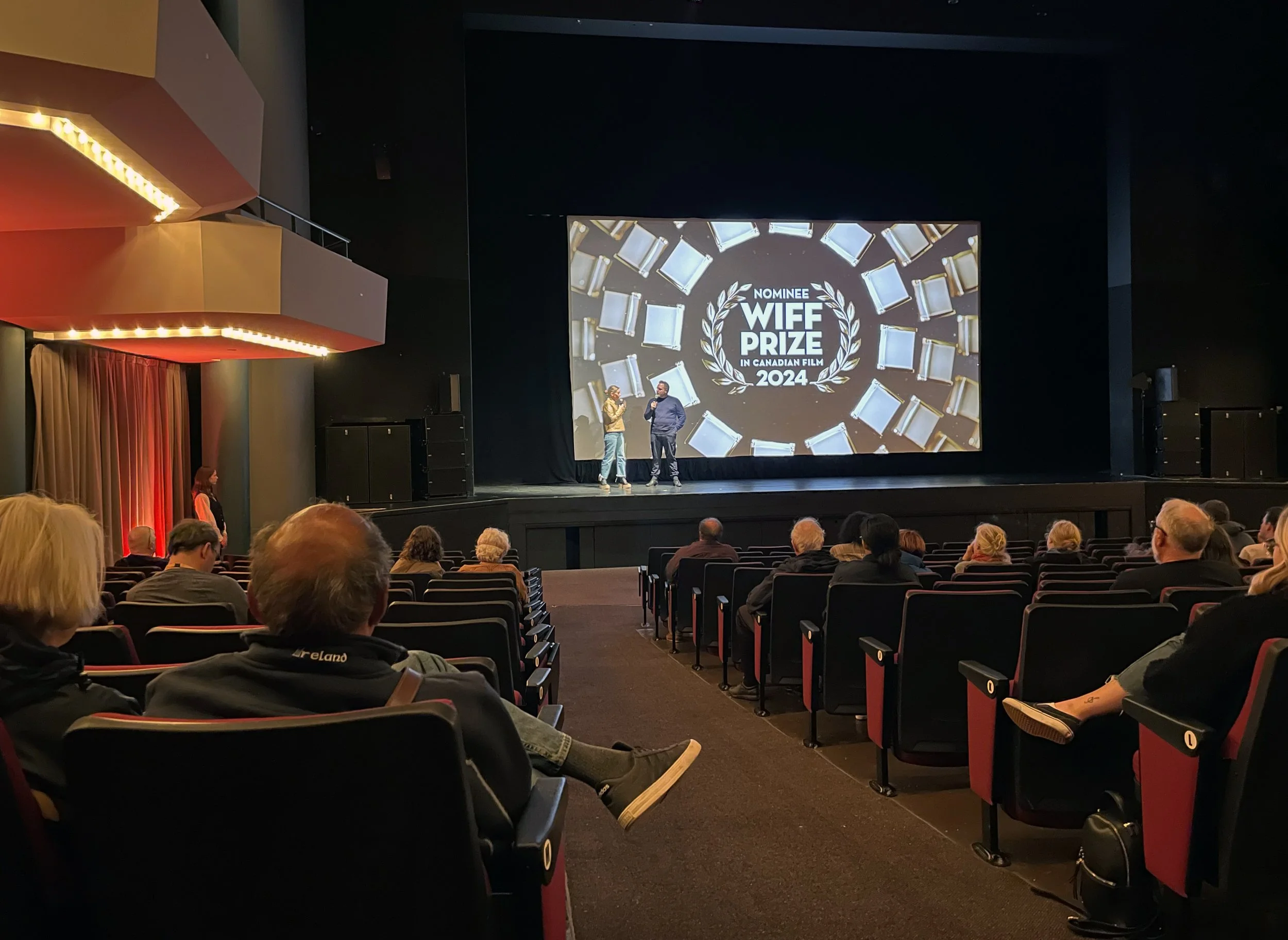
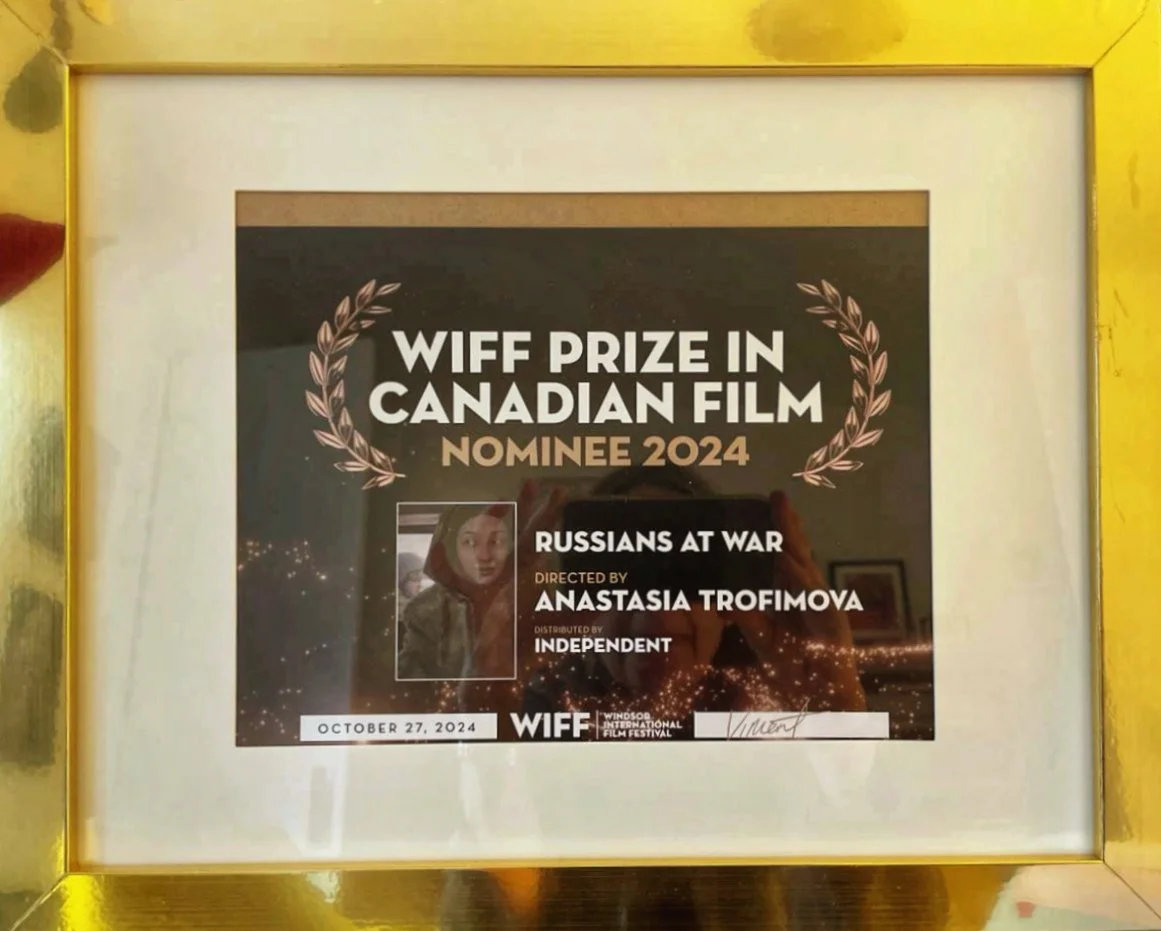
Despite the threats and pressure, screenings at the Windsor International Film Festival (WIFF) and in Lunenburg go very well.
Plus two and 3/3 Canadian festivals!
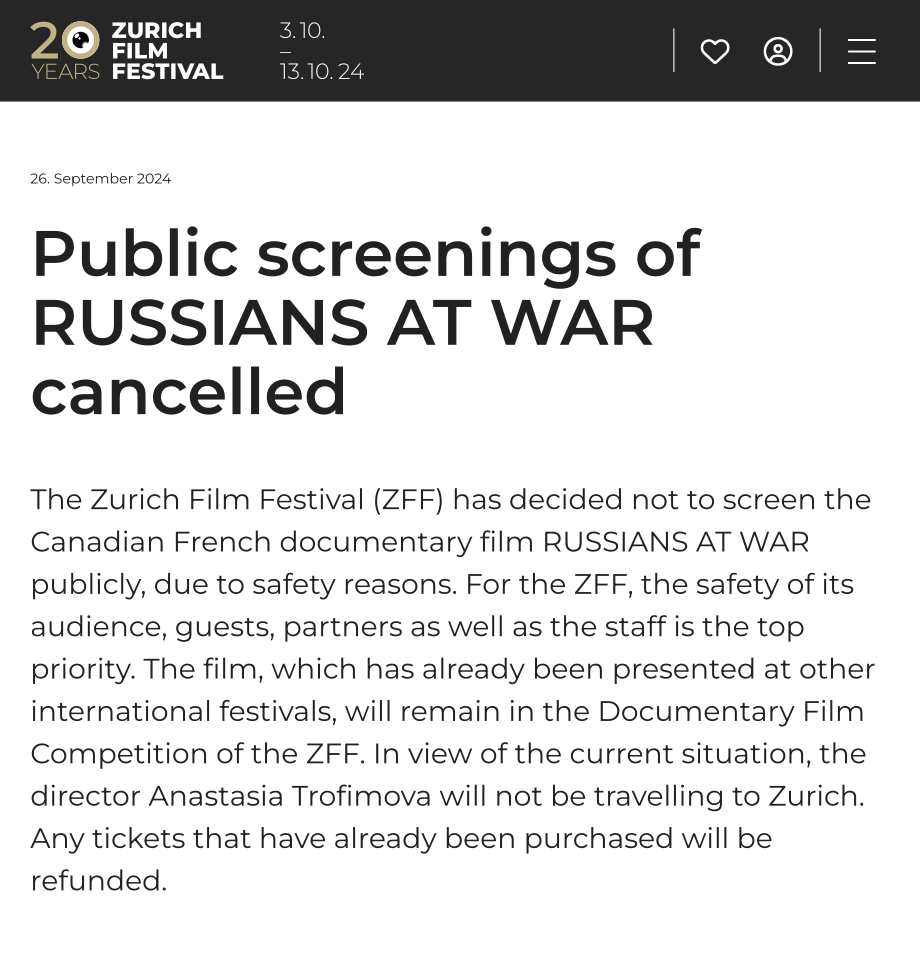
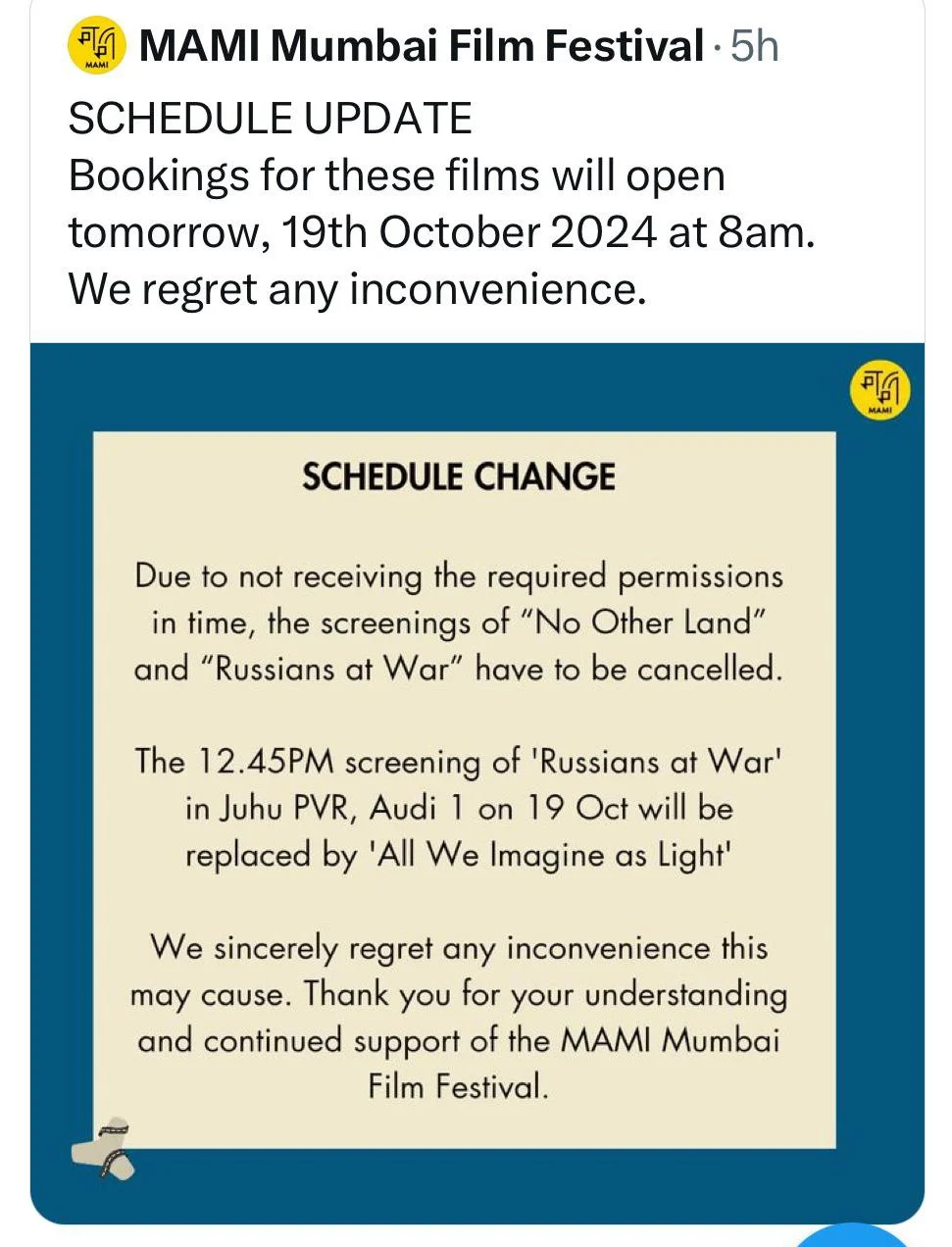
But threats from the Ukrainian diaspora prove too serious for Zurich (ZFF) and Athens (AIFF). Both festivals are forced to cancel screenings for security reasons, a first for both. So does the festival in Mumbai (MAMI), without an explanation – along with No Other Land (which would later win an Oscar).
Minus three.
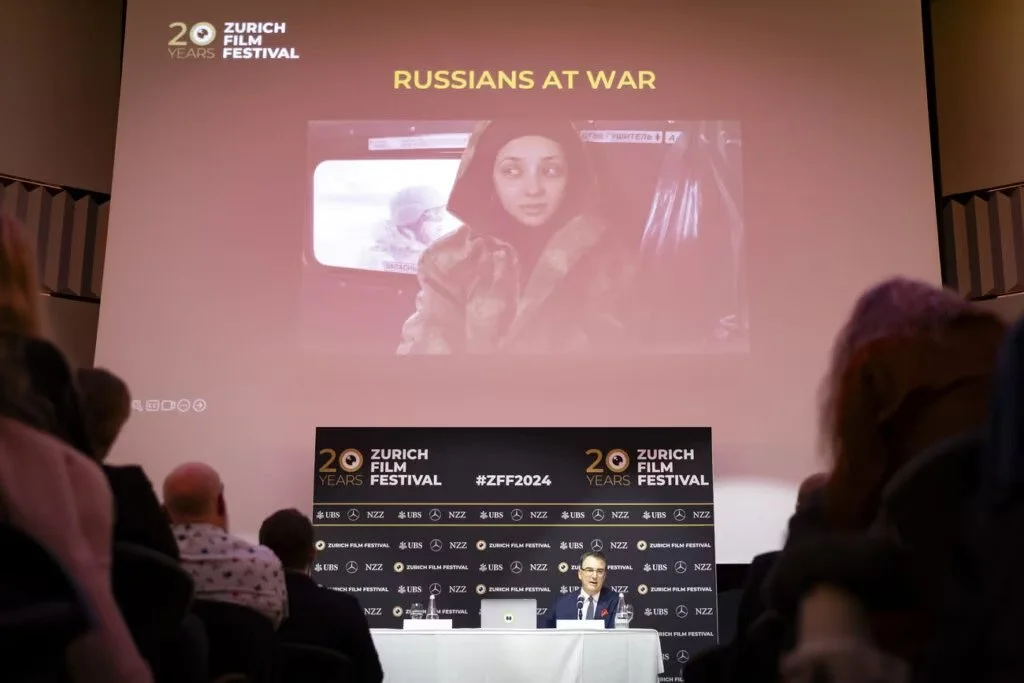
‘The Zurich Film Festival (ZFF) has decided not to screen the Canadian-French documentary Russians at War for security reasons.’
– Zurich
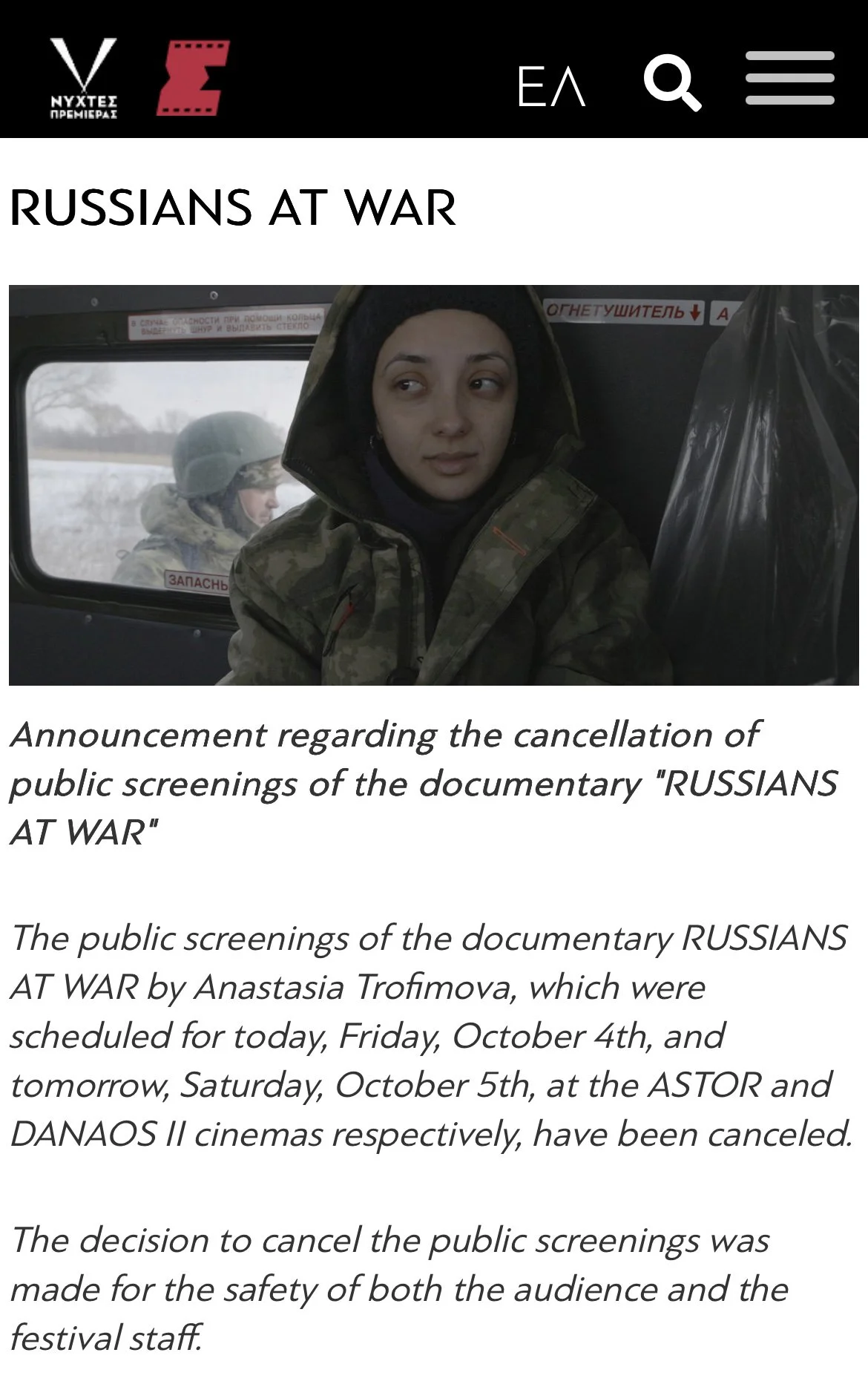
‘…The decision to cancel public screenings was made for the safety of both the audience and festival staff.’
– Athens
‘Due to the fact that the necessary permits were not obtained in time, the screenings of the films No Other Land and Russians at War have to be canceled.’
– Mumbai
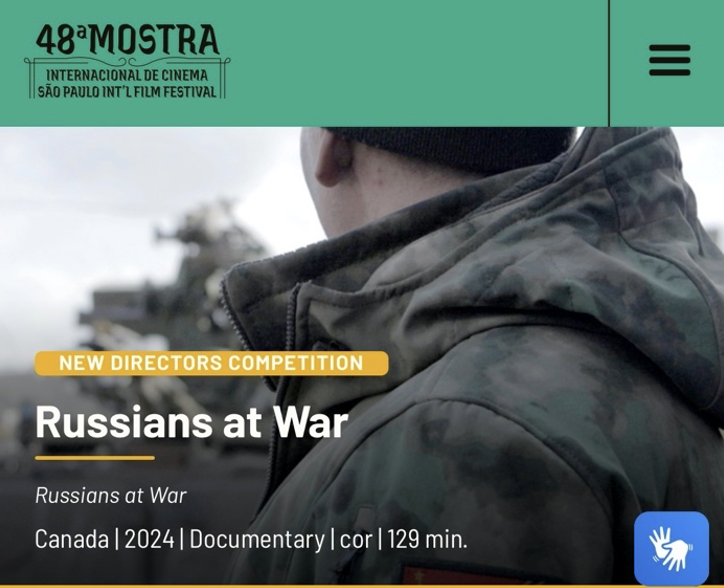
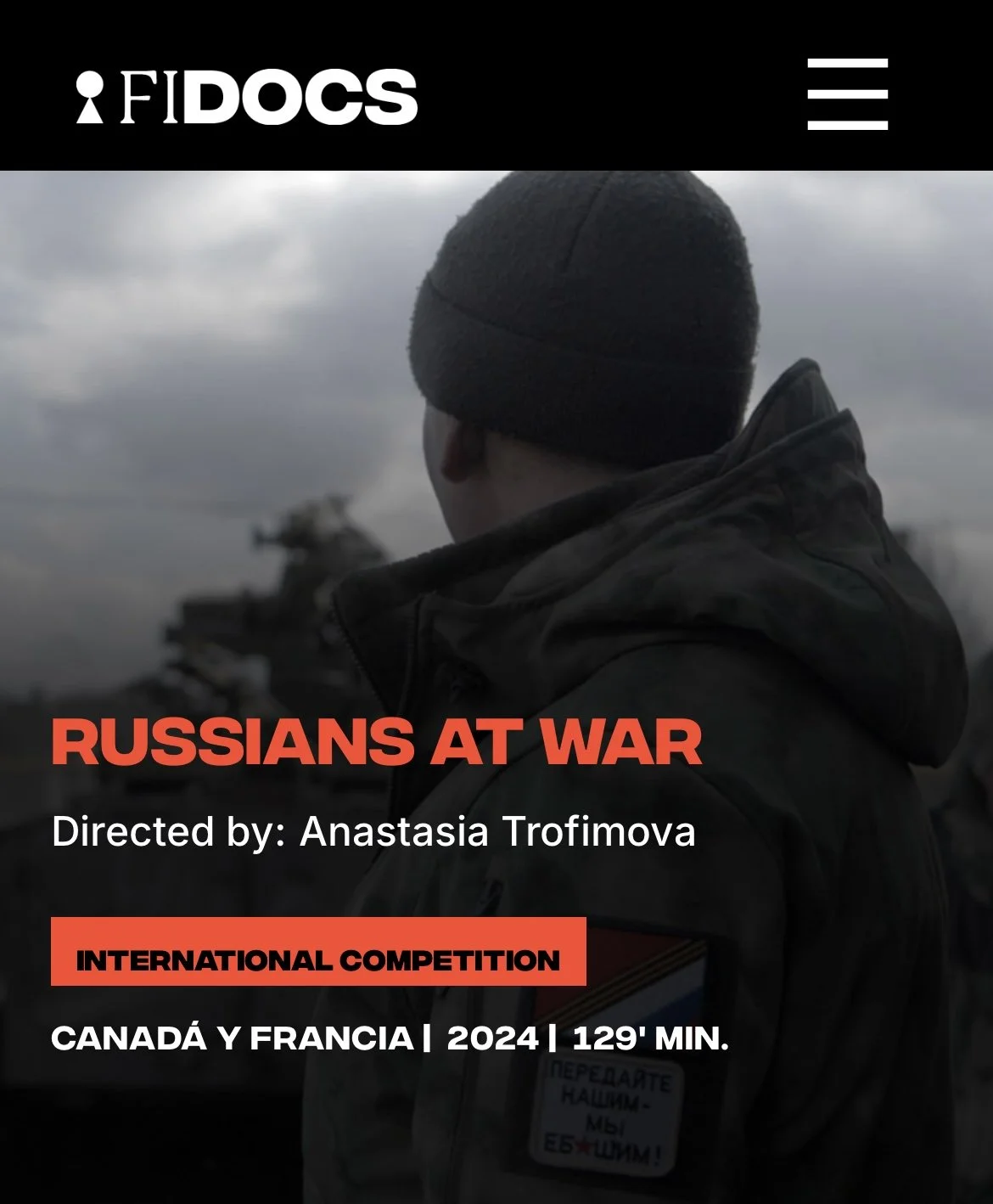
Screenings at Sao Paolo International Film Festival (Brazil) and Fidocs (Chile) go through without a hitch!
Plus two.
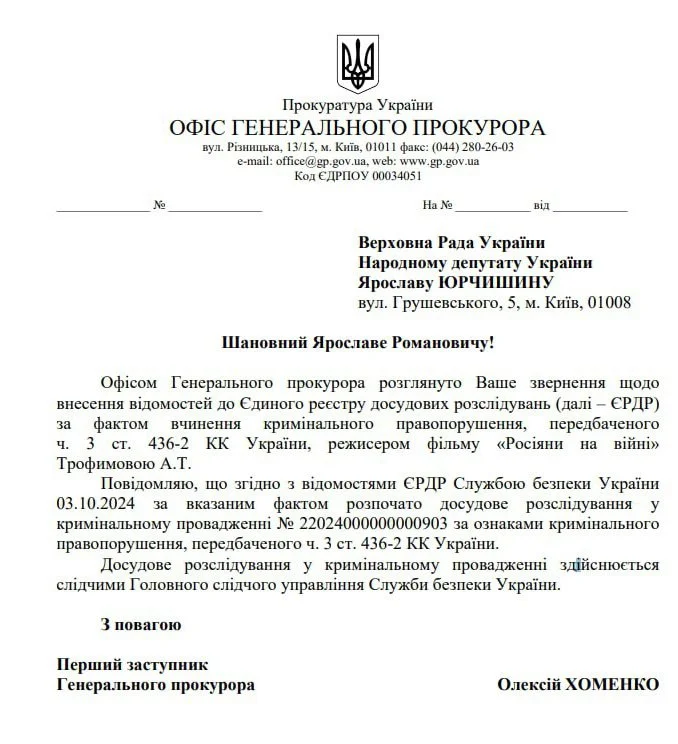
Two criminal cases are initiated against me in Ukraine, with 5-8 years sentences, following a complaint by Yaroslav Zhurchyshyn, Chairman of the Committee on the Freedom of Speech.
For a film he hasn’t seen.
Meanwhile, the reviews keep coming in…
‘Not dissimilar to Erich Maria Remarque’s novel about German soldiers in the Great War, Trofimova’s film gives a welcome perspective at the level of the individual soldier.’
– RogerEbert.com
‘Russians at War unveils the complex realities of life of a motley group of Russian soldiers amidst existential compulsions, ideological tensions, and unravelling war, revealing the humanity often obscured by political narratives. As if in the footsteps of John Steinbeck’s Russian Journal, alongside renowned war photographer Robert Capa, an incisive eyewitness account of the Soviet Union during the nascent Cold War.’
– The Wire
‘At its core, Russians at War is an anti-war film… Trofimova doesn't shy away from confronting them about accusations of atrocities committed against civilians, forcing the audience to wrestle with these difficult, uncomfortable moments. The backlash against the film – claims that it is ‘convenient for the Kremlin’ or that it downplays war crimes – feel misplaced when compared to the film's clear anti-war stance… Even before its official release, Russians at War has become one of the most misrepresented films in recent memory. Much of the outrage stems not from the film itself, but from assumptions about its content.’
– Original Cin
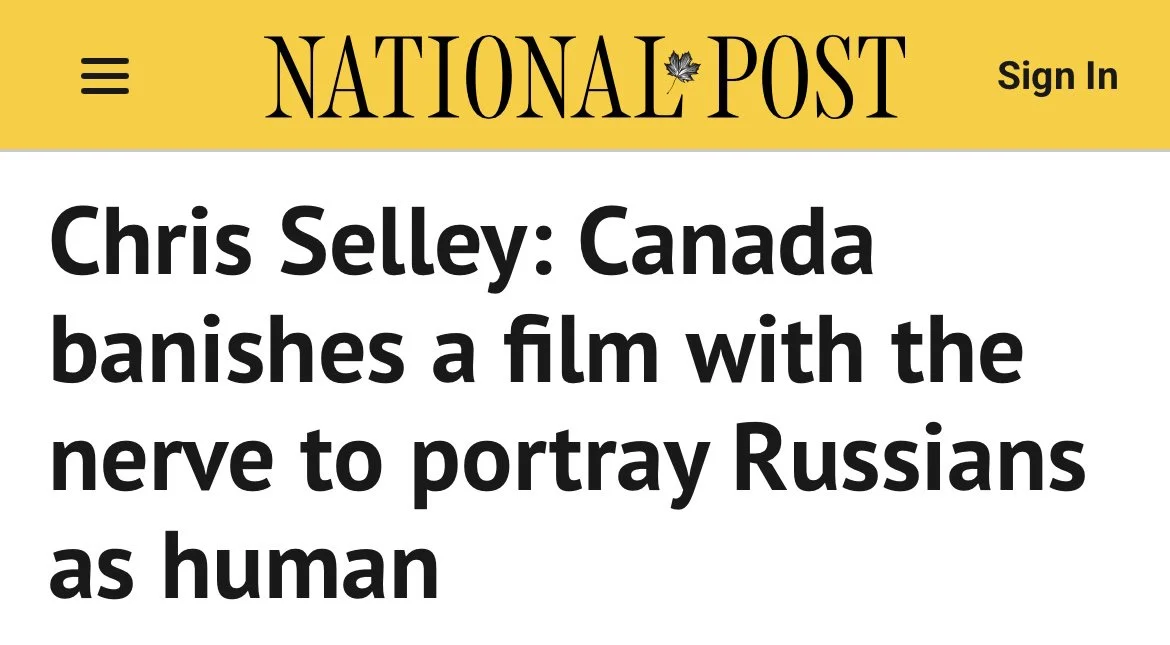
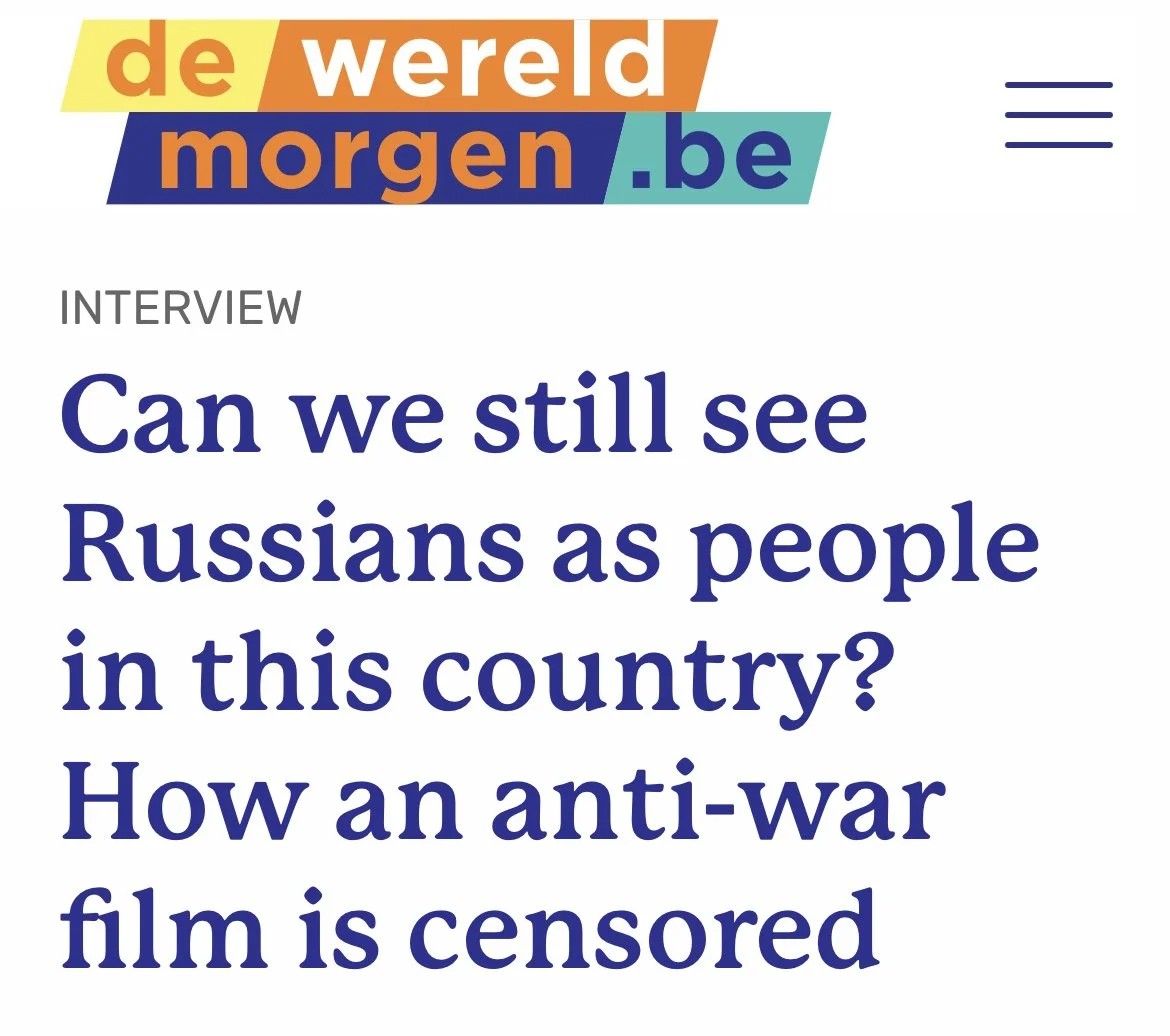
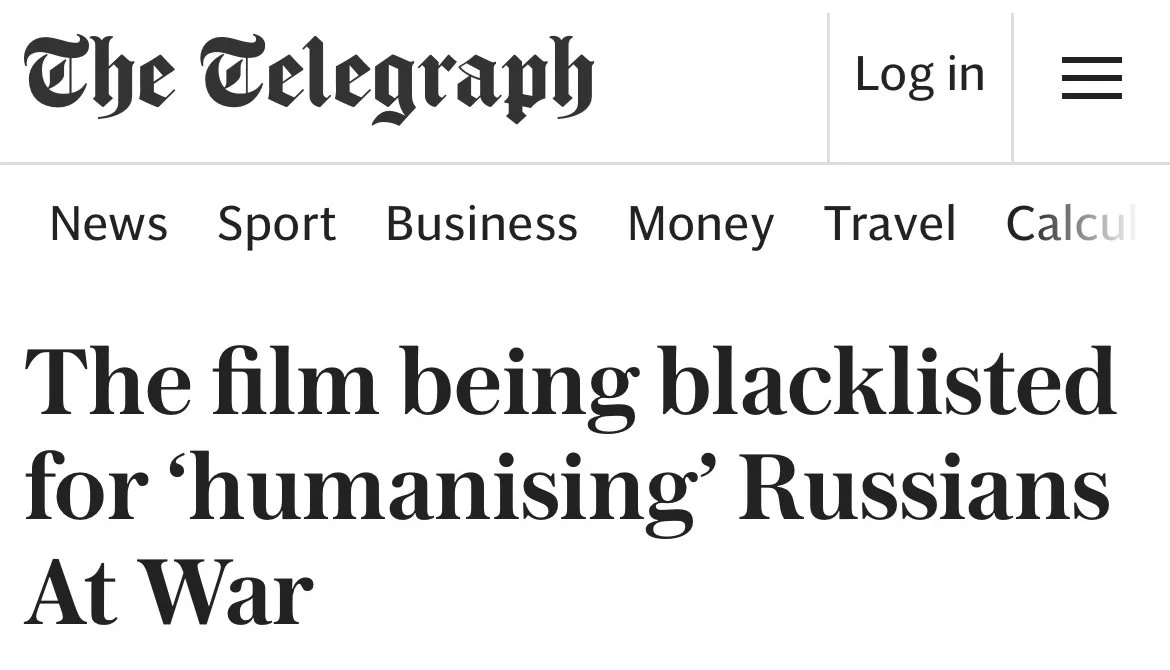
The debate around ‘humanization’ and Russians at War keeps growing.
ANTENNA, BUDAPEST
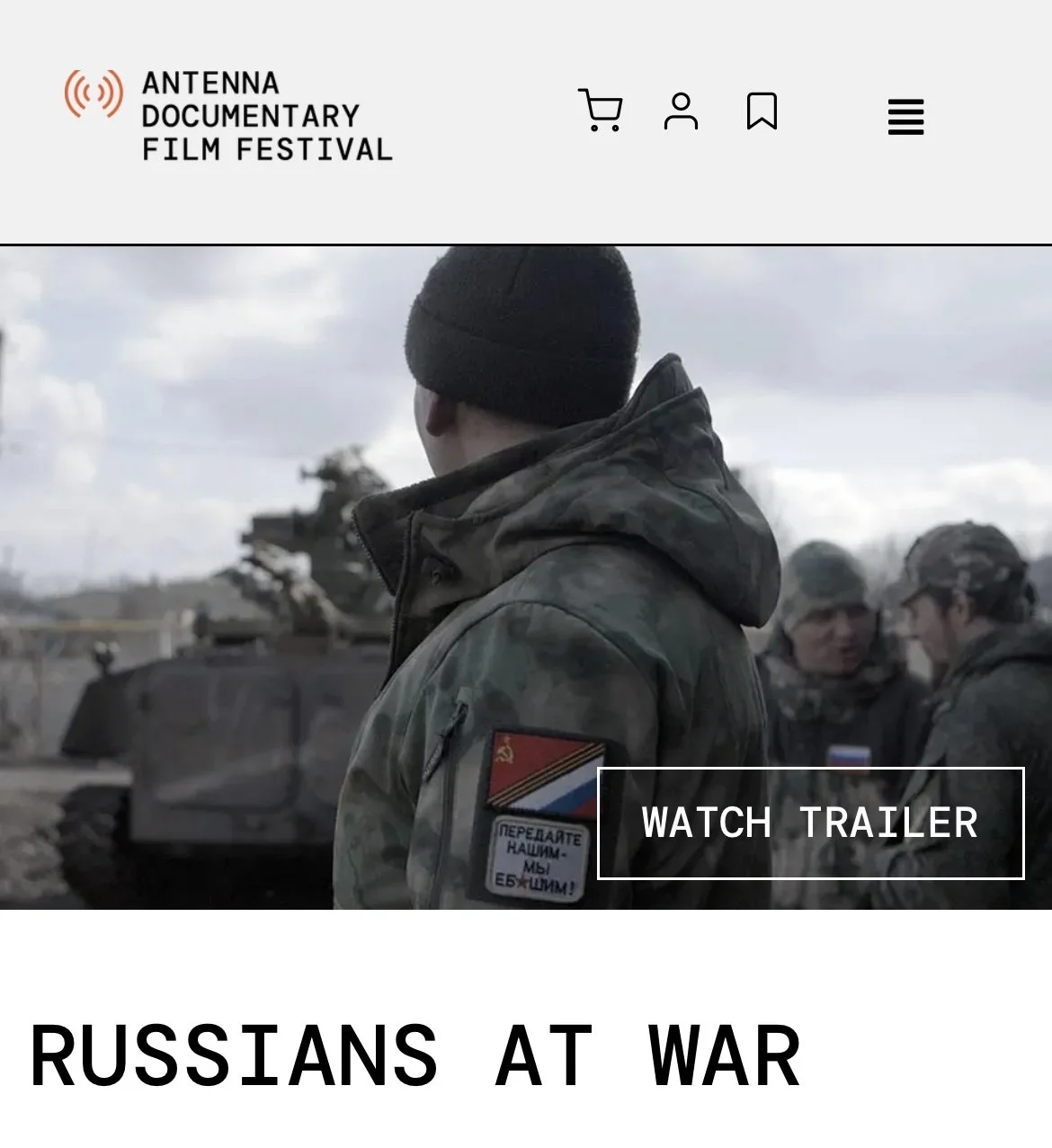
Australia! After six great screenings (Venice, Toronto, Lunenburg, Windsor, São Paulo, Santiago) and three canceled screenings (Zurich, Athens, Mumbai), Russians at War comes to Sydney (Antenna Documentary Film Festival).
Ukrainian diplomats and activists demand for the festival and the Australian Ministry of Culture to cancel screenings.
The festival stands firm. The two screenings at the Antenna Film Festival are sold out!
Plus one.
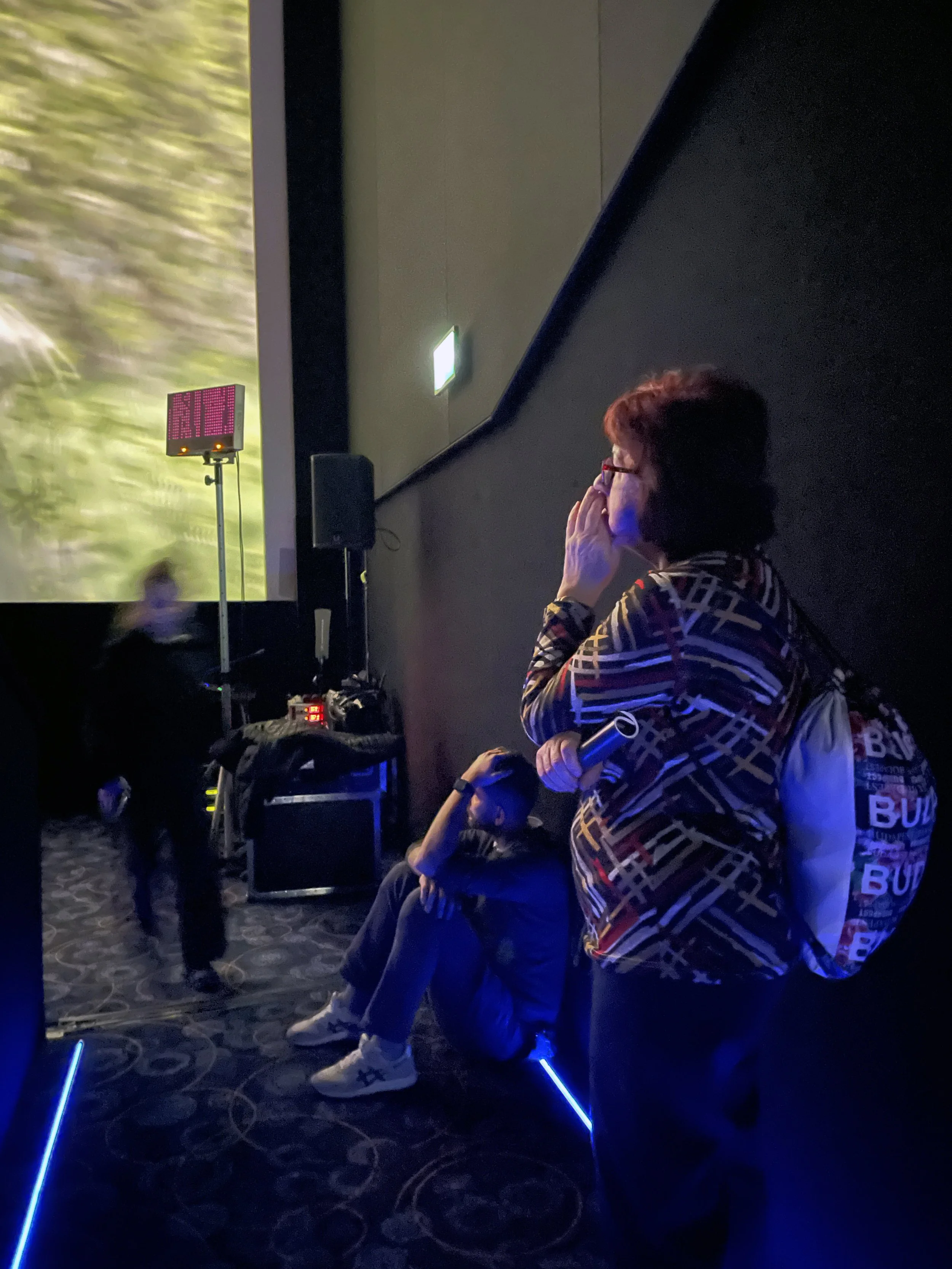
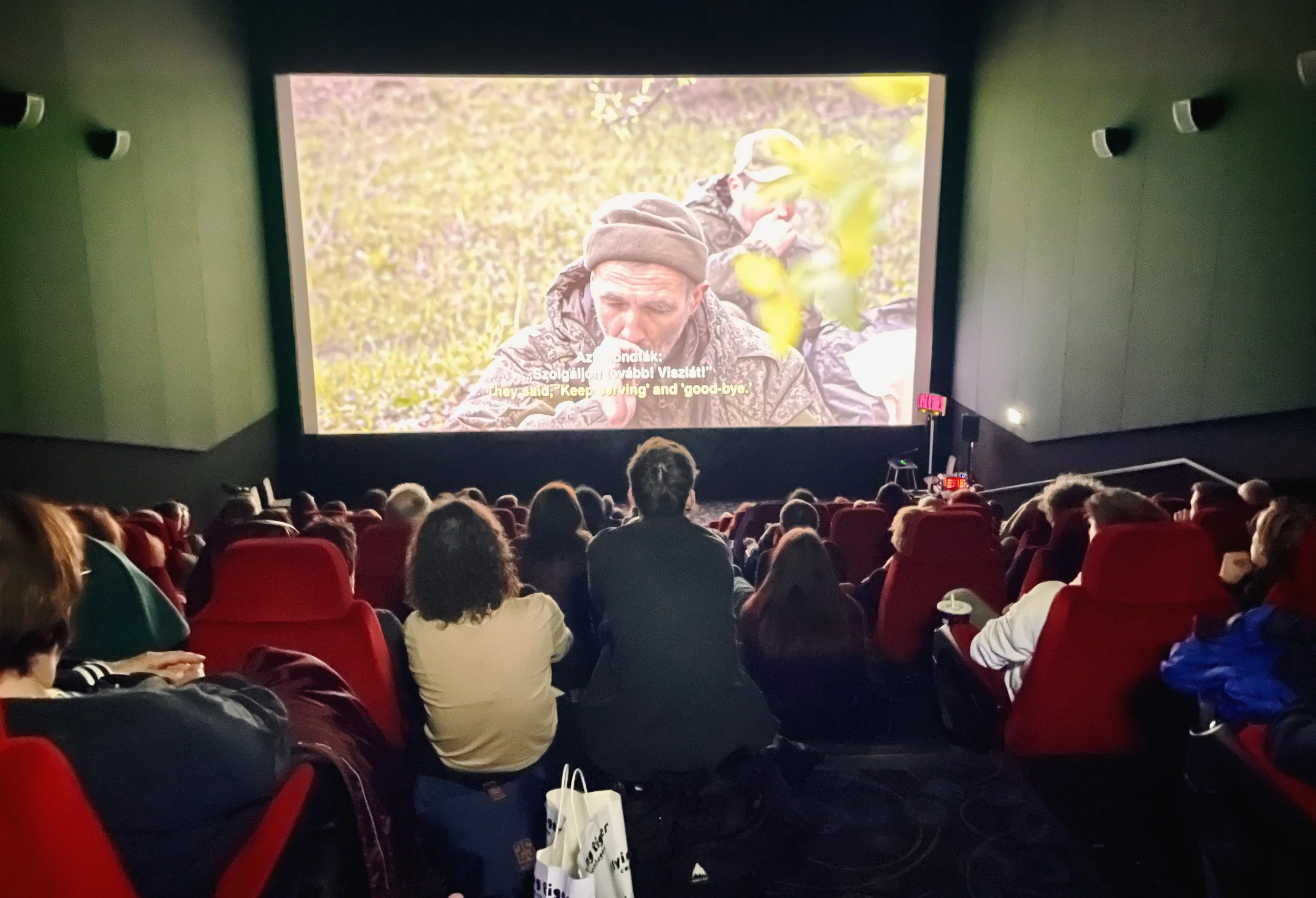
Hungary! All 8 screenings at the Budapest International Documentary Festival (BIDF) are sold out!
Plus one.
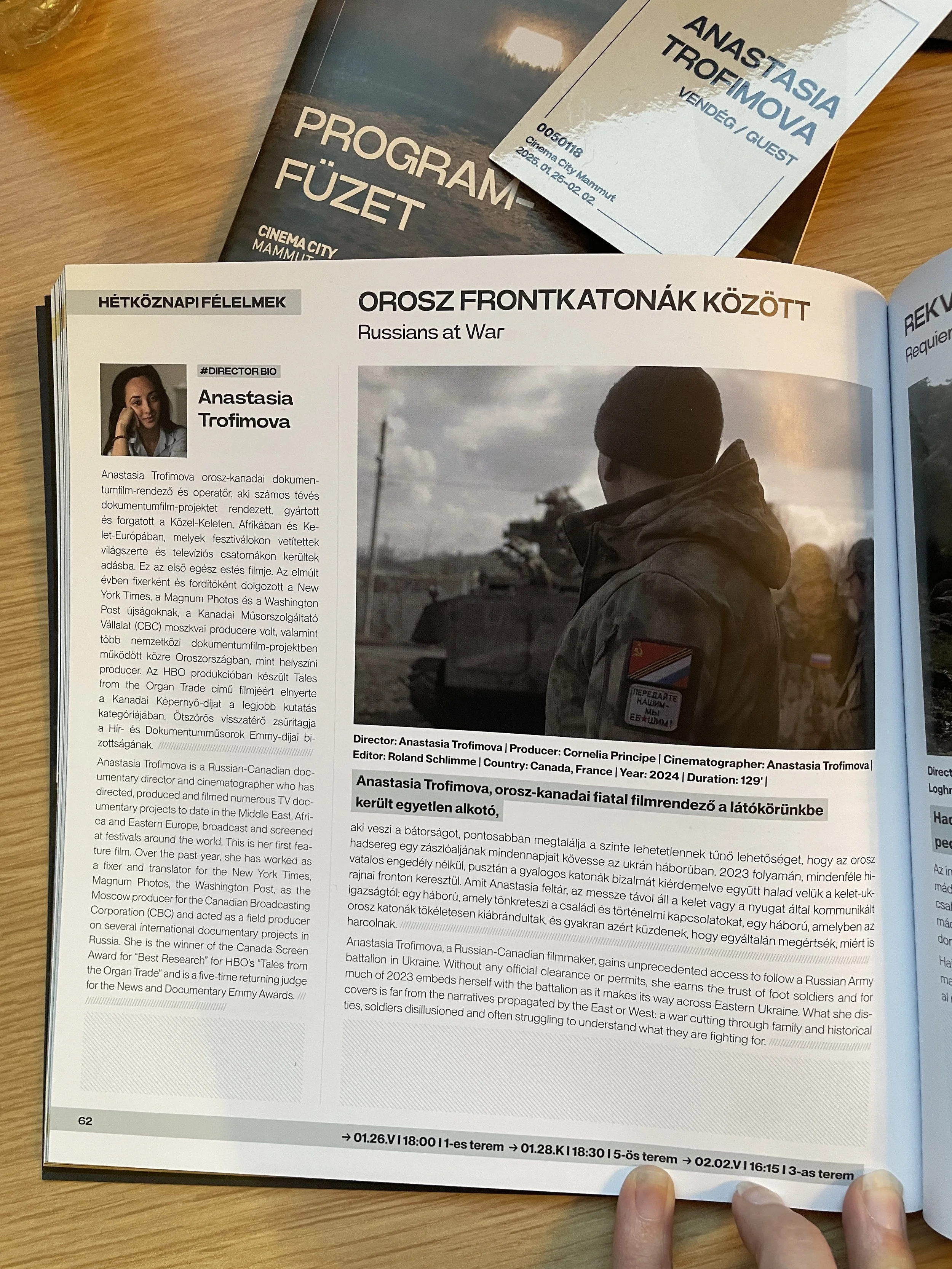
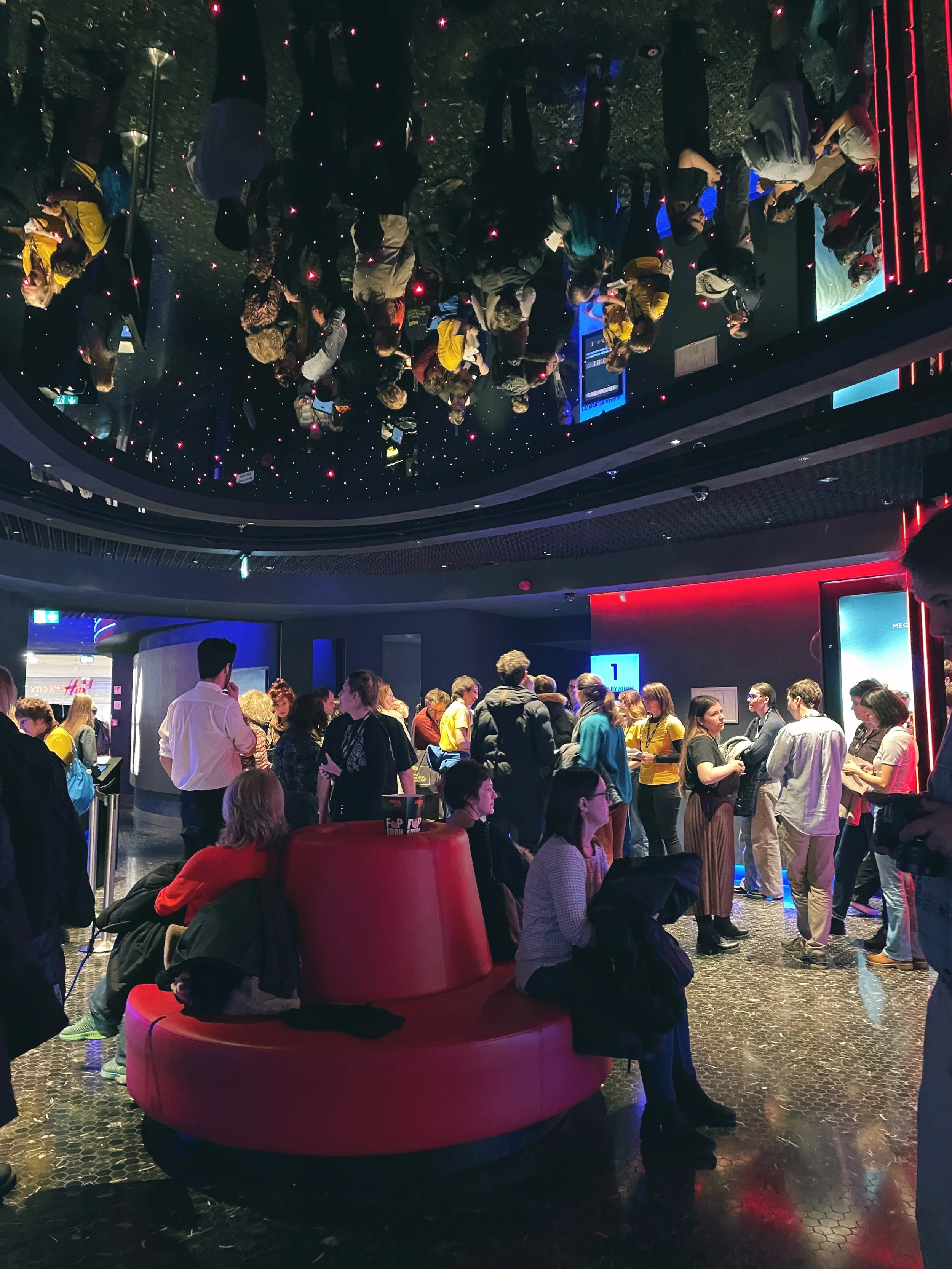
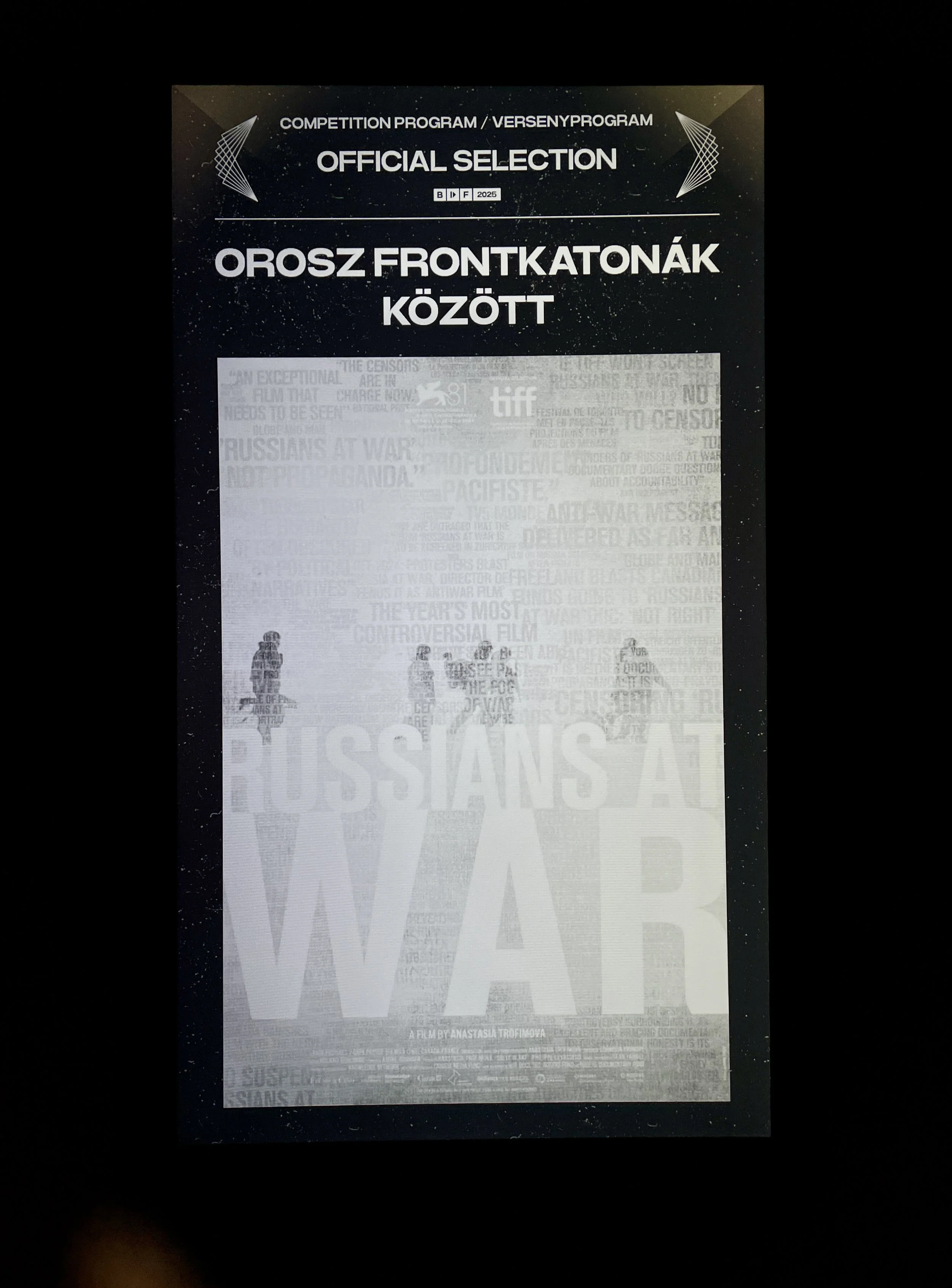
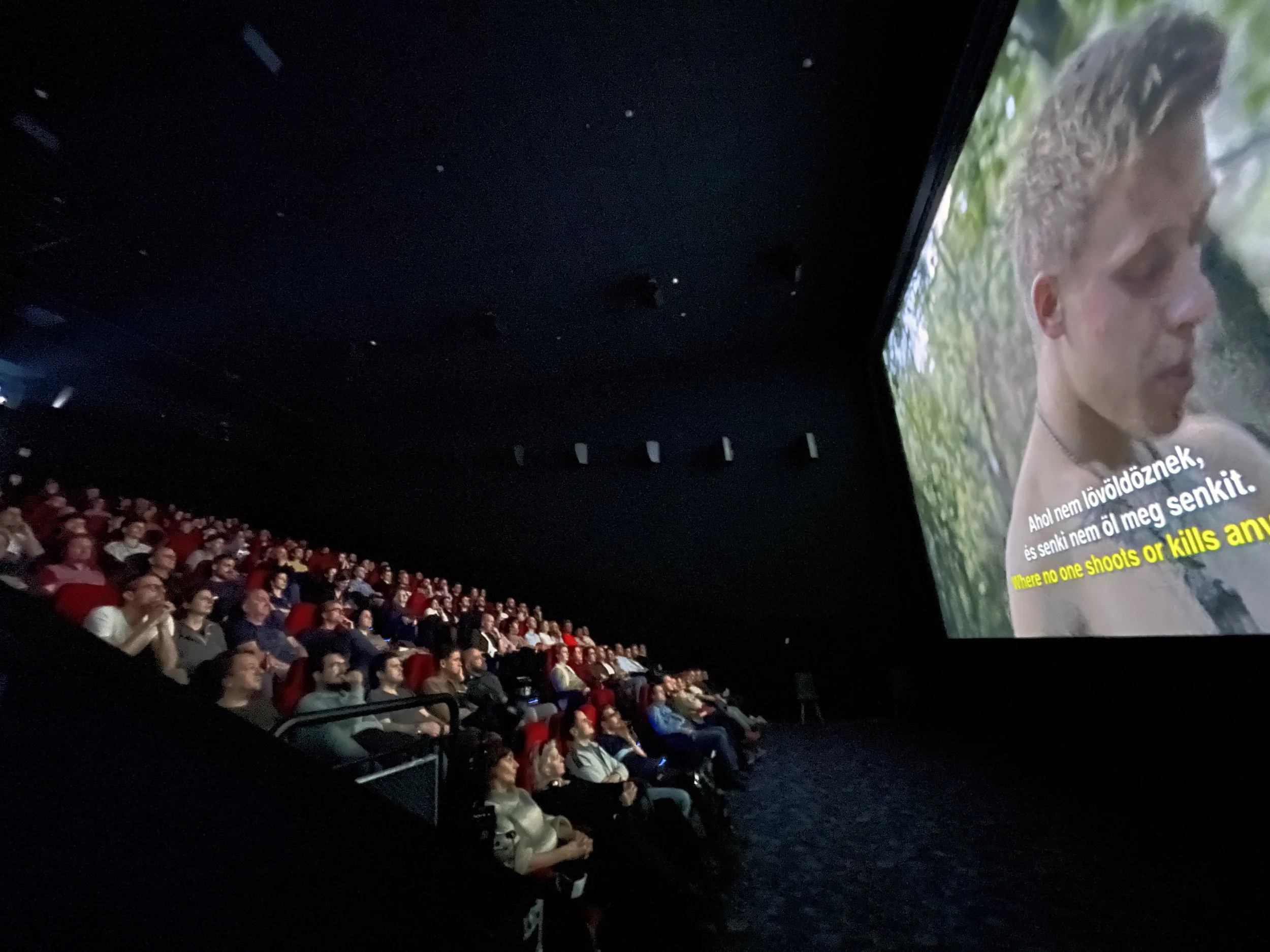
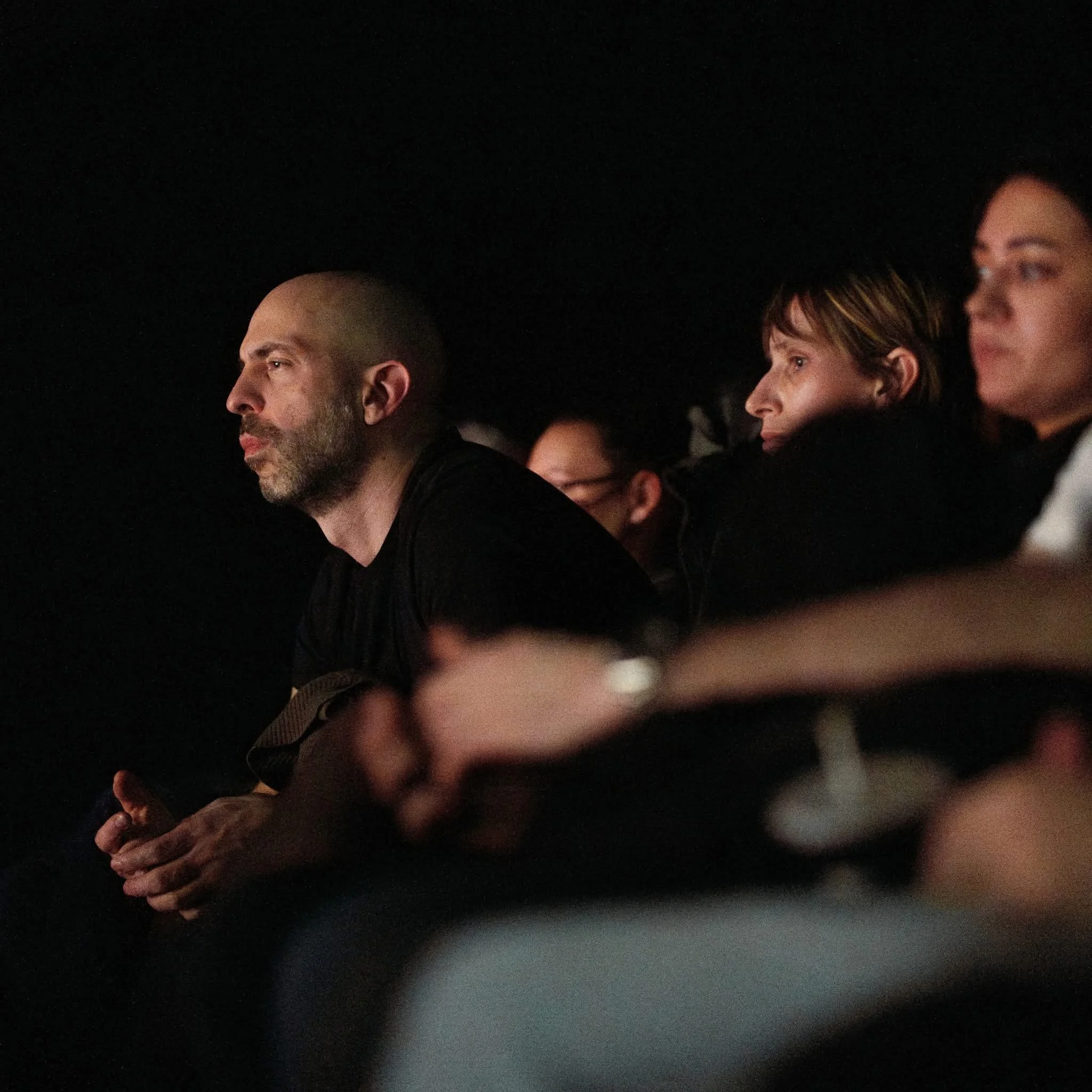
Demand is so high that BIDF schedules 2 additional screenings.
People sit on the steps and stand in the aisles just to watch Russians at War. It’s unbelievable.
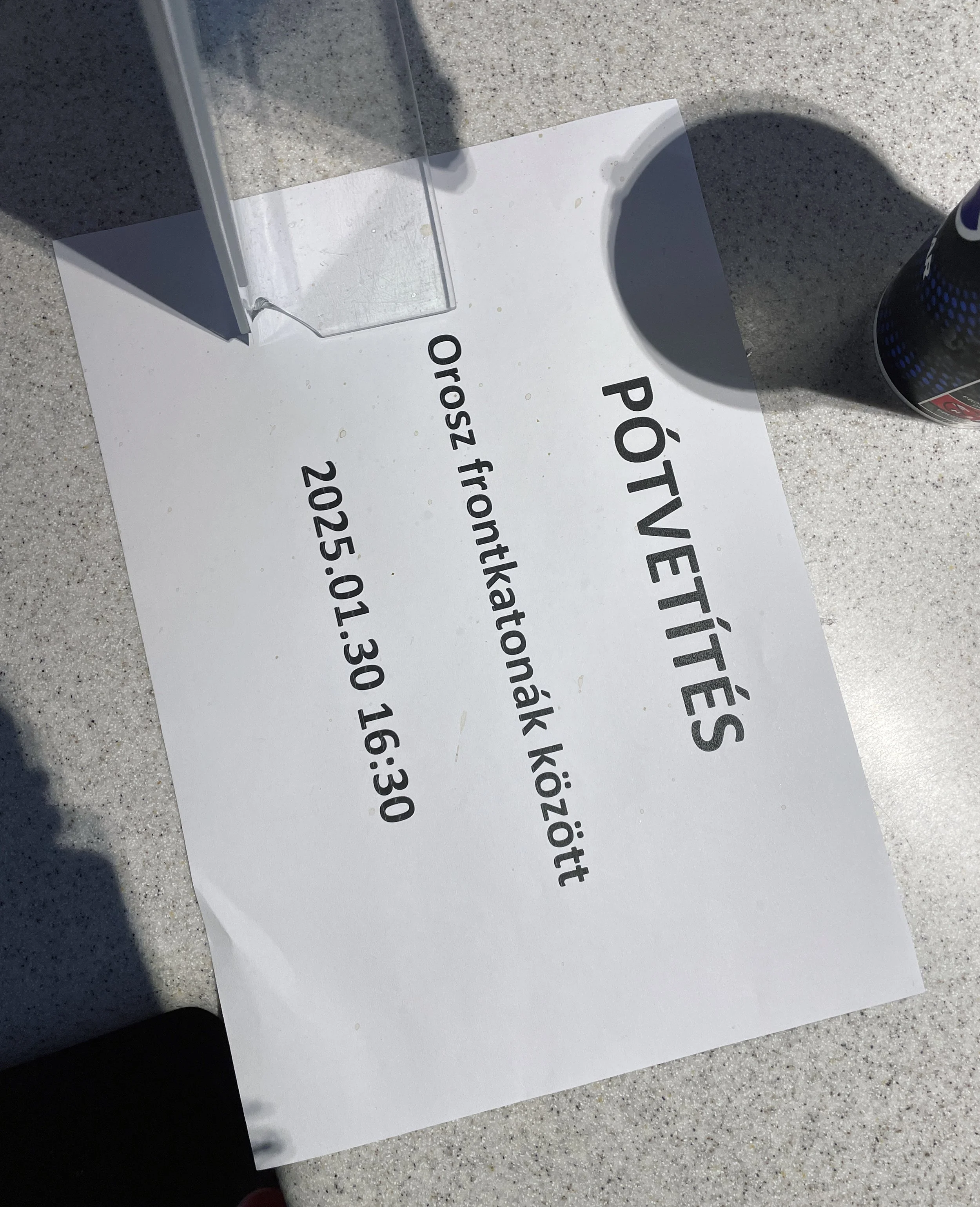
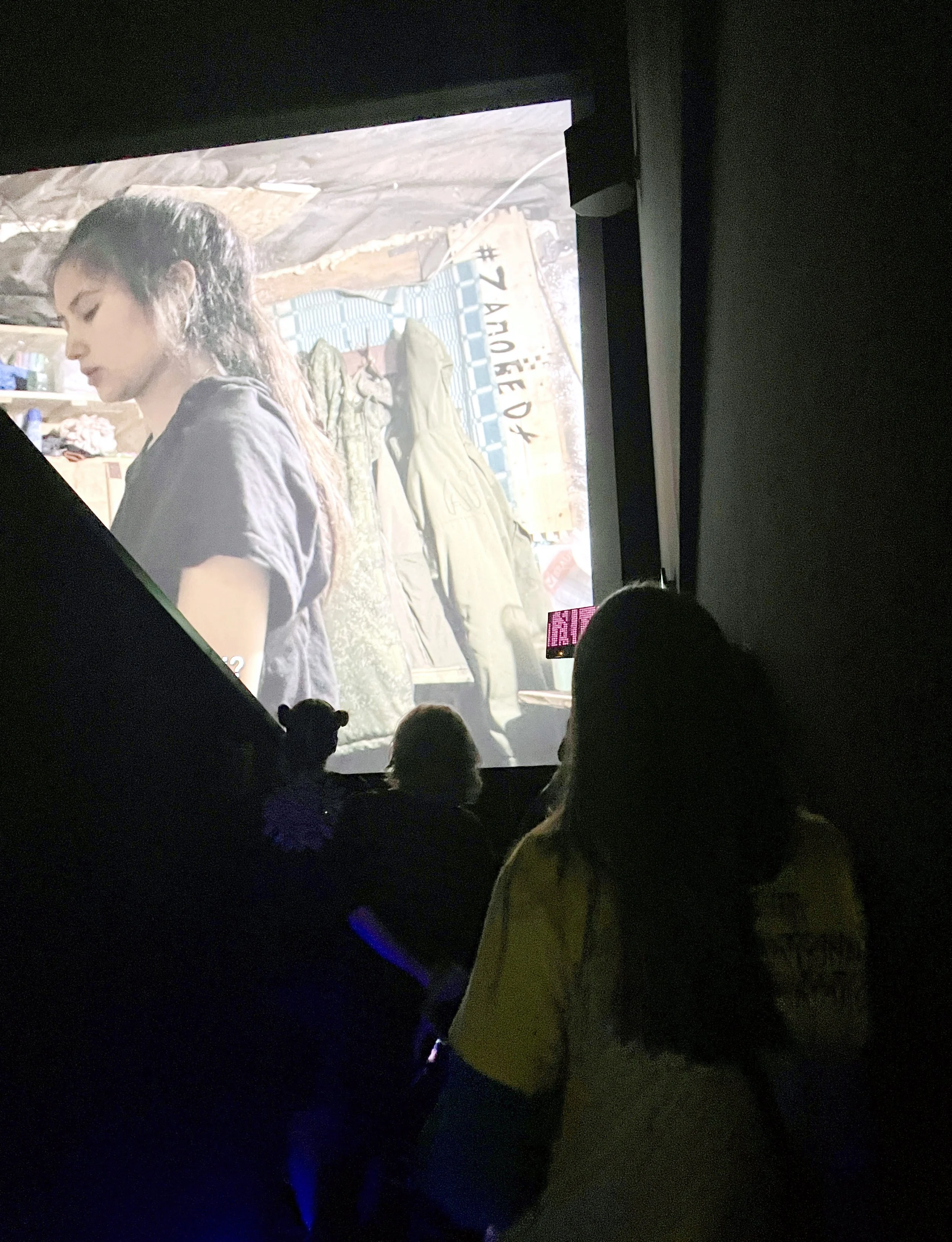
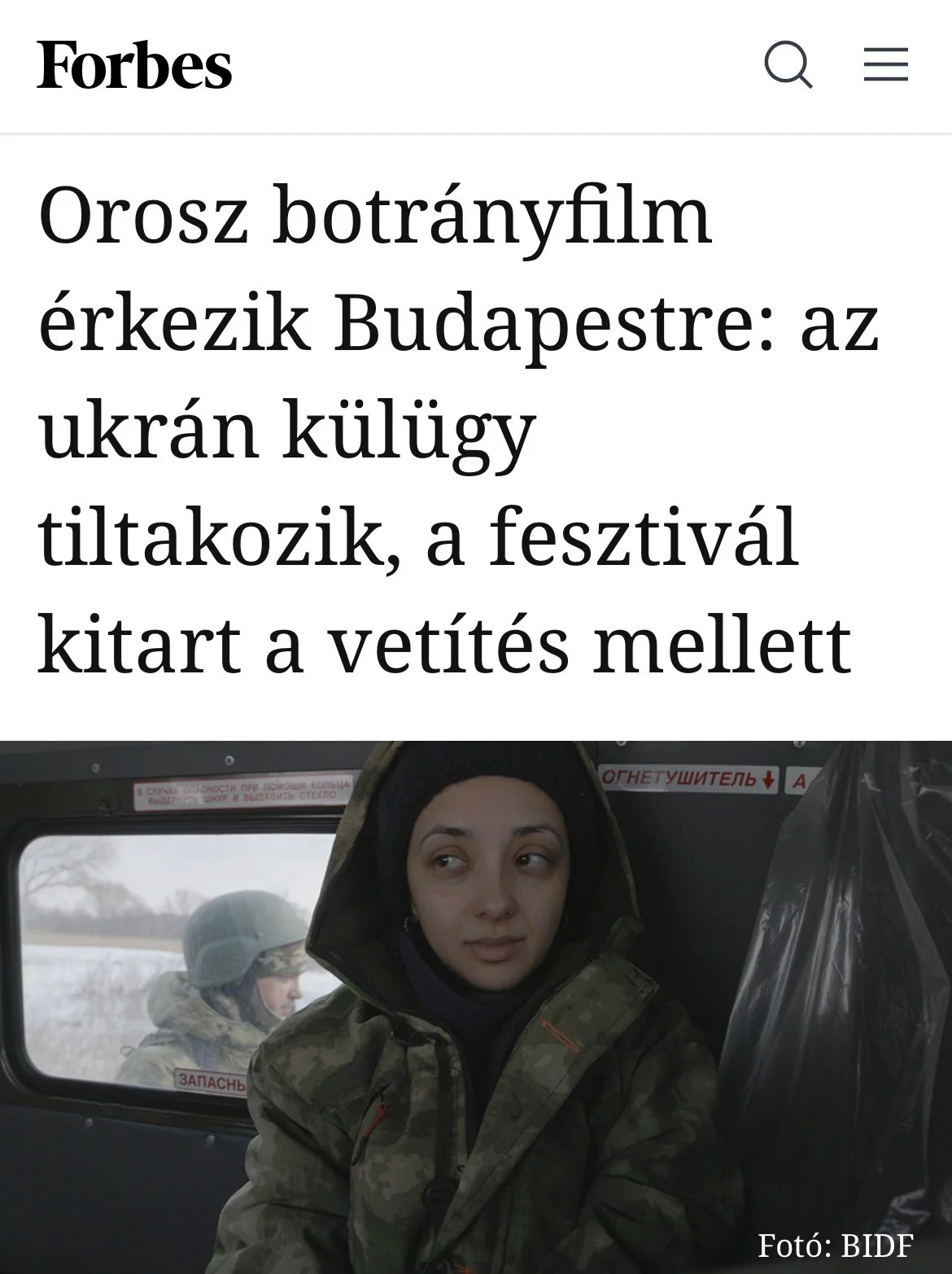
An overview of the Hungarian press.
Russians at War makes both ‘Best Films of 2024’ and ‘Worst Moments of 2024’ in Canada.
‘Armchair critics, including prominent politicians, claimed it was piece of Russian propaganda. But many of those who saw it dismissed those allegations, instead praising the film for its detailed insights and humanity. In his four-star review for the Star, film critic Corey Atad described the work as an ‘excellent and bracing documentary.’ The festival, however, still faced unrelenting protests, forcing organizers to pause screening of the film due to ‘significant threats.’’
– Toronto Star
‘The fact that the film was immediately greeted with outrage – almost exclusively by those who had not even deigned to watch it – says as much about our era’s tunnel vision as the doc itself.’
– The Globe and Mail
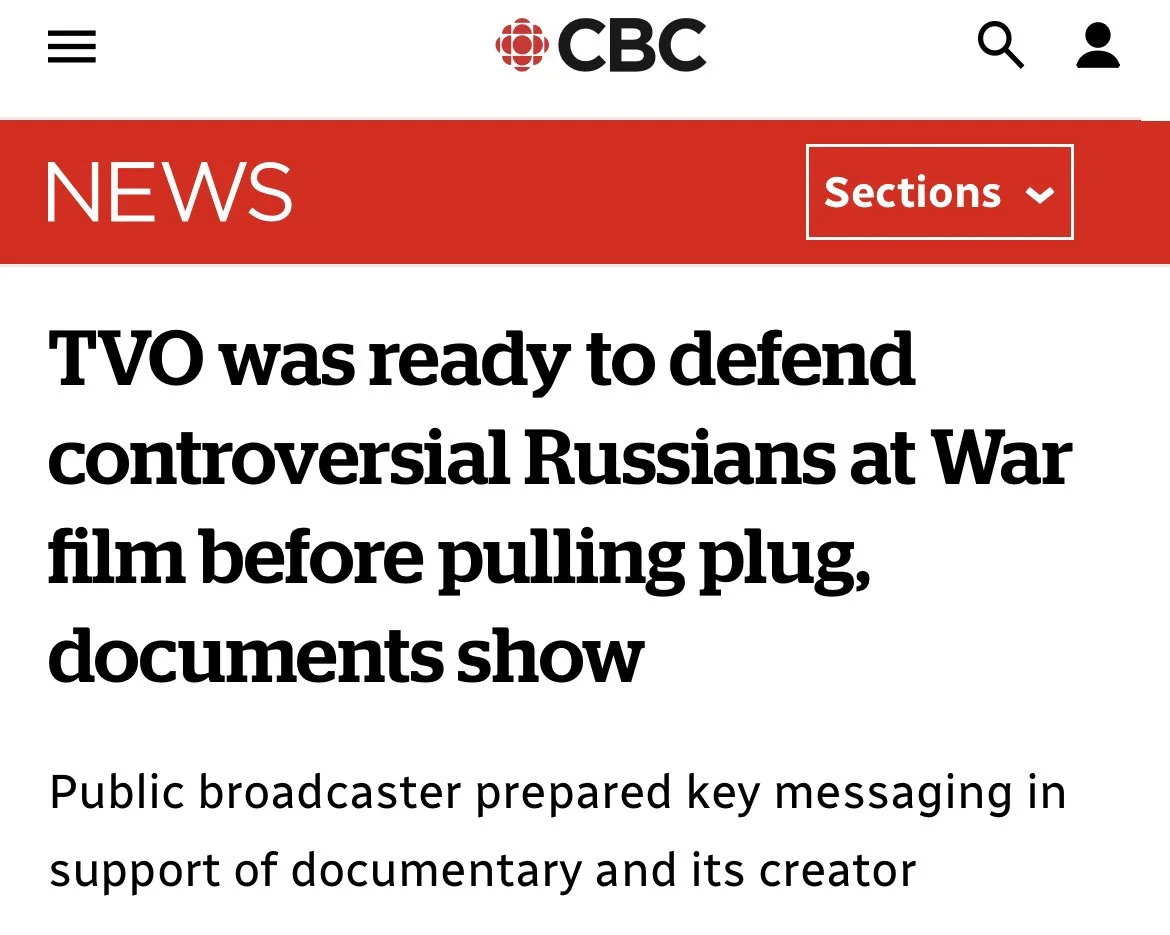
Investigations by Canadian journalists suggest that Canada’s Deputy Prime Minister, Chrystia Freeland, could have exerted political pressure on TVO to cancel the broadcast of Russians at War.
‘A few days before TVO’s board of directors refused to support the controversial documentary about Russia’s war in Ukraine, the broadcaster was prepared to defend the film, according to documents obtained by CBC Toronto.’
– CBC
‘Canadaland’s Jesse Brown and Justin Ling challenged the narrative surrounding the documentary Russians at War, arguing that the film is not pro-Kremlin propaganda. The discussion strongly critiqued public figures for pressuring institutions to halt screenings, labeling the interference as an inappropriate, anti-democratic act that opposes free expression.’
– CanadaLand
THE HAGUE, DOCVILLE, OSLO, BELGRADE
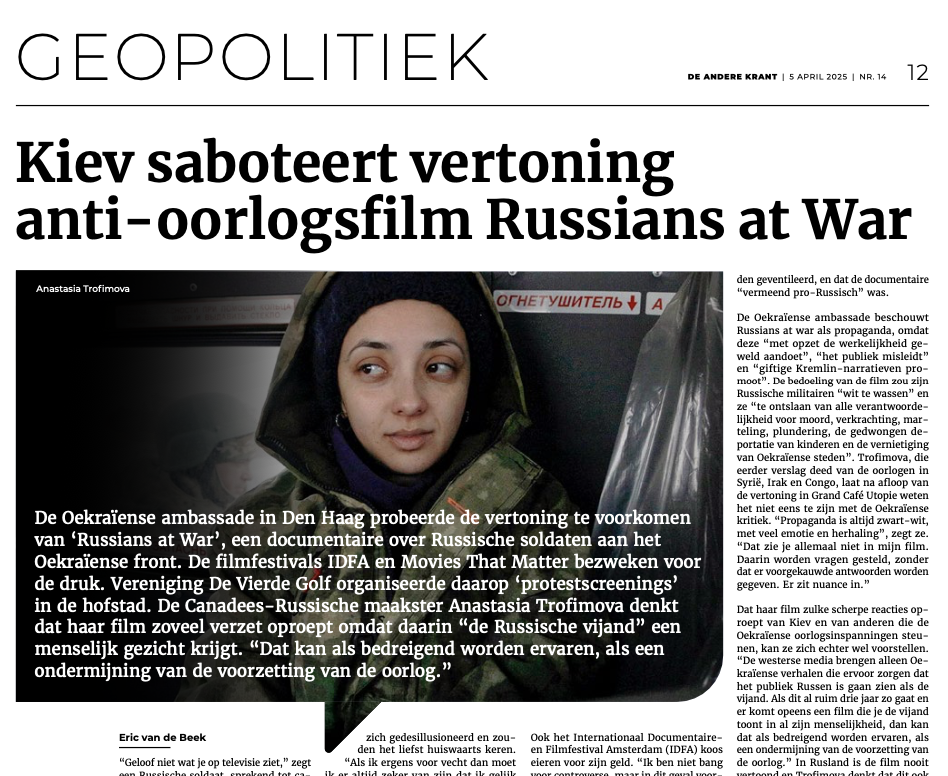
Russians at War in The Hague!
Again, Ukrainian politicians and interest groups demand a cancellation of screenings.
(They still haven’t seen the film.)
Full houses at Leiden University and Café Utopia. Great conversations with audiences afterwards.
Plus one.
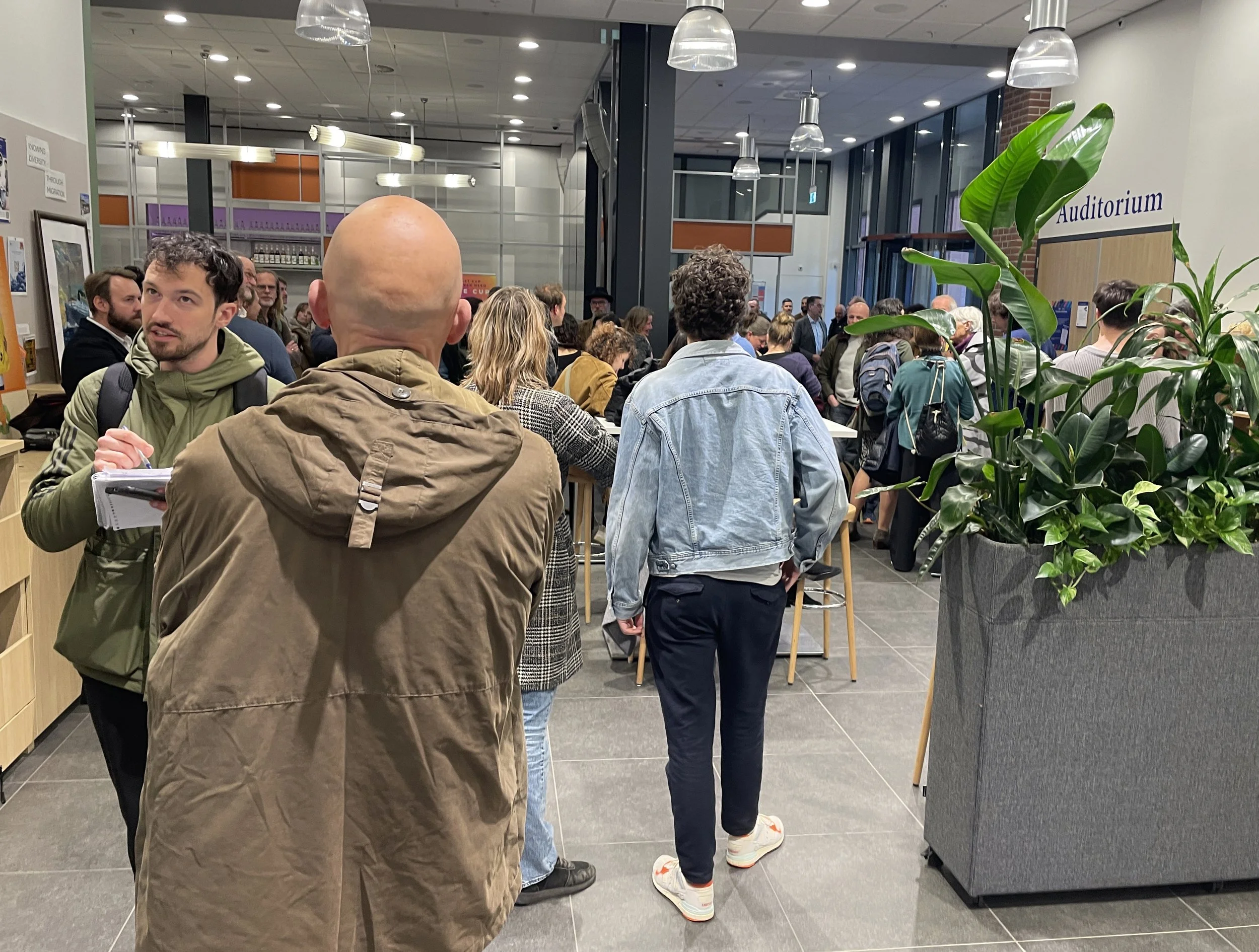
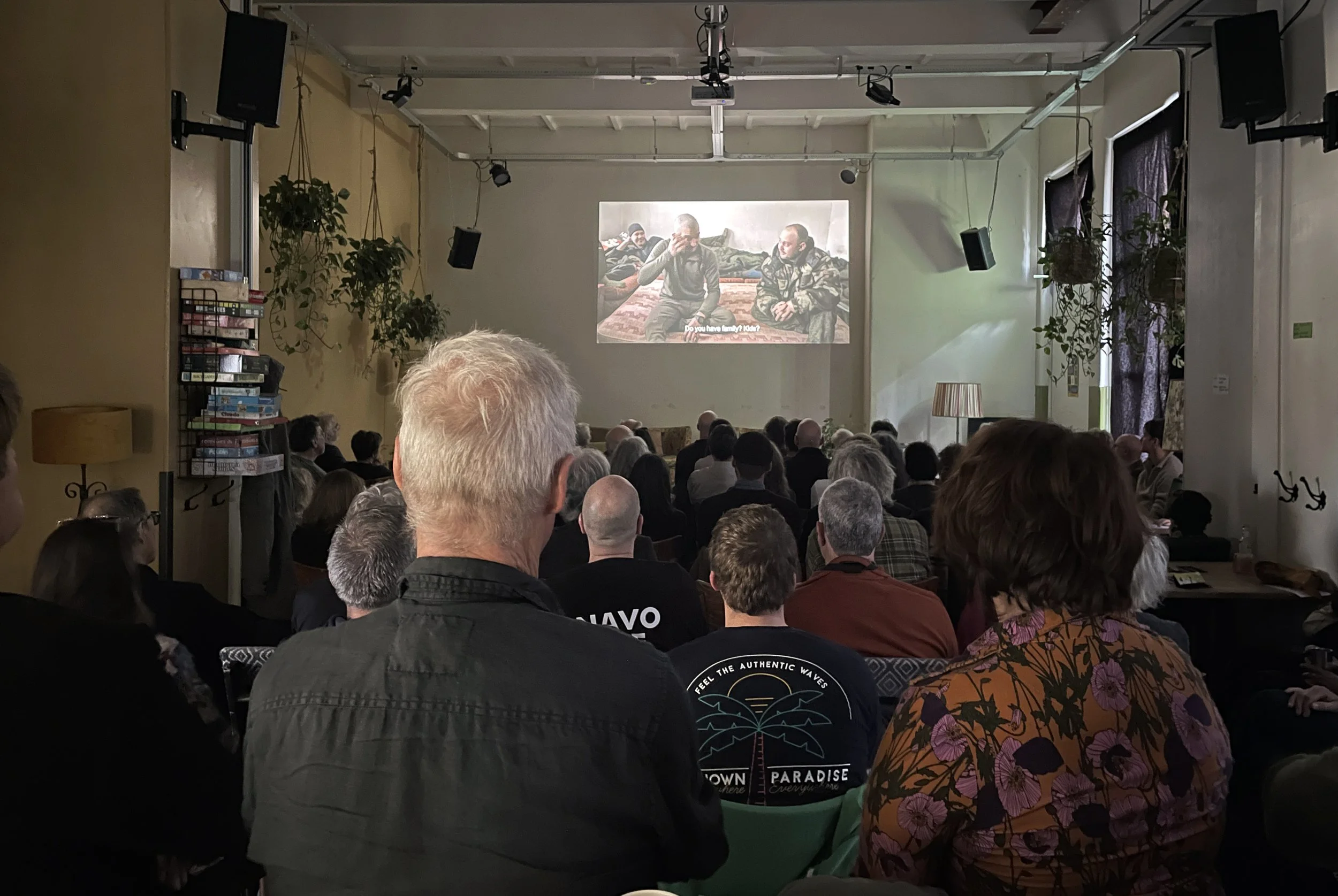
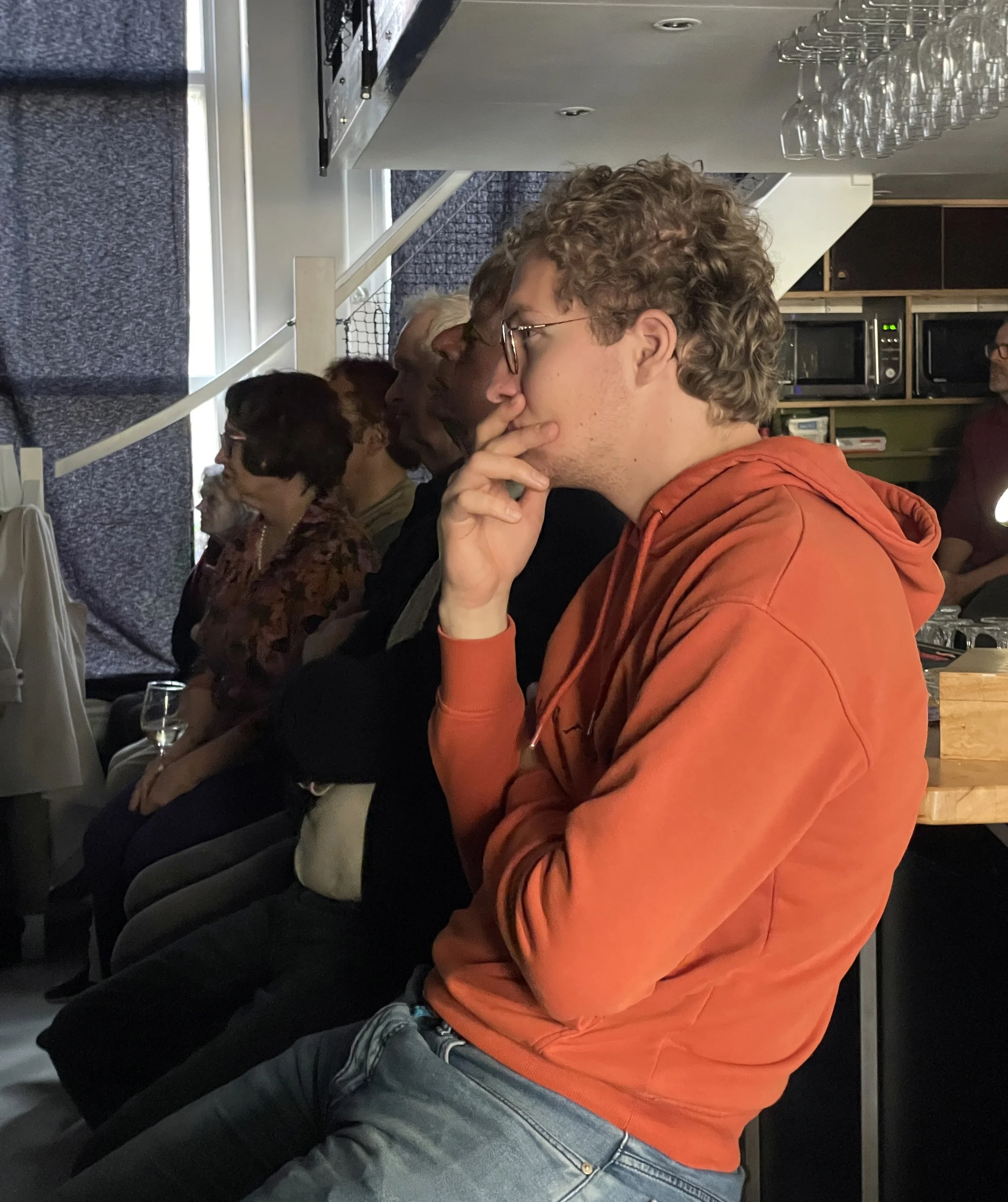
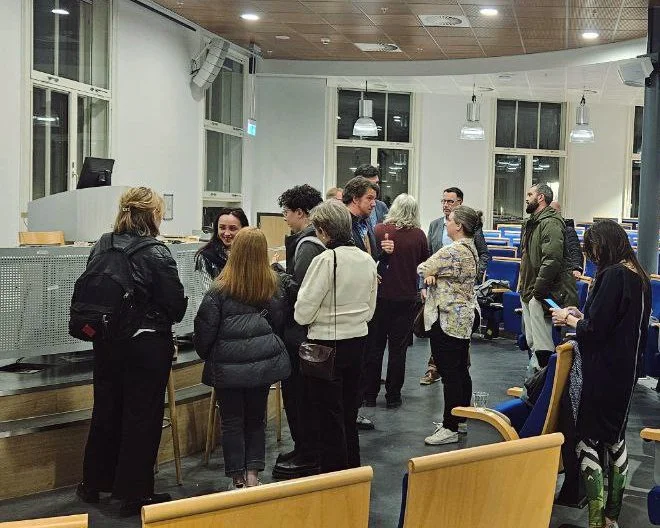
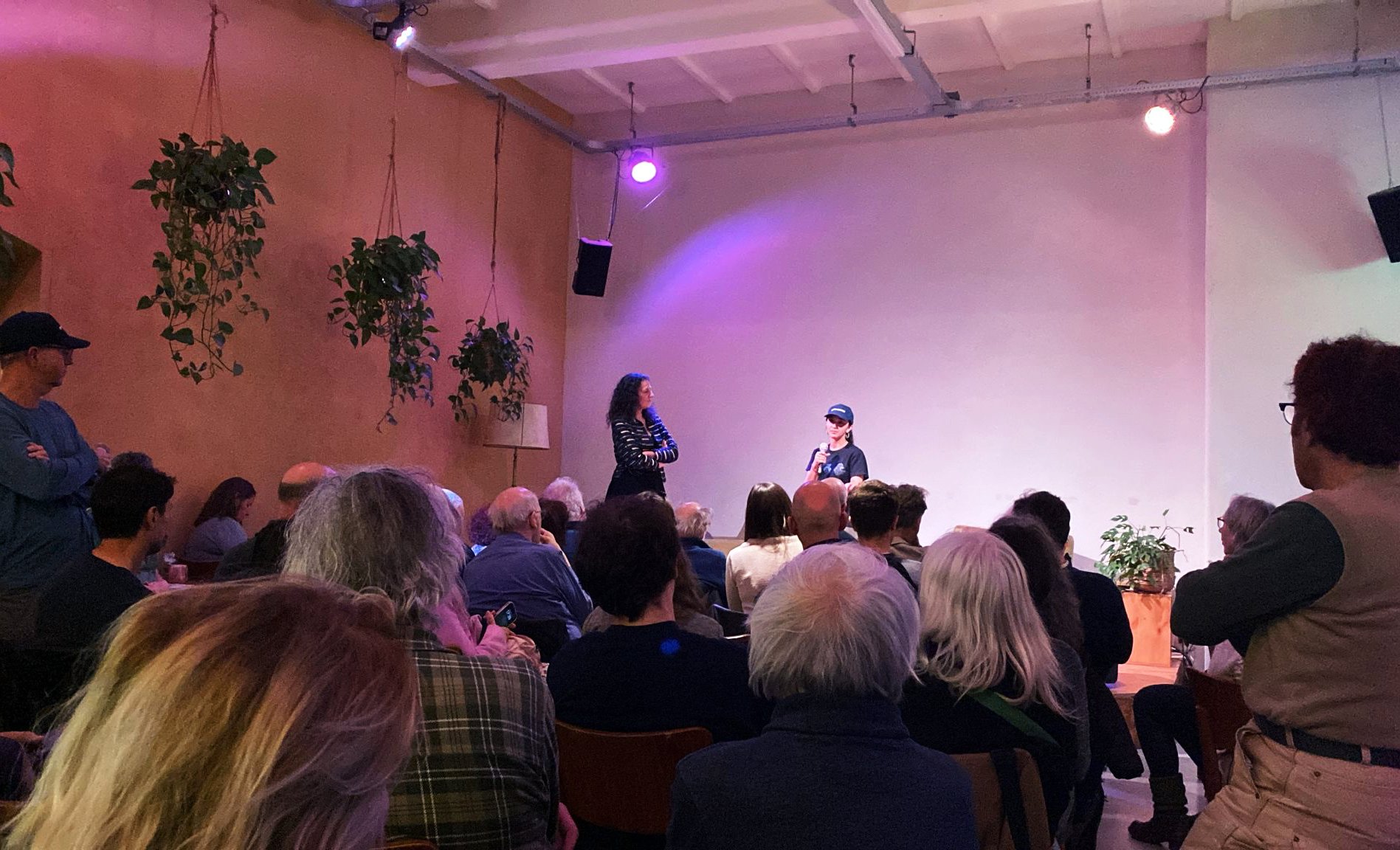
Reactions to yesterday’s screening on Dutch radio:
– Is this film propaganda?
– No.
– Then why aren’t we allowed to watch it?
– Because we aren’t allowed to feel empathy for the other side.
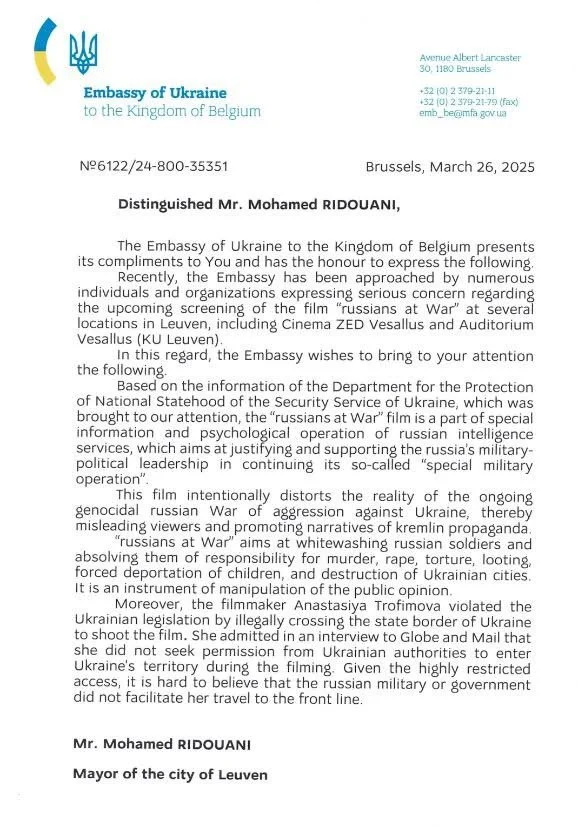
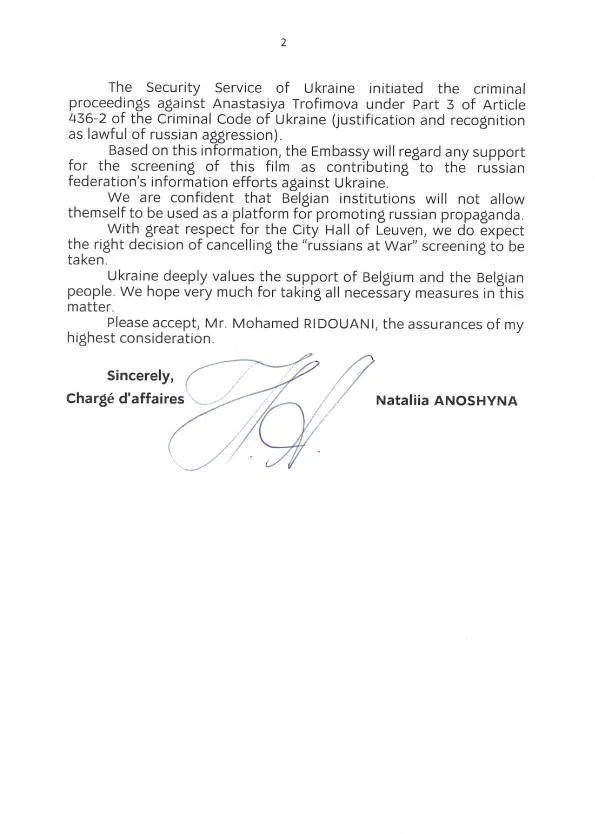
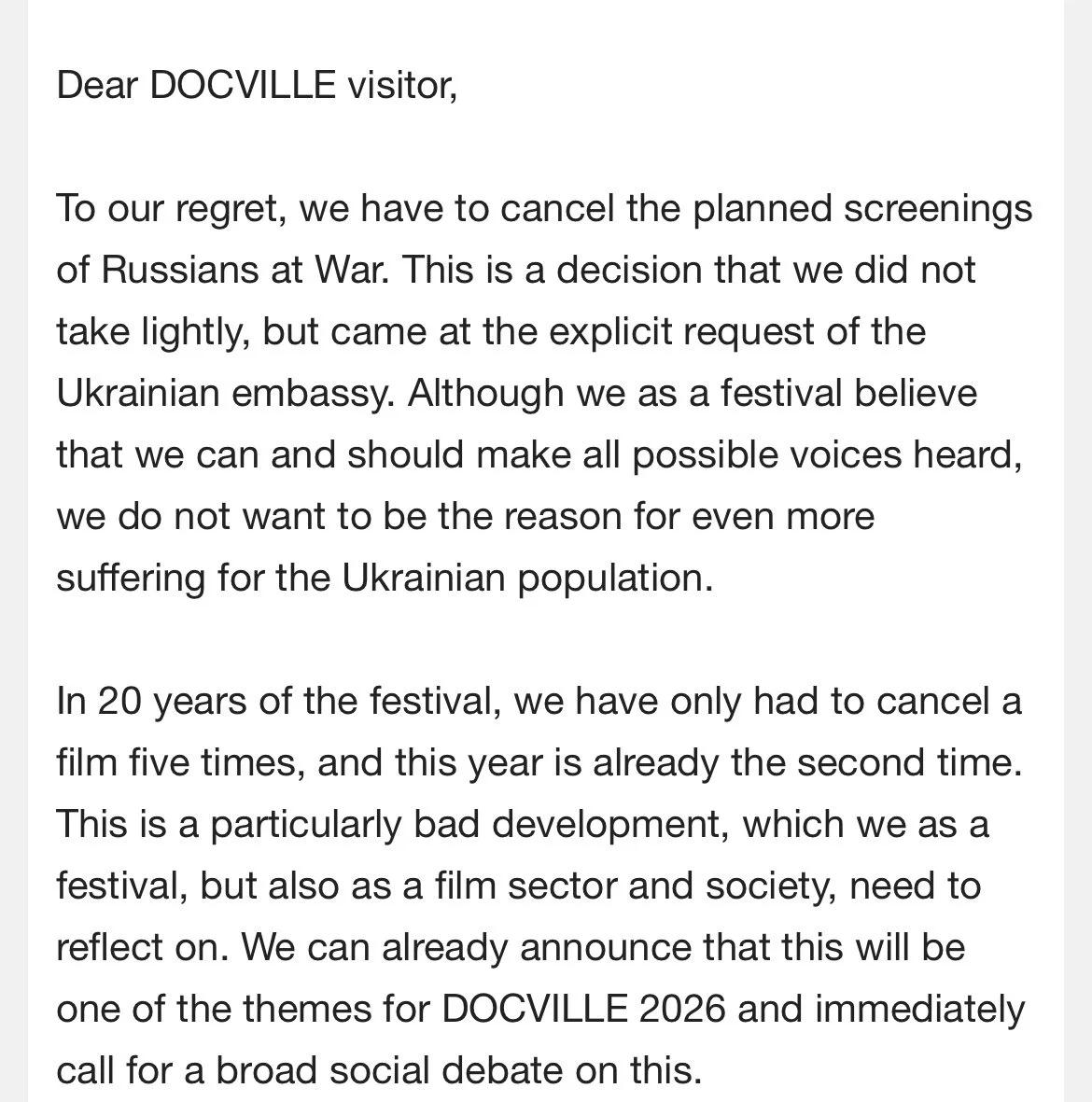
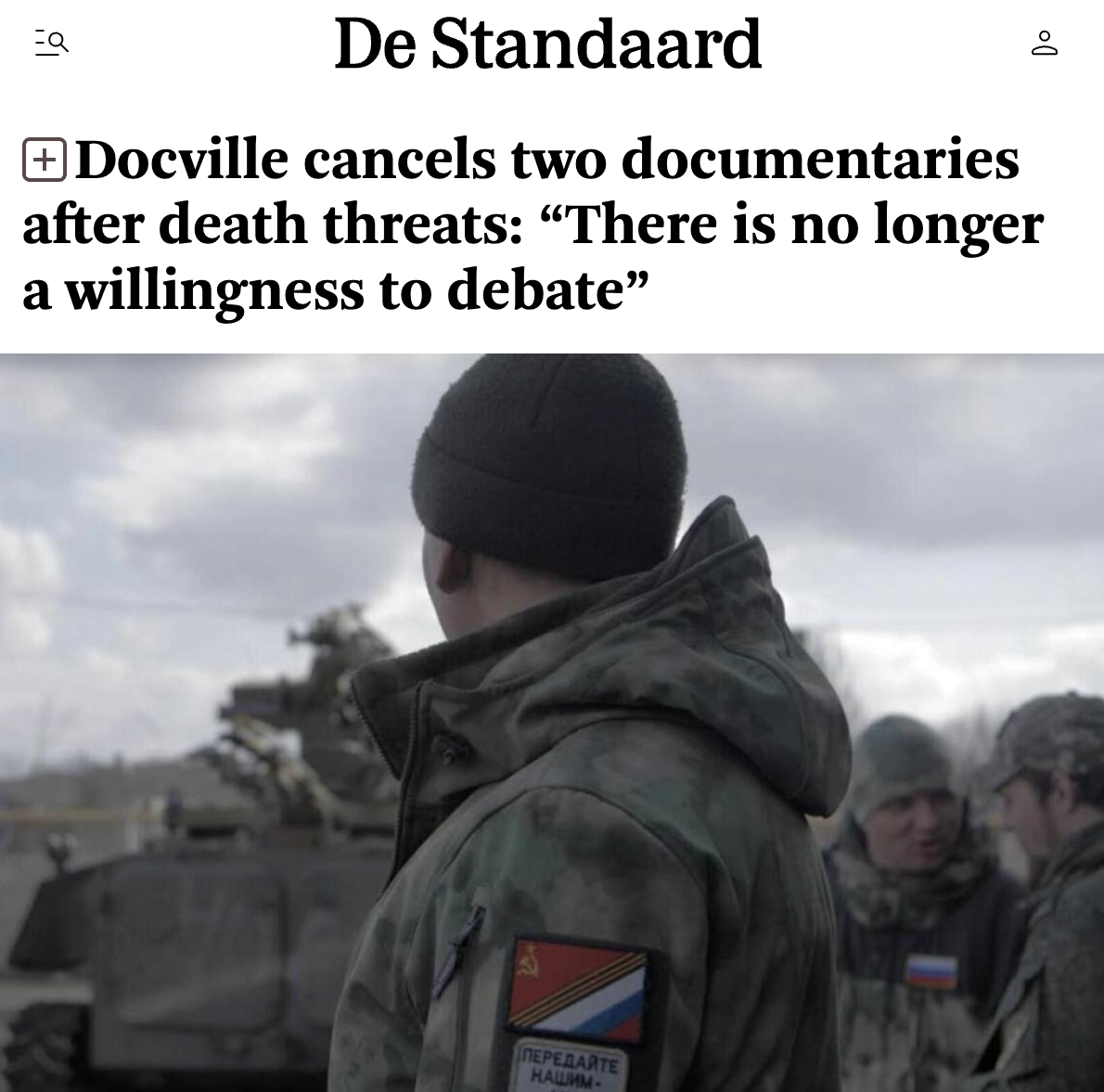
Belgium! The Docville Film Festival suddenly cancels sold out screenings ‘at the request of the Ukrainian embassy’, citing threats and intimidation.
‘Ultimately, the organizers made this decision under ‘emotional pressure’ from the Ukrainian embassy, which rejected the film as Russian propaganda. But, according to [festival director] Moens, this event was preceded by attacks and intimidation. ‘They were directed personally at me, but also at our staff and the festival’s official partners.’
– Standaard.be
Minus one.
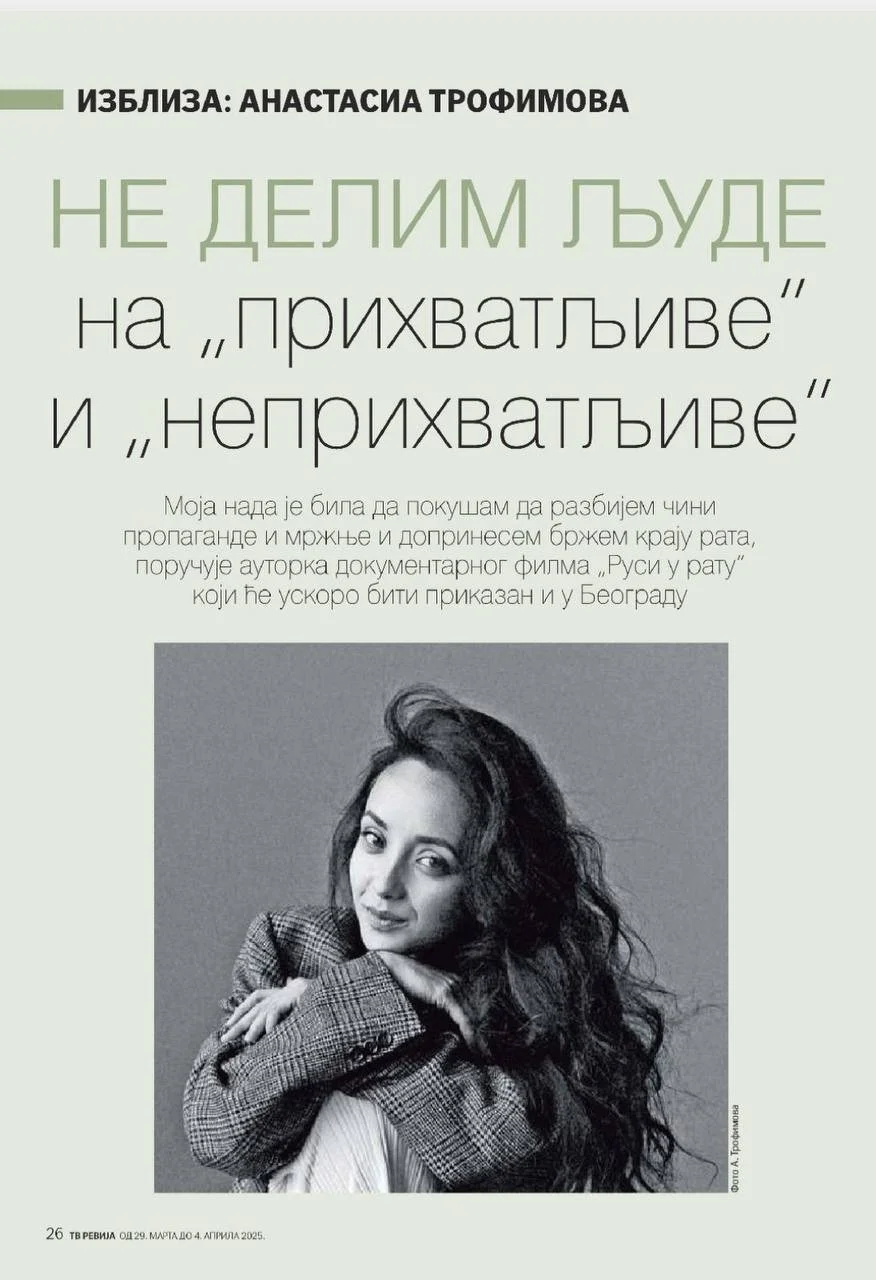
Serbia! Smooth sailing and a full house at the Balkan premiere in Belgrade!
Plus one.
An overview of the Serbian press.
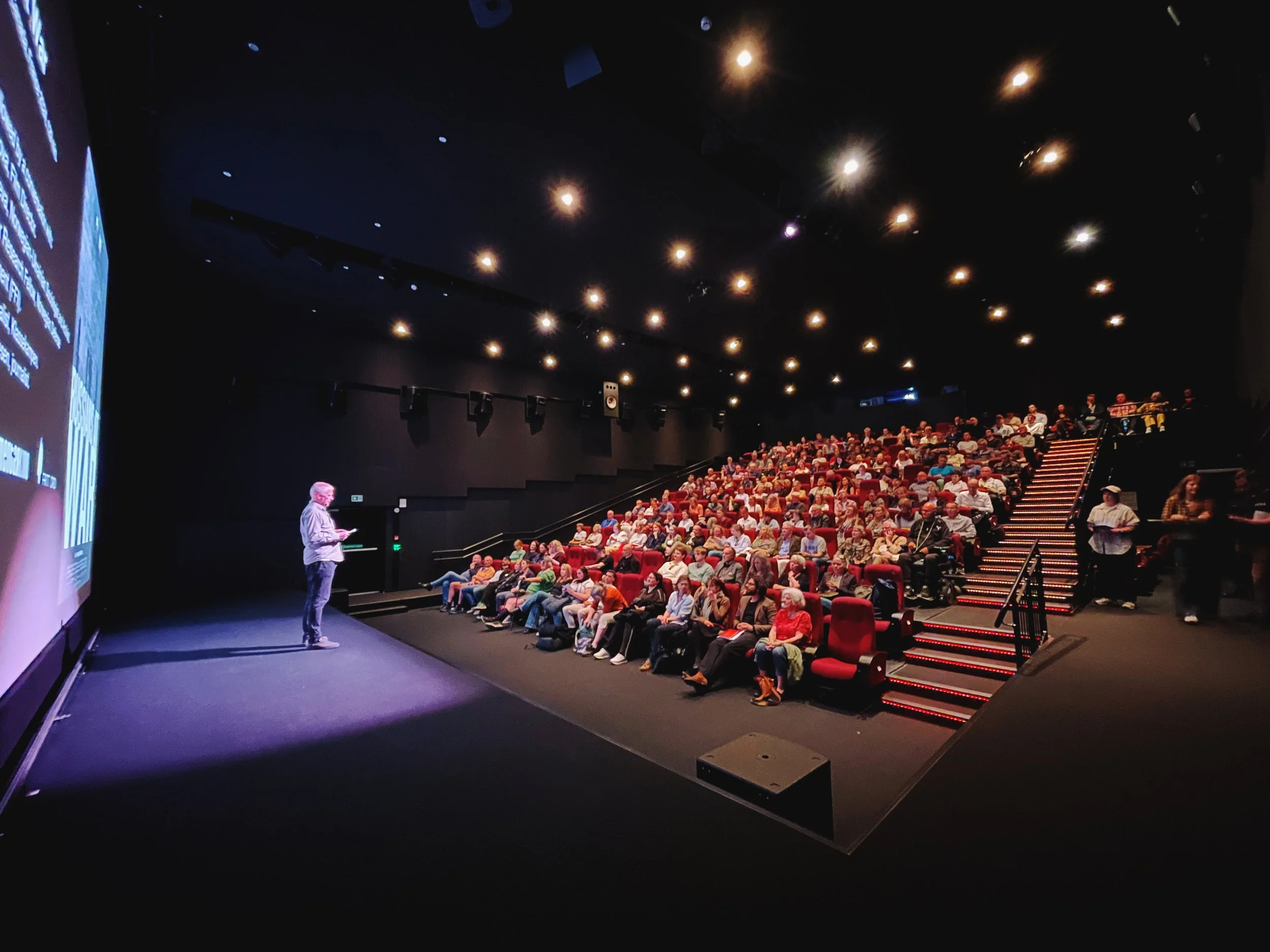
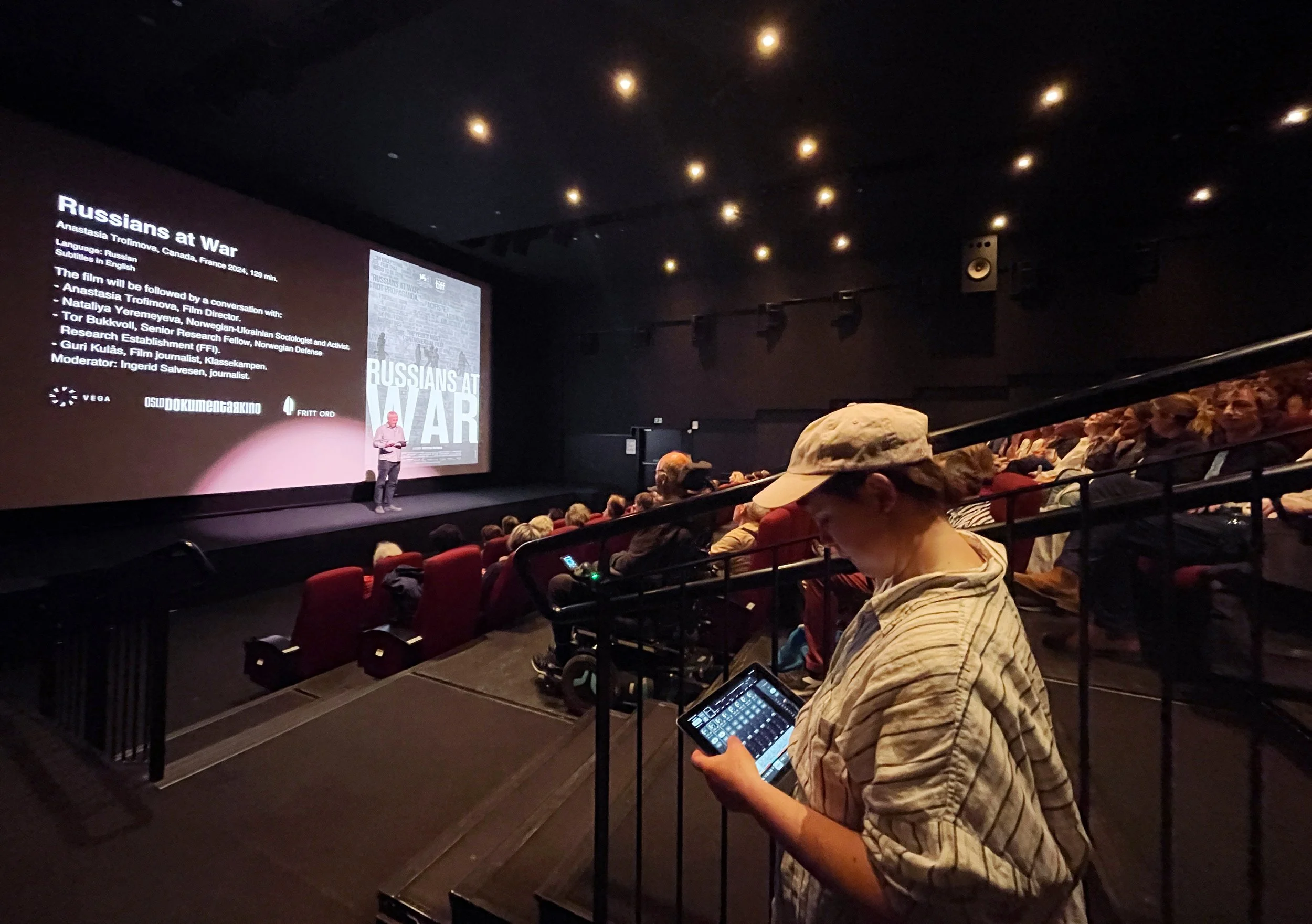
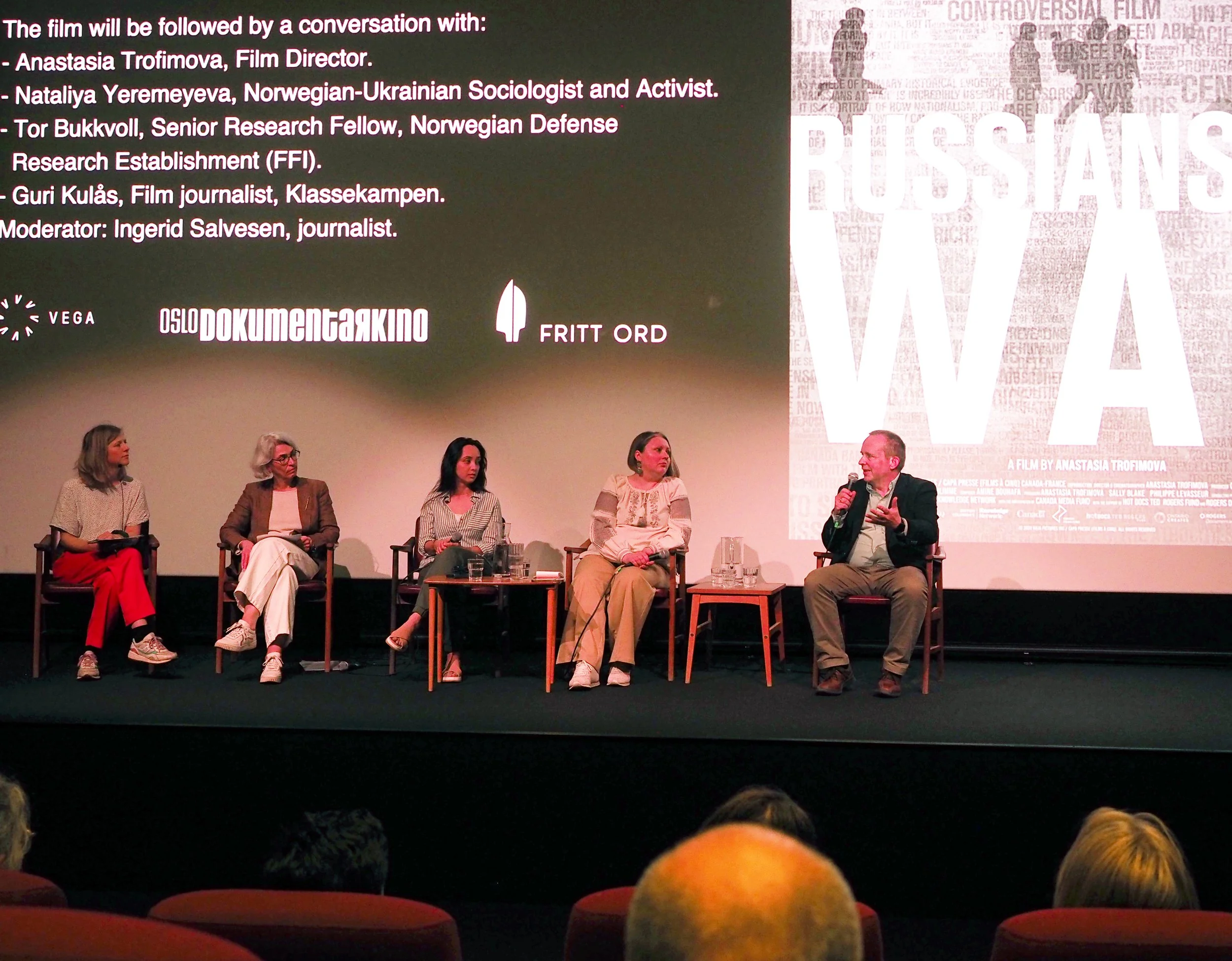
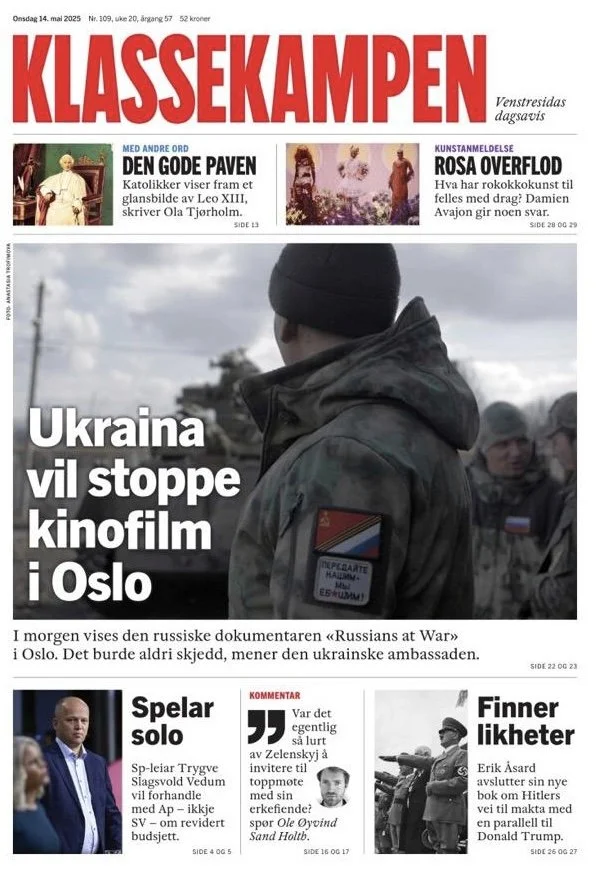
Norway! Despite the pressure from the Ukrainian embassy and groups – a full house in Oslo, with a great panel discussion afterwards.
Plus one.
An overview of the European press:
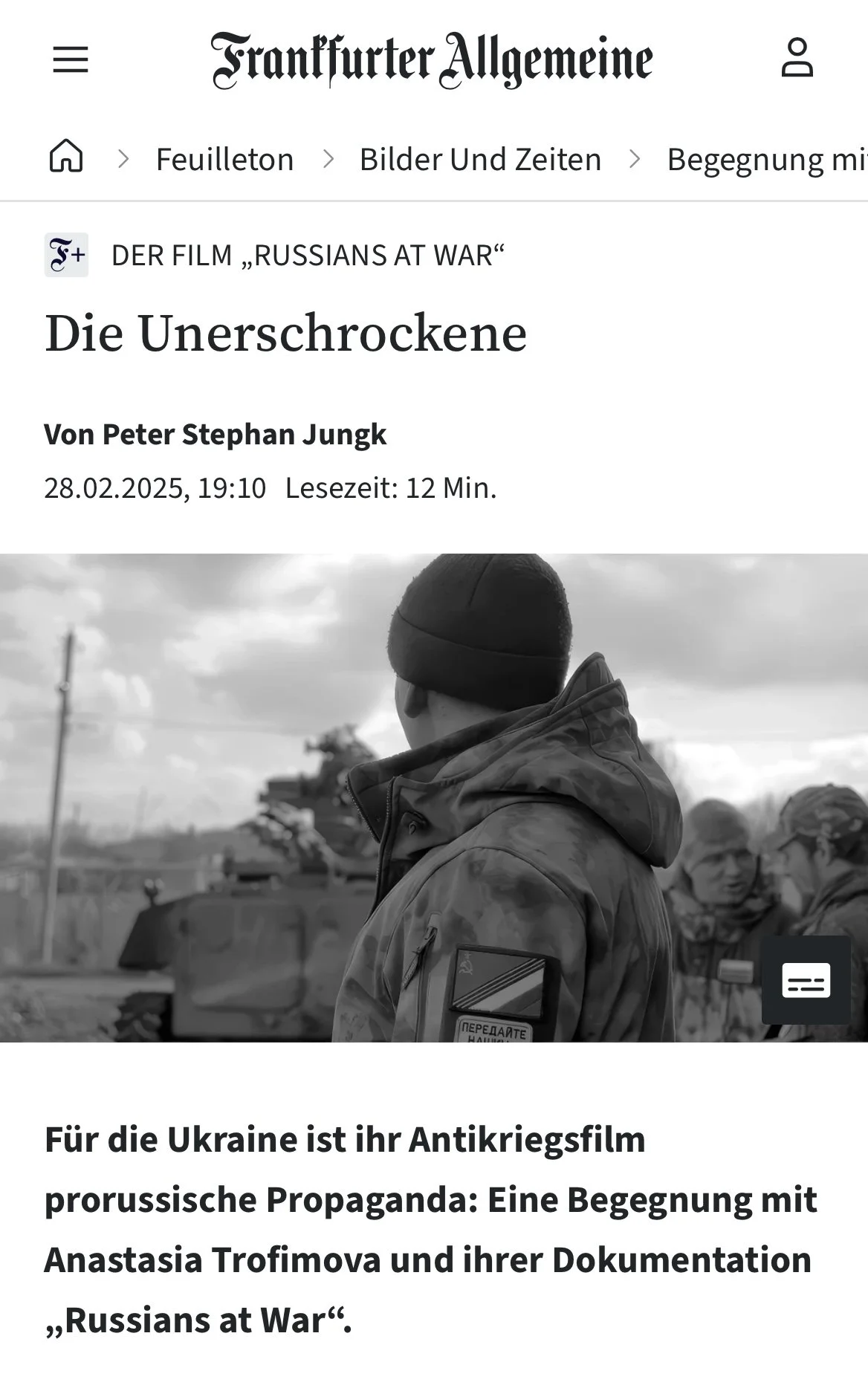
‘Russians at War is a deeply harrowing anti-war film, a sort of All Quiet on the Western Front in documentary form. I left the theater deeply shaken.’
– Frankfurter Allgemeine Zeitung
‘Trofimova is part of a long tradition of war films that show the war through the eyes of ordinary soldiers. It’s a well-known humanistic perspective, and it is understandable that the director (and the festivals that programmed the film) did not foresee the strong opposition the film would face.’
– Klassekampen
‘Well, according to the Ukrainian authorities, this documentary supposedly ‘humanizes’ Russian soldiers. And that, apparently, is unacceptable. When I read about this, I had to lie down. Empathy is the new threat. This is what we’ve come to in this damned war. We’re afraid of a documentary that might raise too many questions. We’re afraid that you and I, God forbid, might discover that Russian soldiers are human beings too.’
– Revu.nl
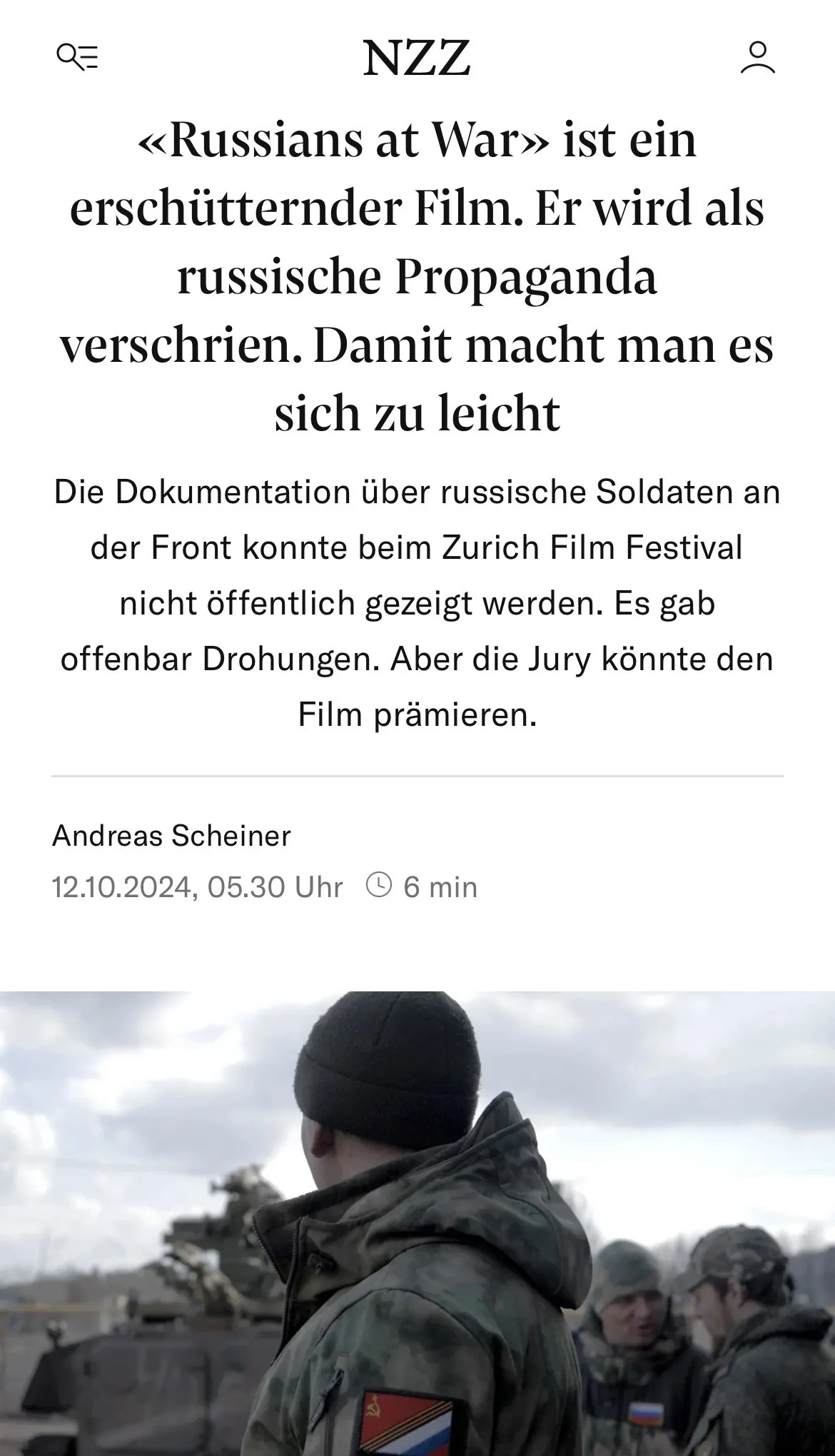
‘The film is shocking. There’s nothing glamorous about it… Slavic fatalism comes through. It’s a film of the anti-enlightenment variety.’
– NZZ
‘Having seen the film, I must say: the accusations against it are grotesque nonsense and reveal more about how culture has become an ideological battlefield for a conformist public.’
– Fabio Di Masci, German politician
A review by TIFF film critics.
Russians at War airs on TV in Canada, South Korea, the Middle East and Portugal…
…and is released online for free in Russian. Finally, reviews from the soldiers and their families come in. Not everyone lived to see it.
‘Ouf… I want to cry and to scream and to be silent…’
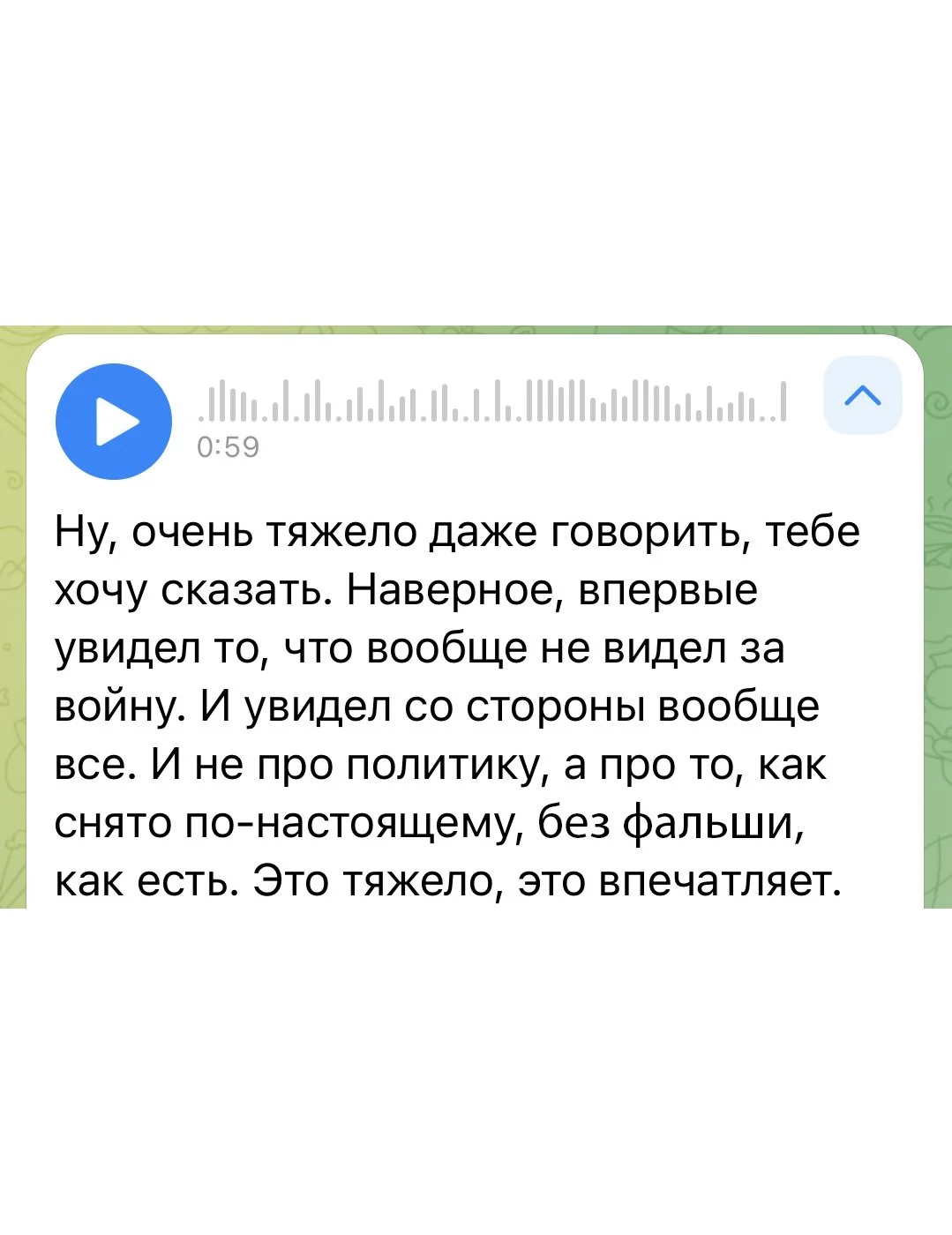
‘It’s hard to even speak, I’ll tell you. For the first time, I probably saw something that I hadn’t seen in the entire war. I saw it all from the outside. Not about politics, but how it’s shot so real, without fakes, as is. It’s heavy, it’s impressive.’
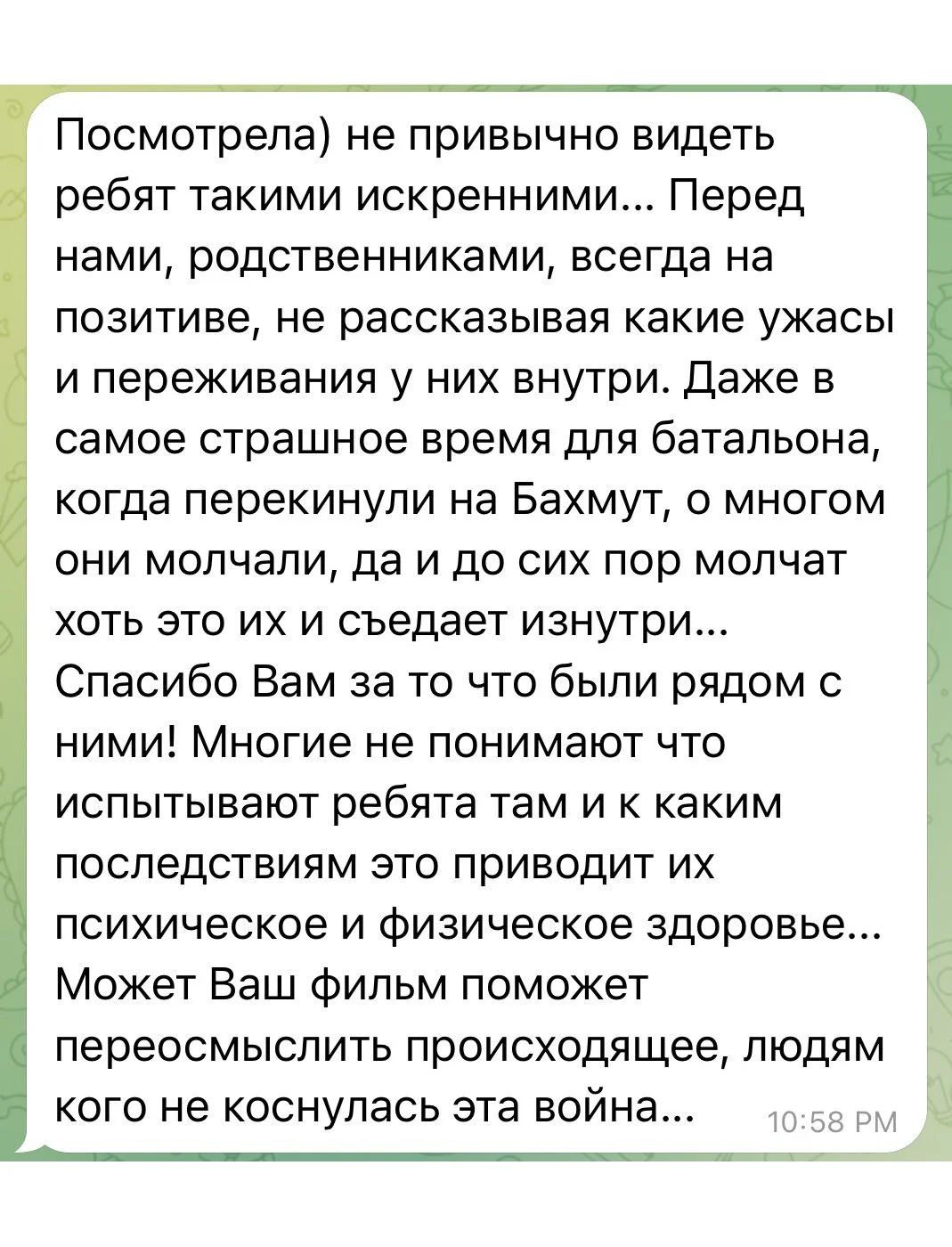
‘It’s unusual to see the guys being so honest… To us, their families, they’re always positive, they never talk of the horrors or emotions they carry inside. Even in the battalion’s scariest time, when they were moved to Bakhmut, they stayed silent about many things, and still are – although it eats them from within…’
‘It’s as if I lived through it all again. So many memories, feelings. The film is good, it’s strong. It’s genuine. Without any fake scenes. Everyone says it straight. It’s important for people to see this film… Not only abroad, but here, on our land too…’
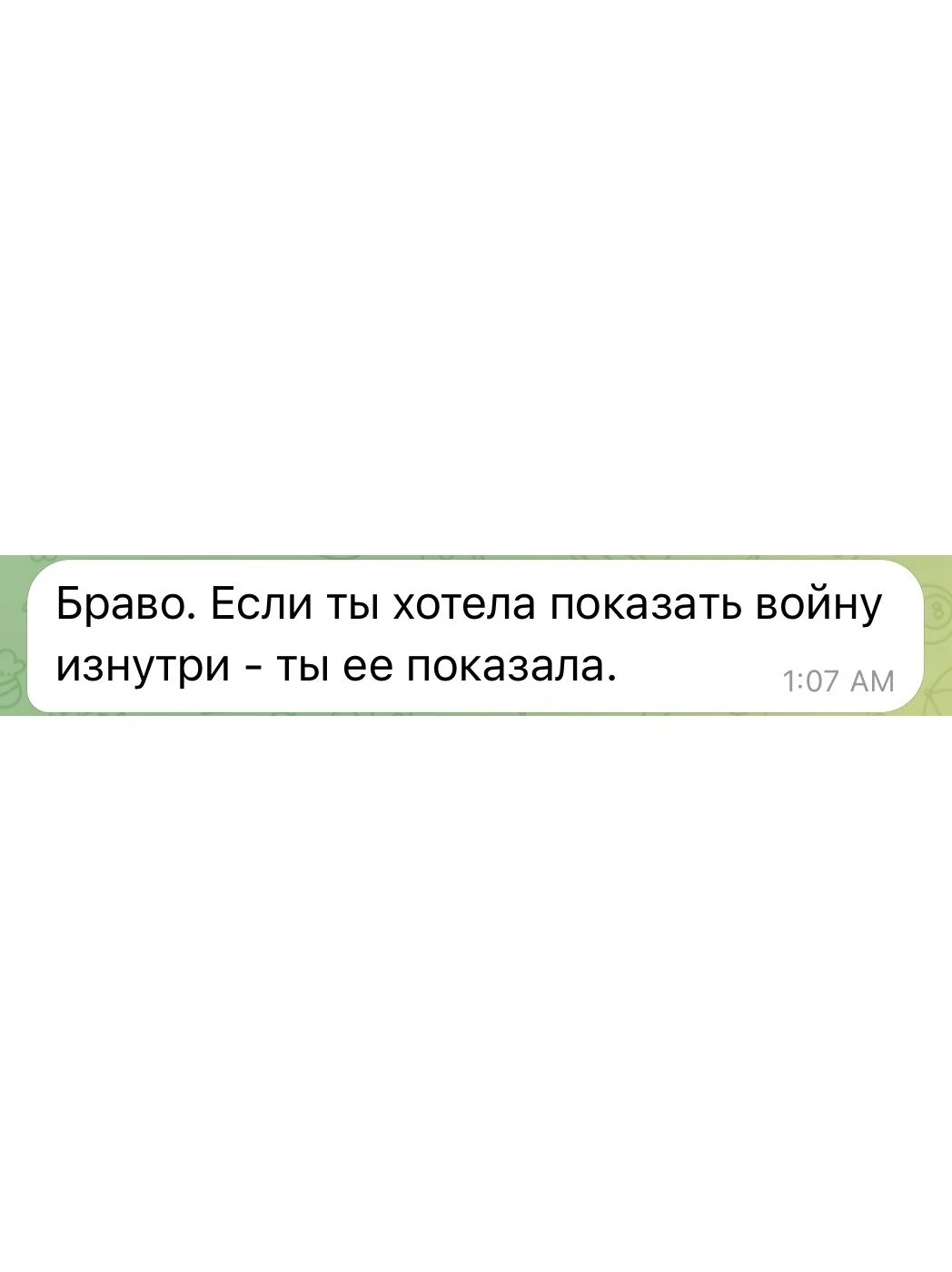
‘Bravo. If you wanted to show the war from within – you did it’
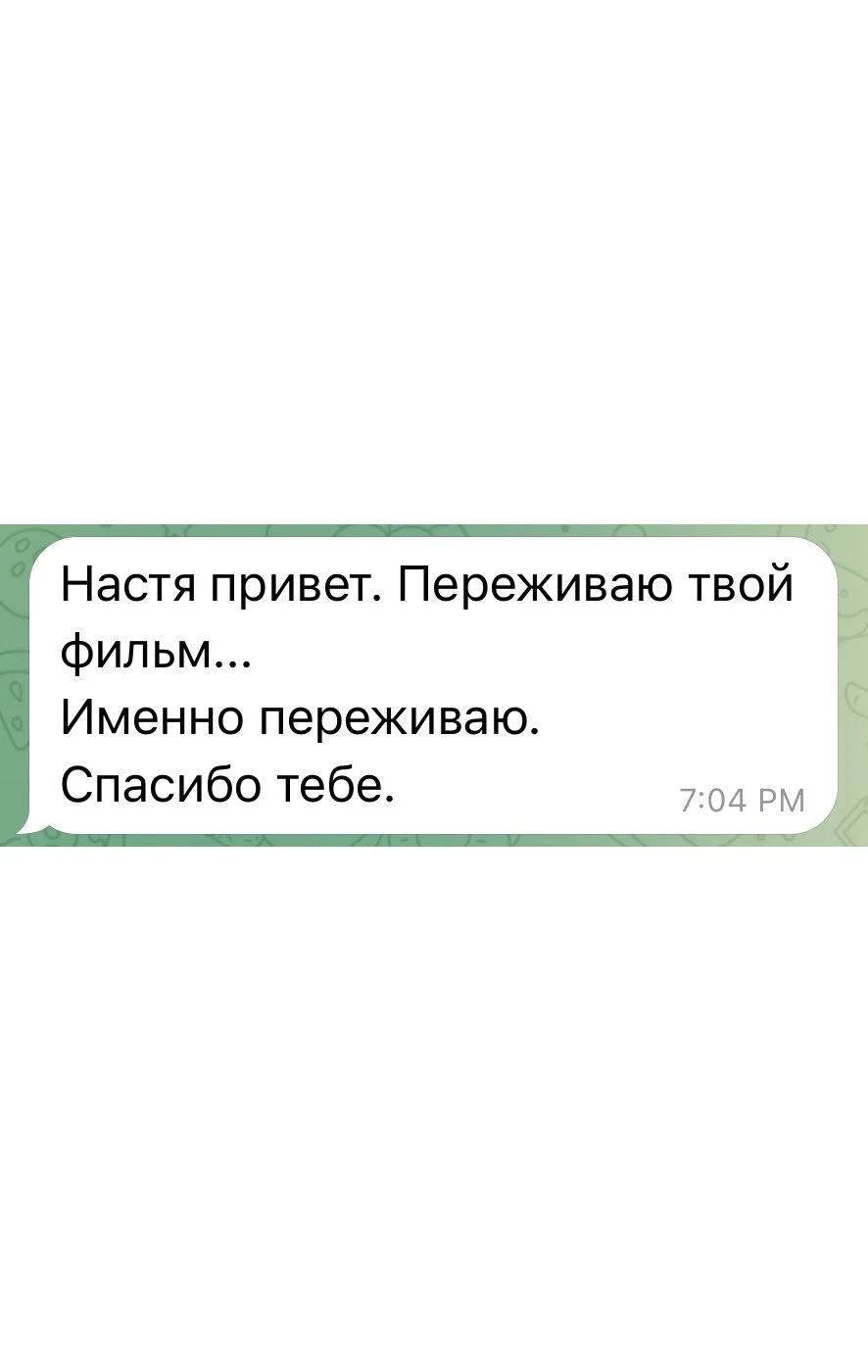
‘I’m living through your film… Precisely living through it. Thank you.’
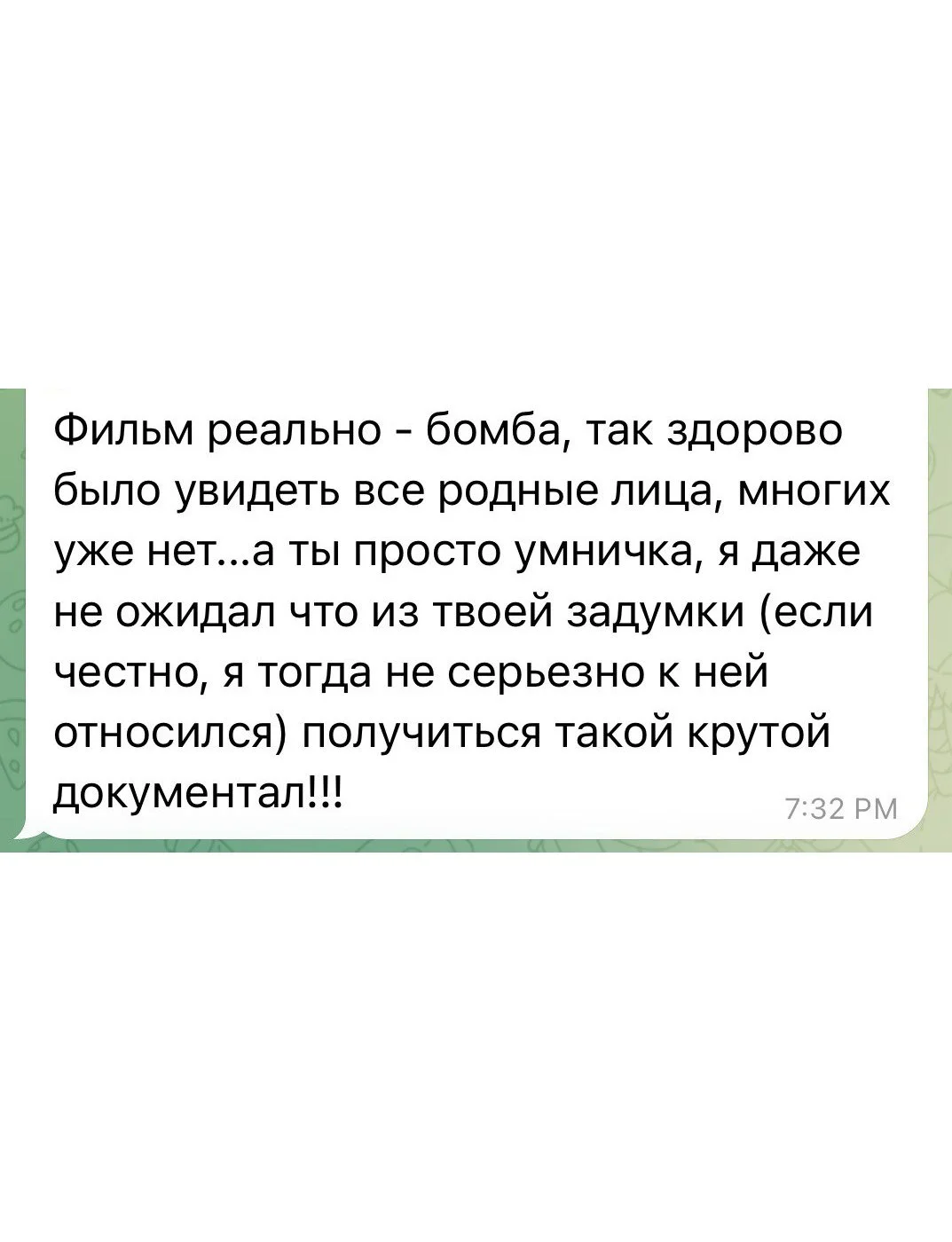
‘The film is off the hook, it was so great to see these familiar faces, many aren’t alive anymore… you’re amazing, I never expected that from your idea (honestly, I didn’t take it seriously then) would come such a great documentary!’
‘Anastasia, I can’t, I’m all in tears. Now I finished watching it, everything is great.’
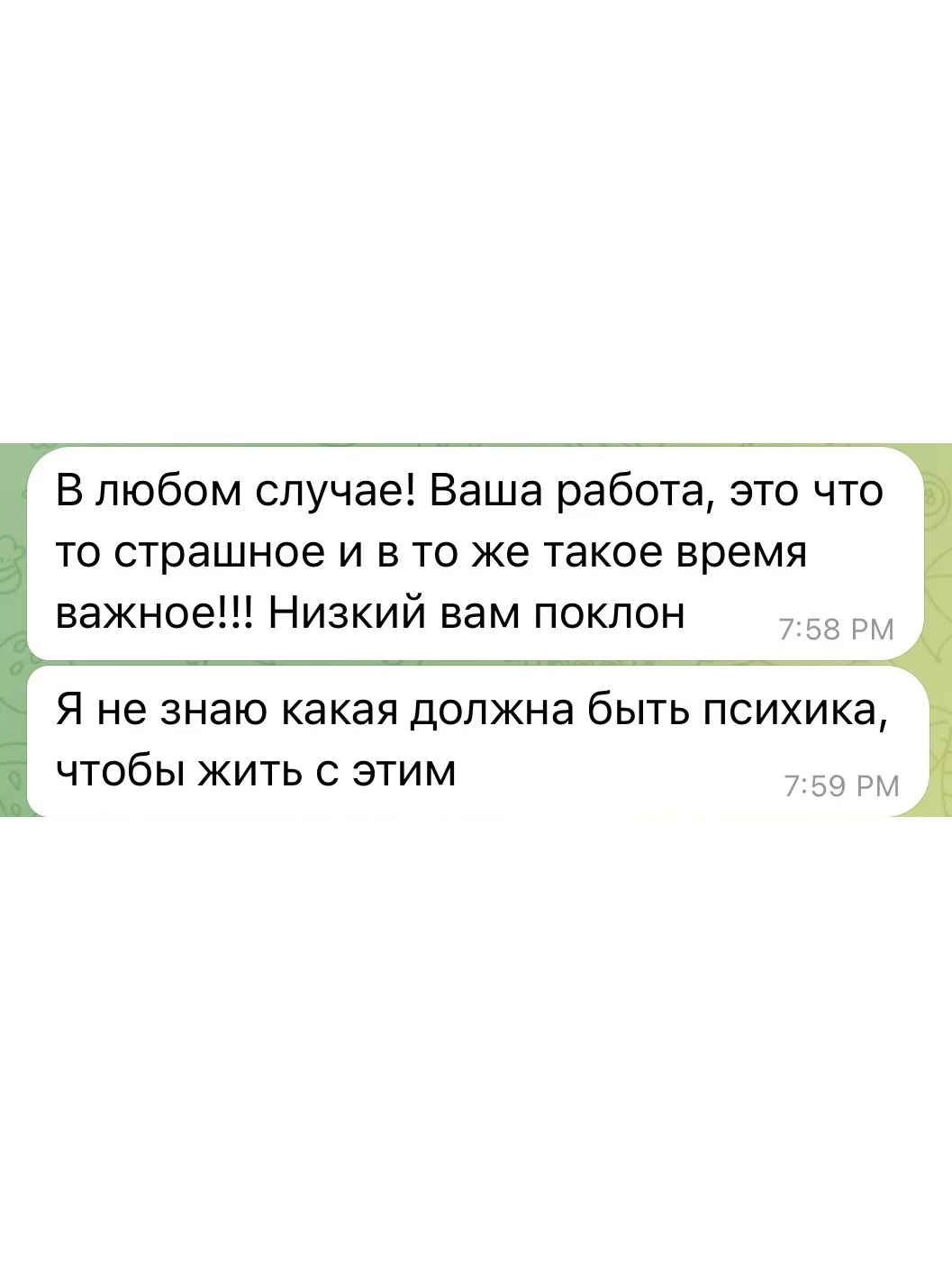
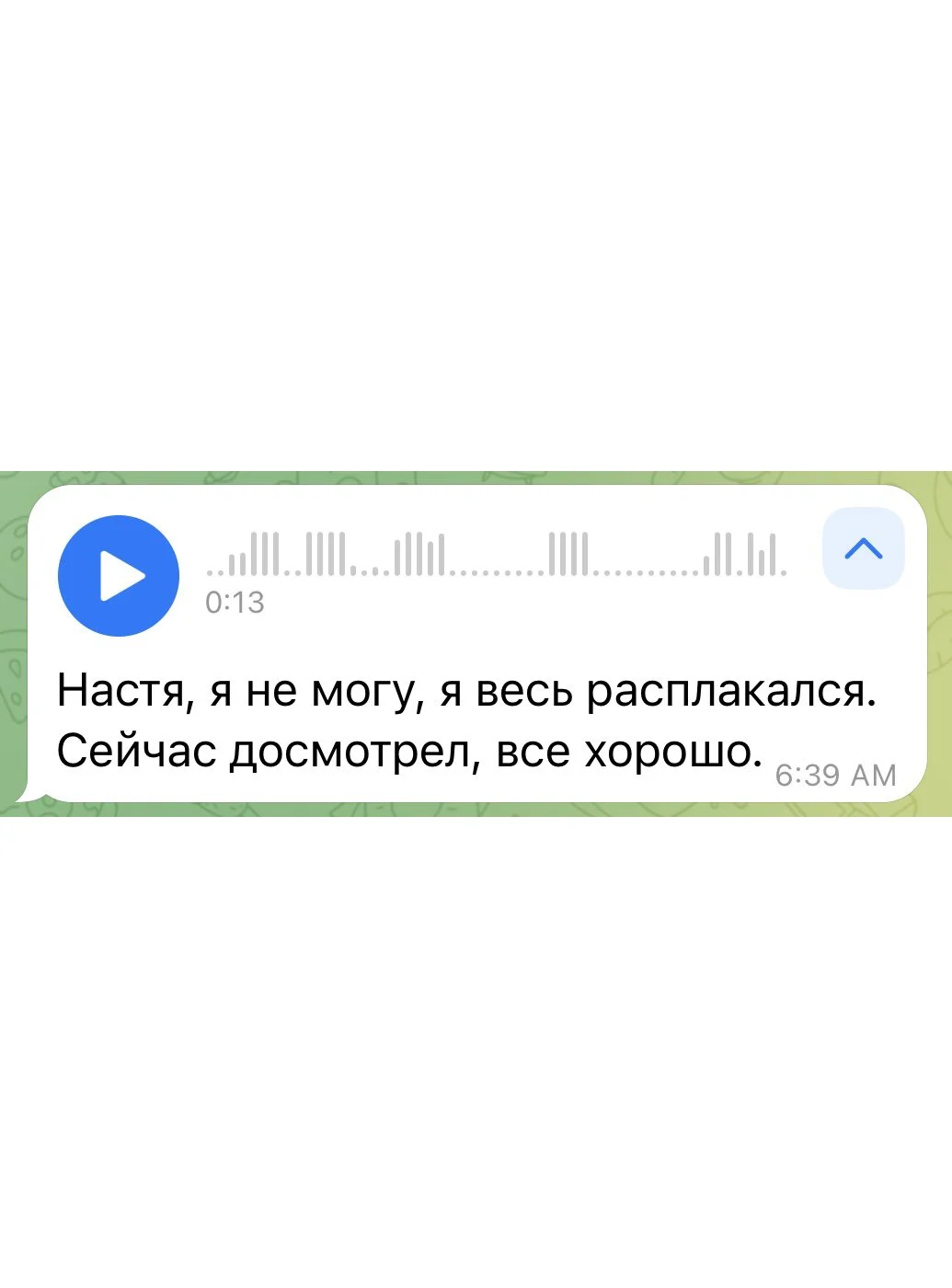
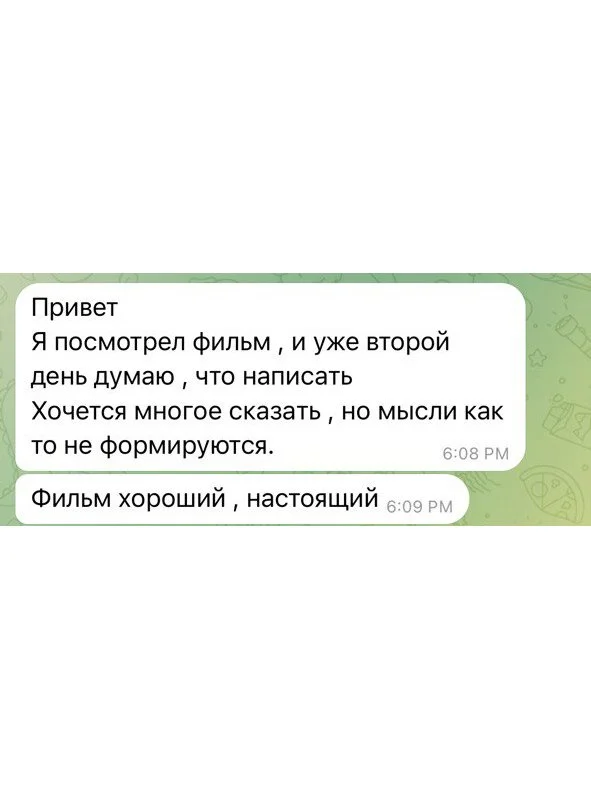
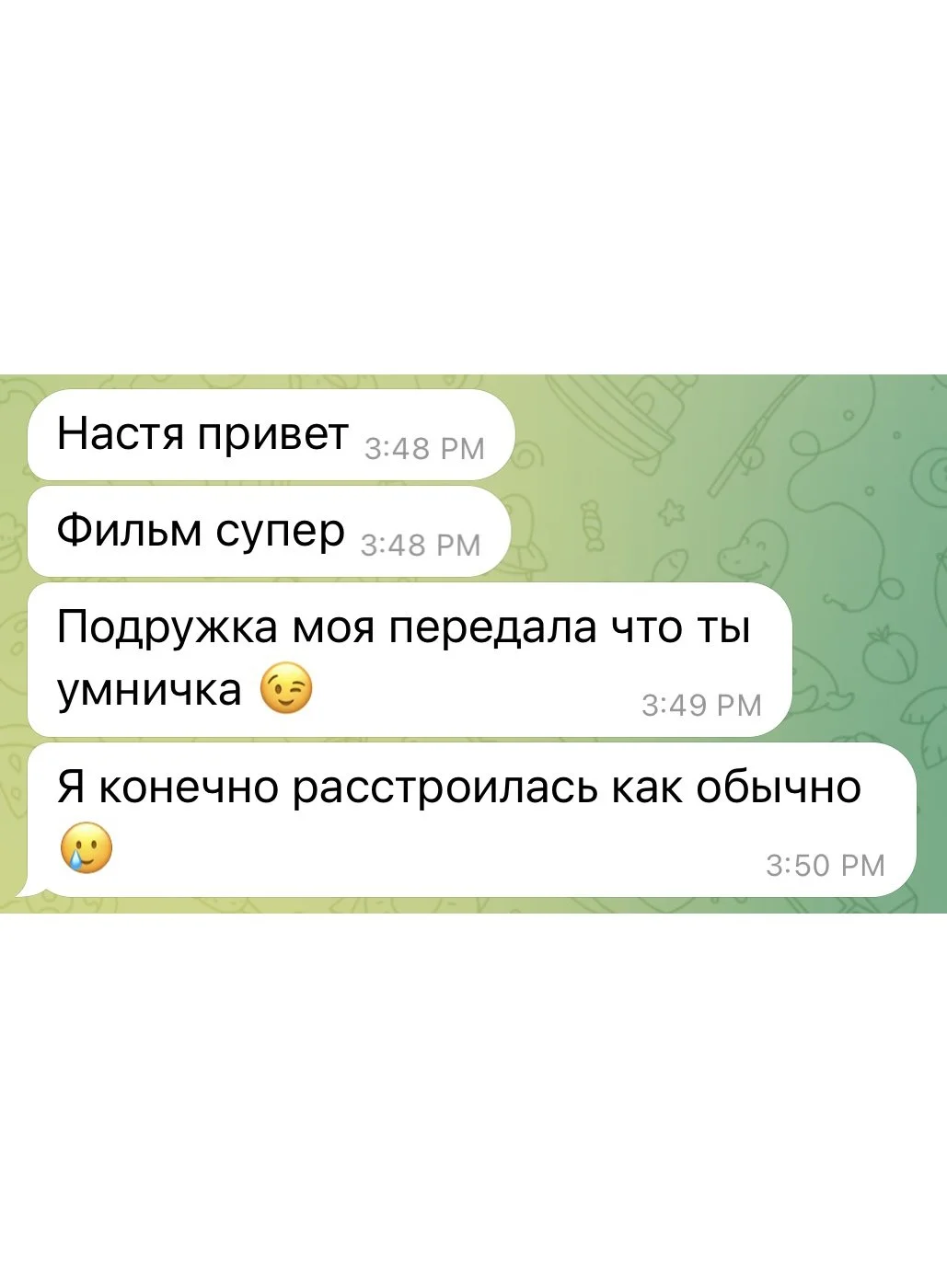
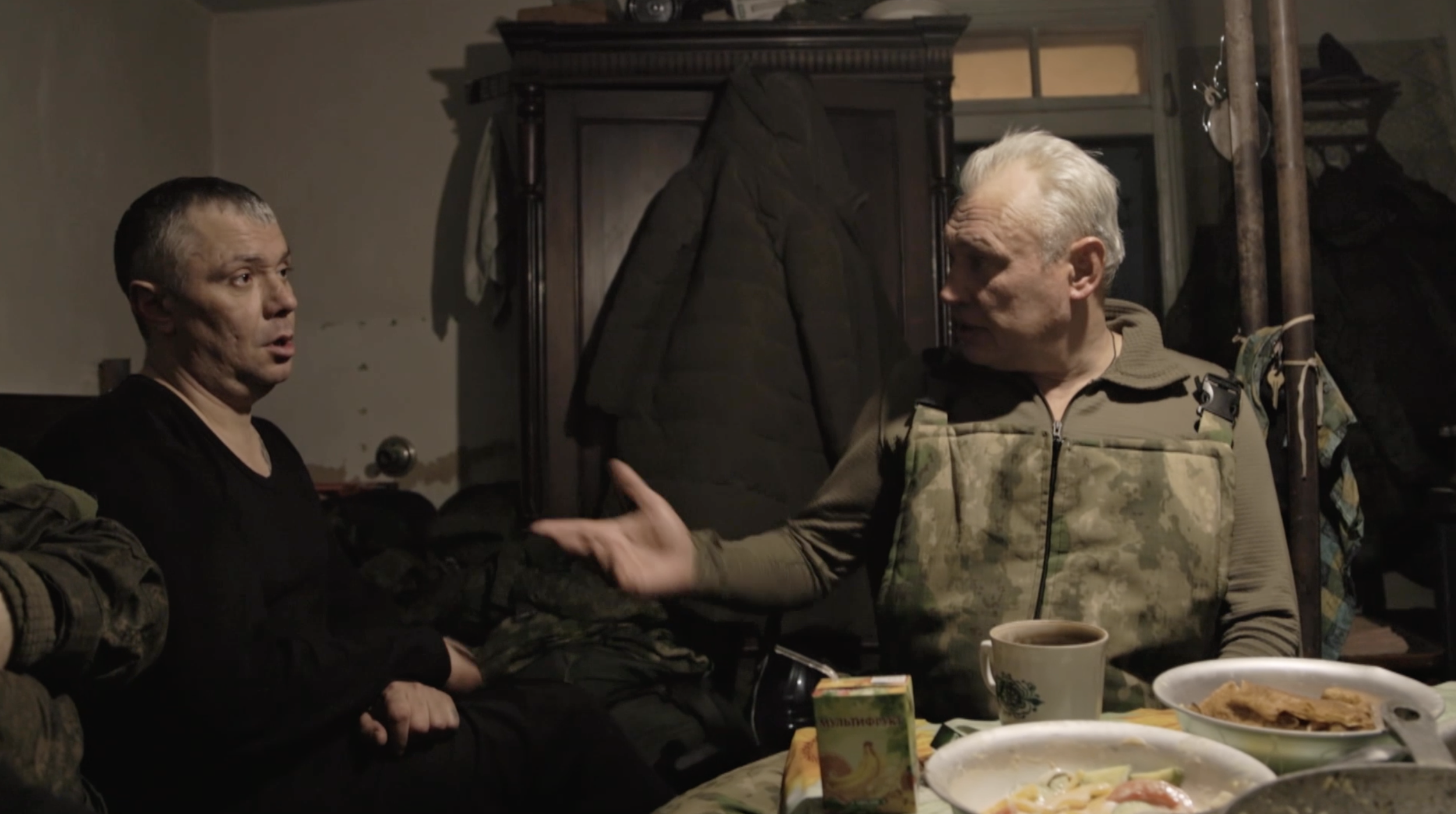
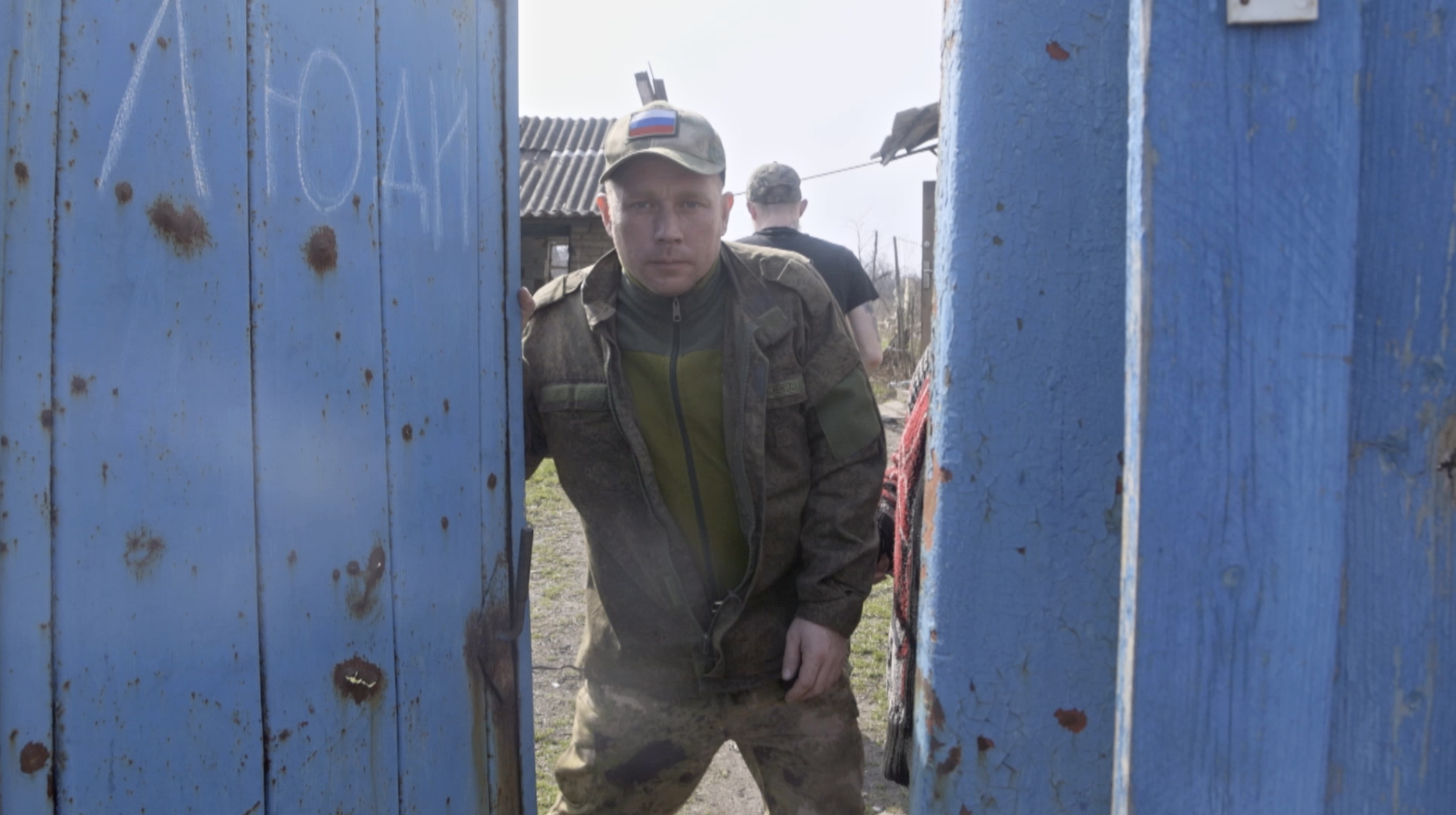
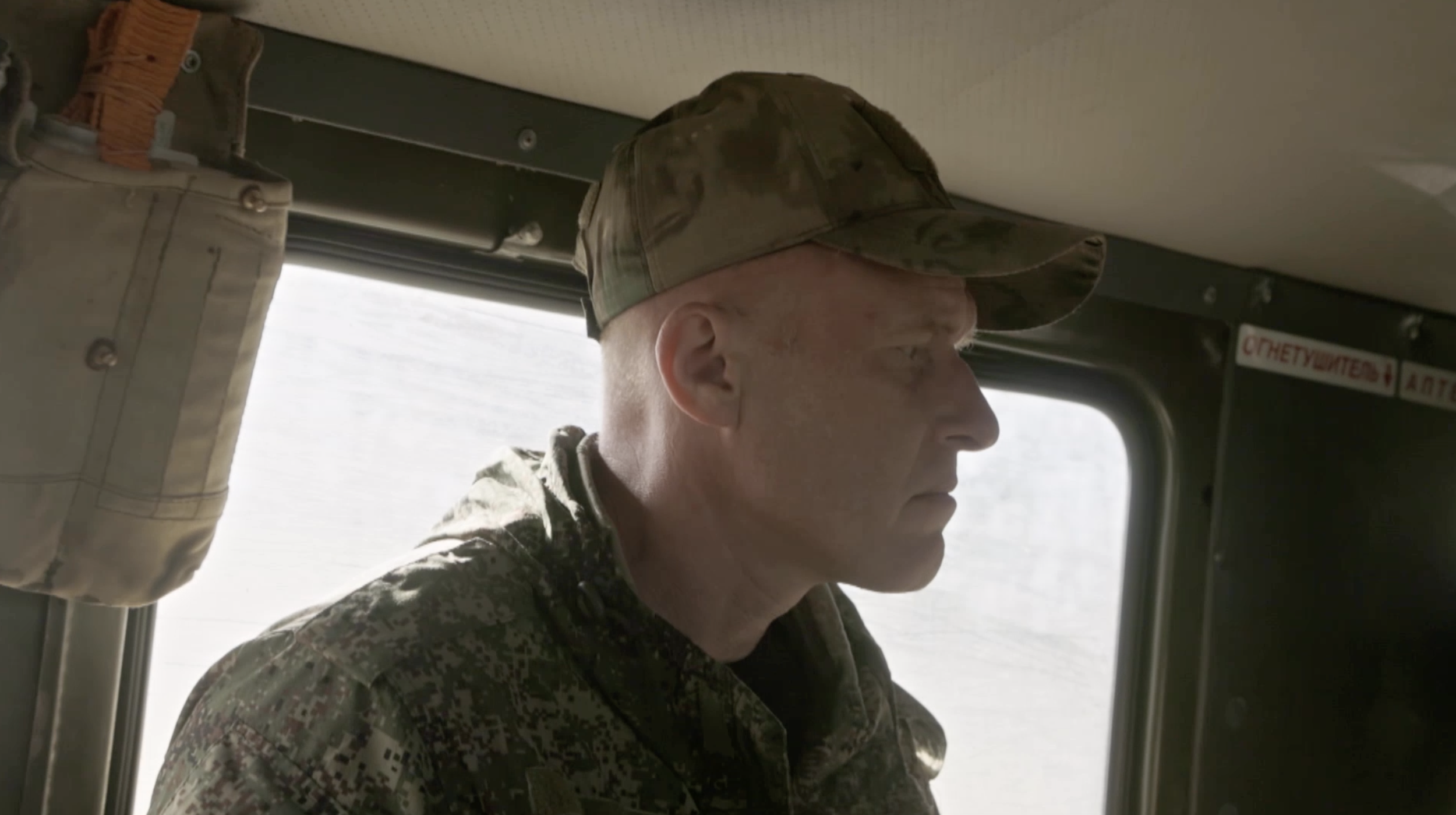
Some of those who didn’t live to see the film.
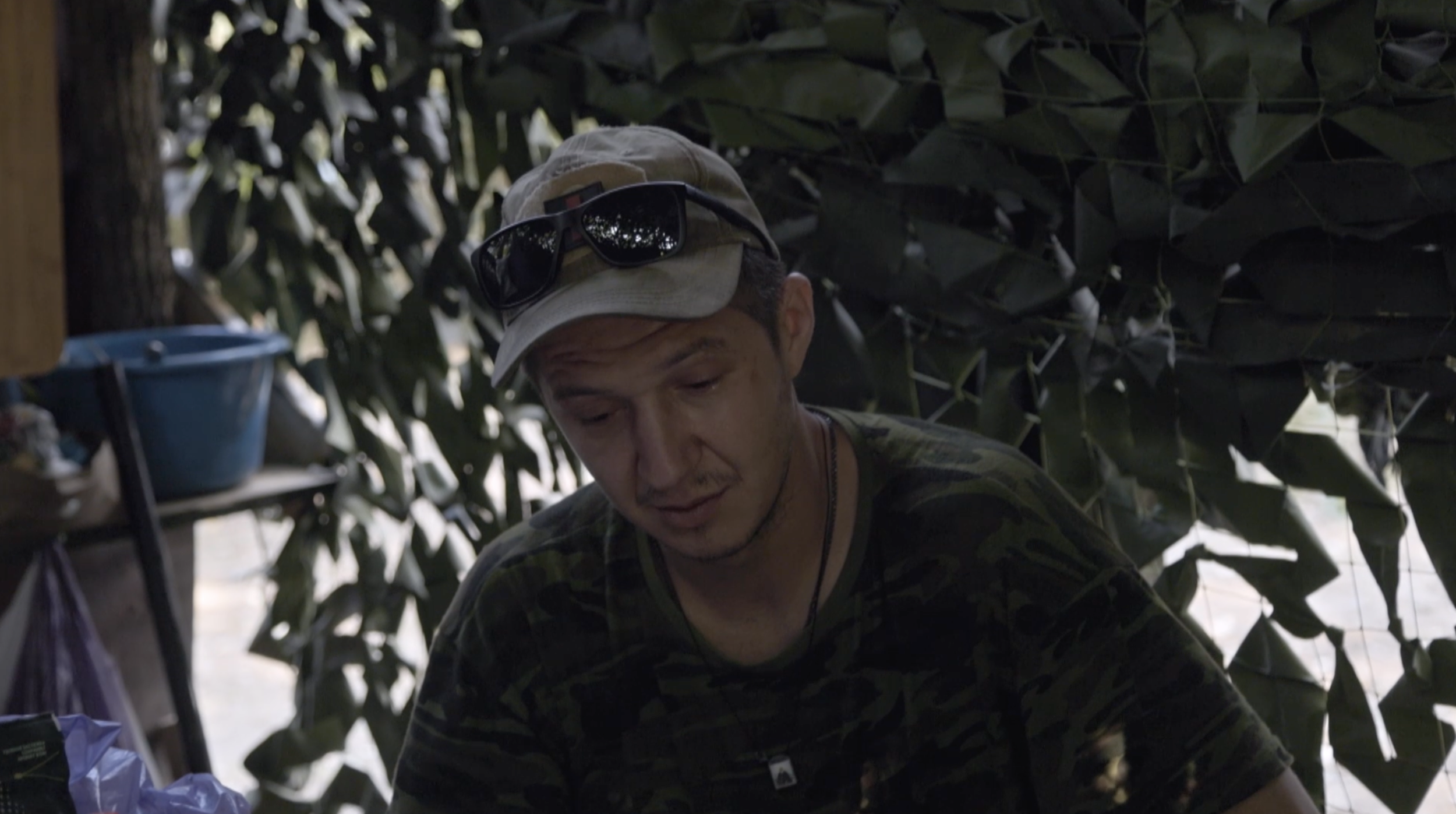
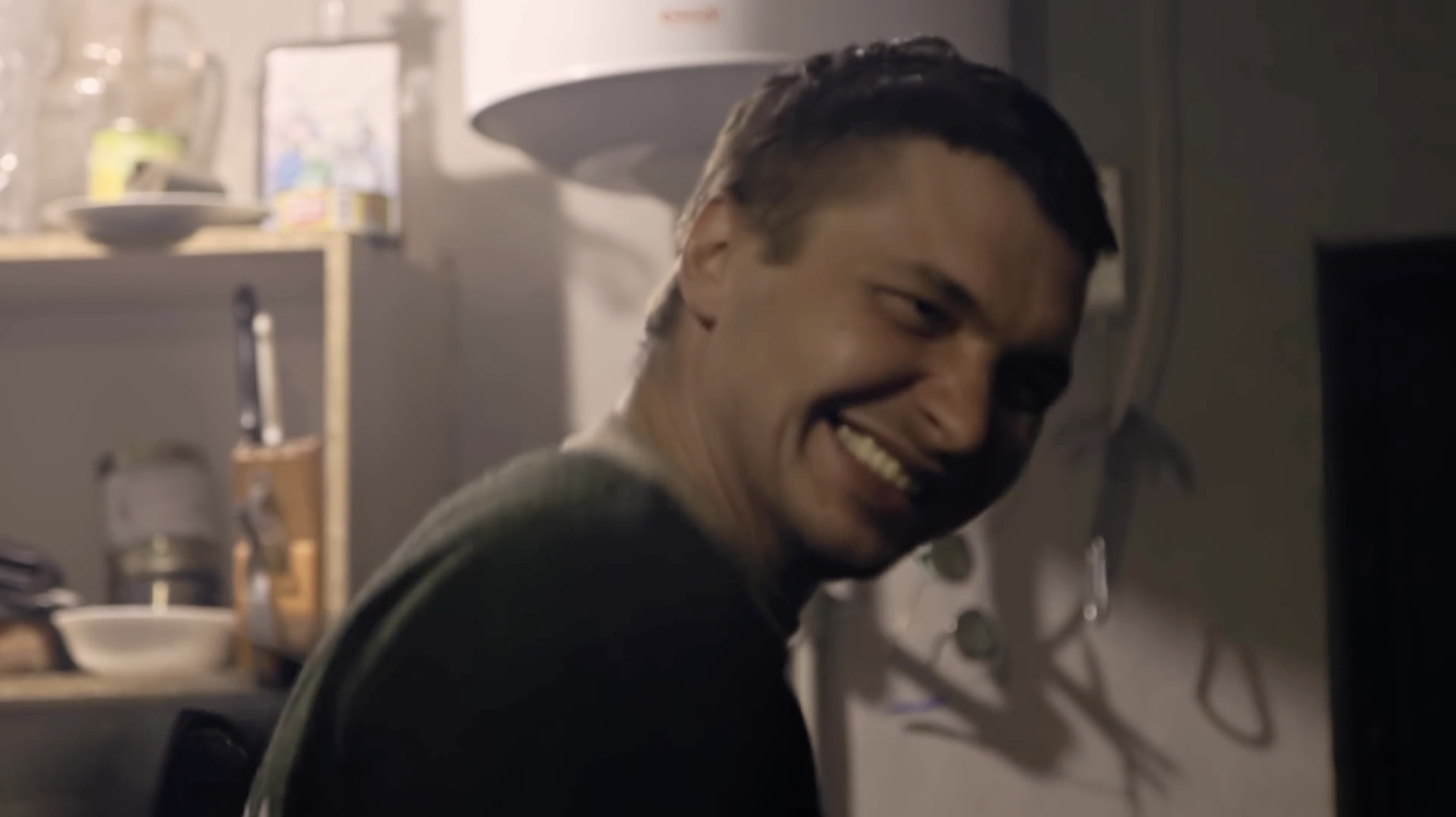
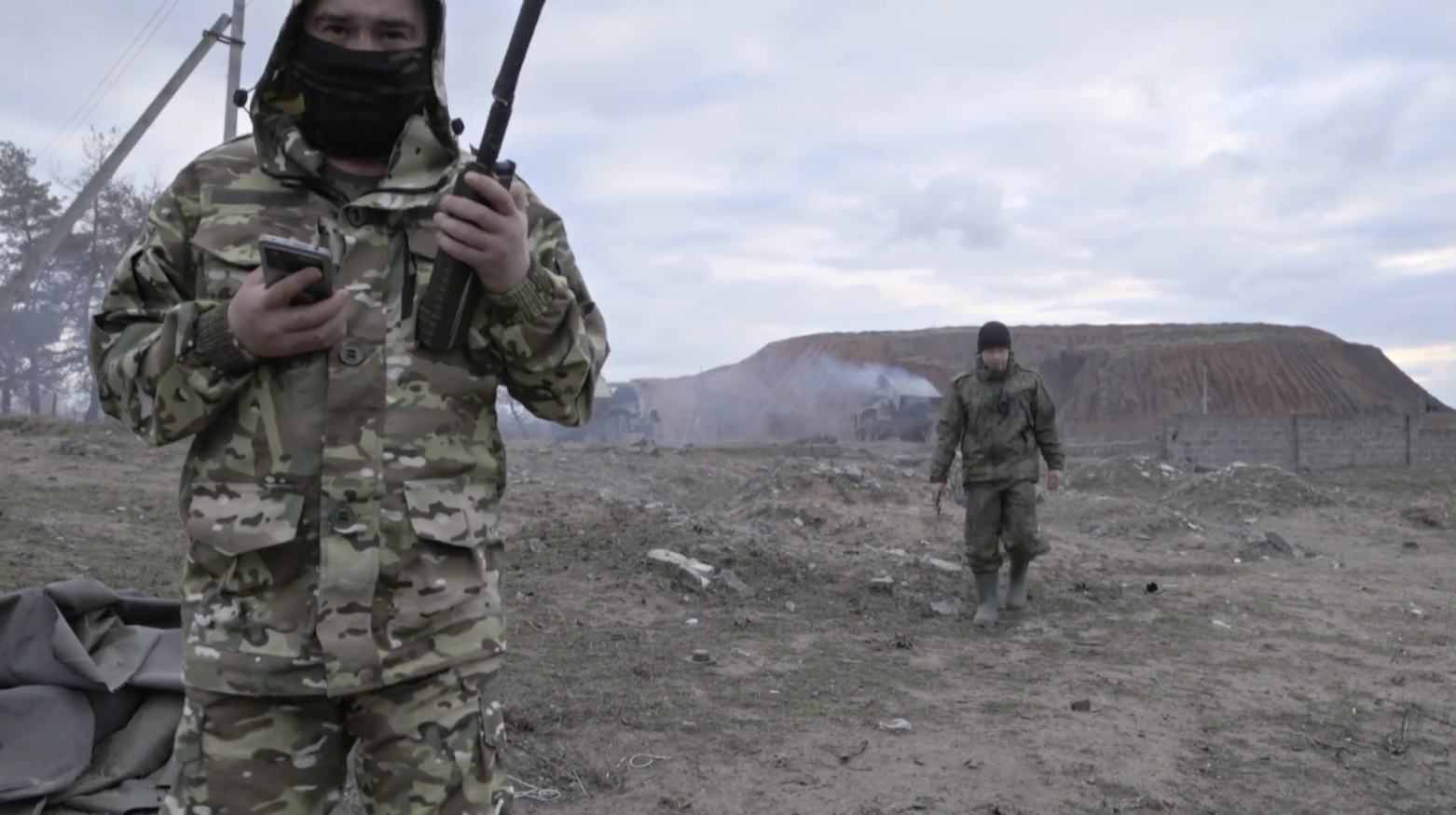
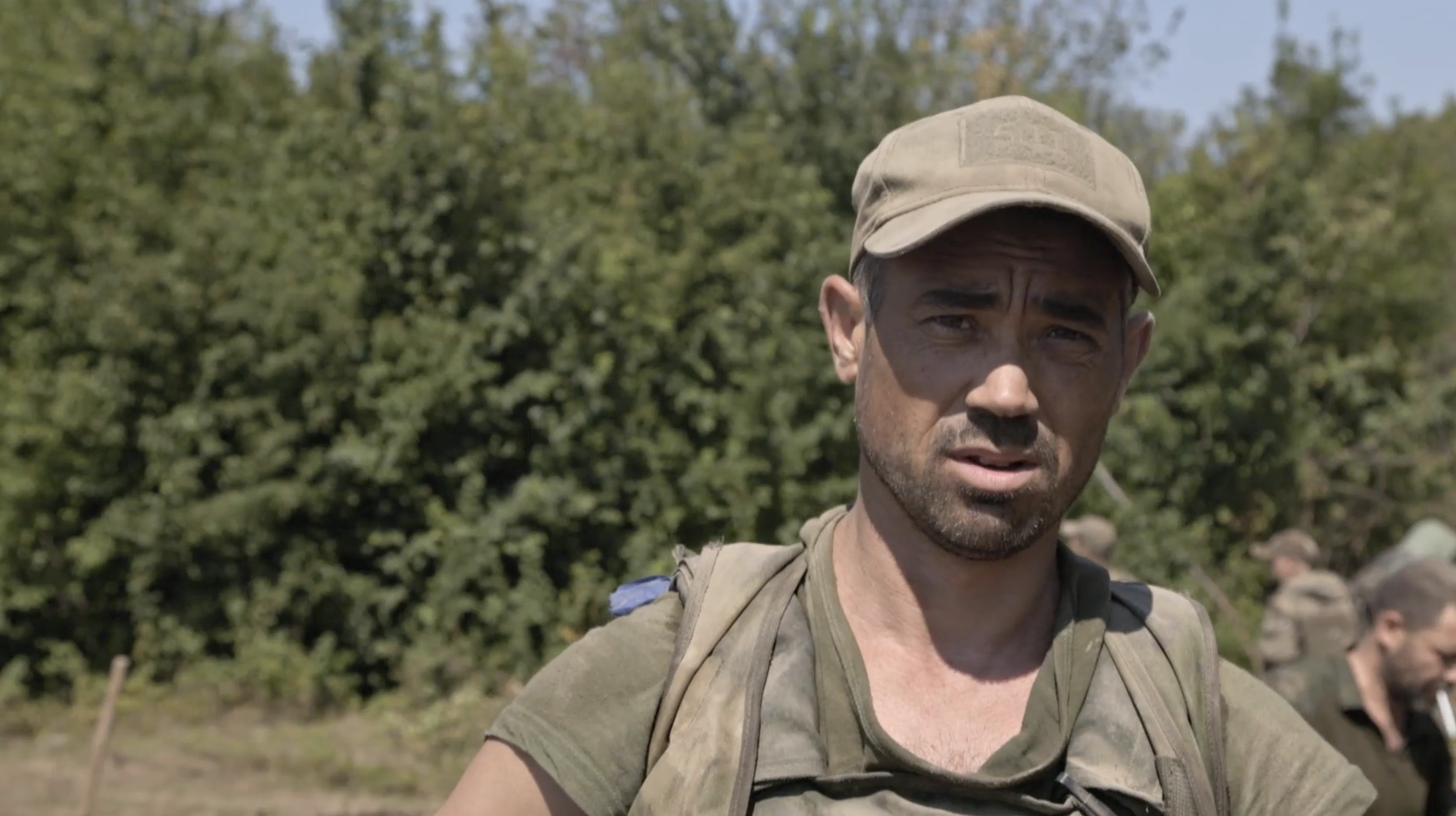
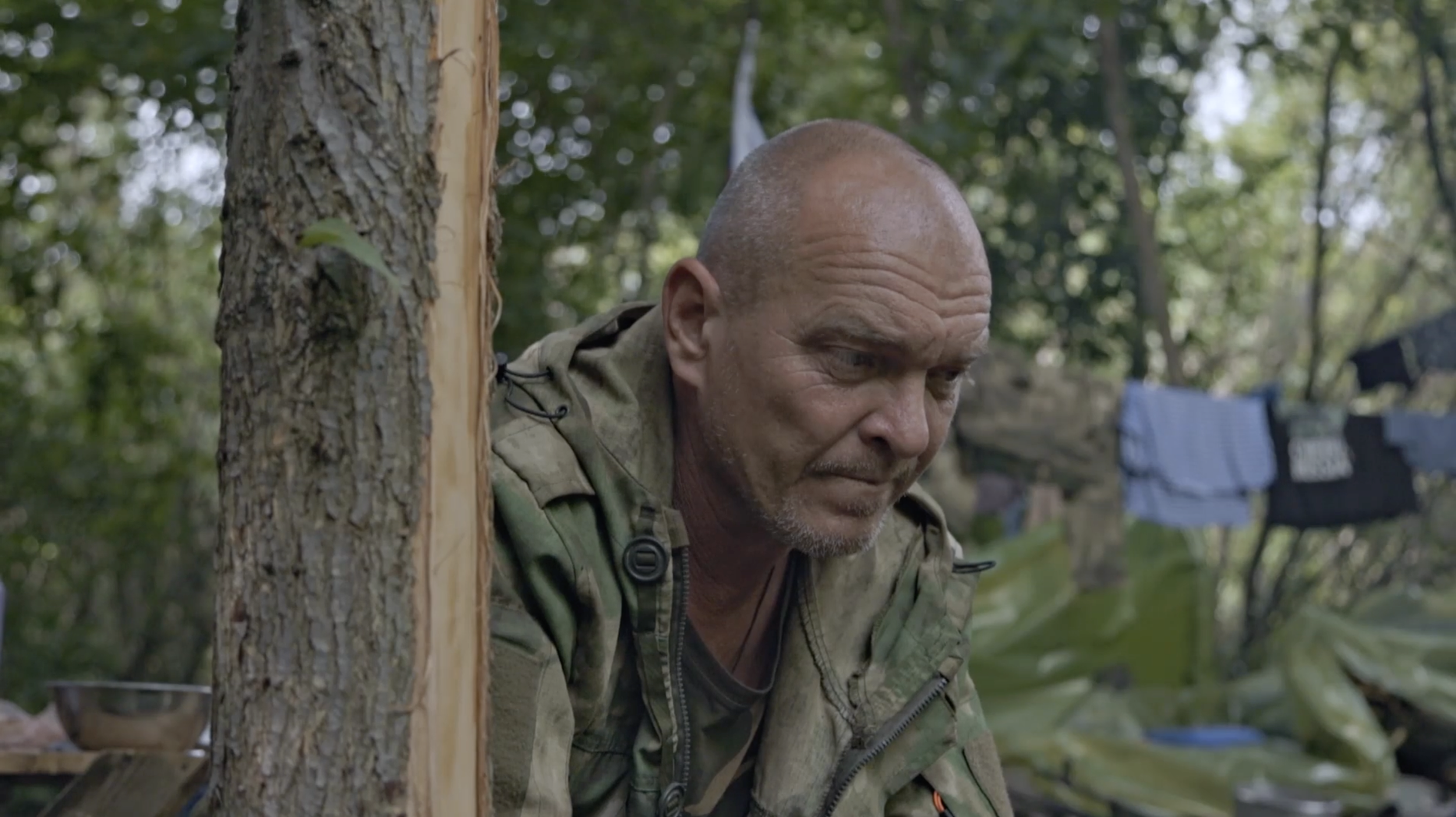
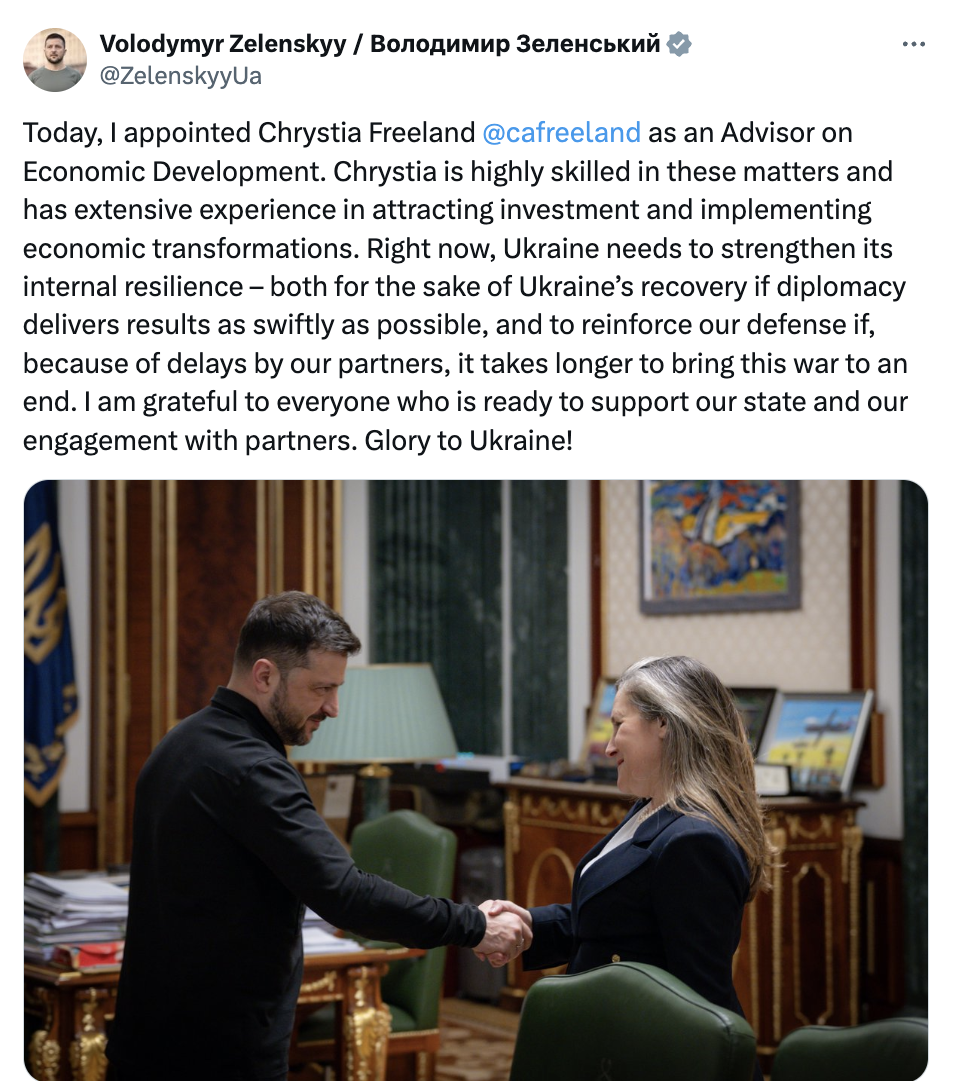
Chrystia Freeland, Canada’s Deputy Prime Minister of Ukrainian descent — the one whose opposition to Russians at War might have lead to the cancellation of the film’s TVO broadcast (according to Canadian press) – lost the election in Canada along with the Liberal Party.
She now serves as an economic advisor to Volodymyr Zelenskyy.
More reviews.
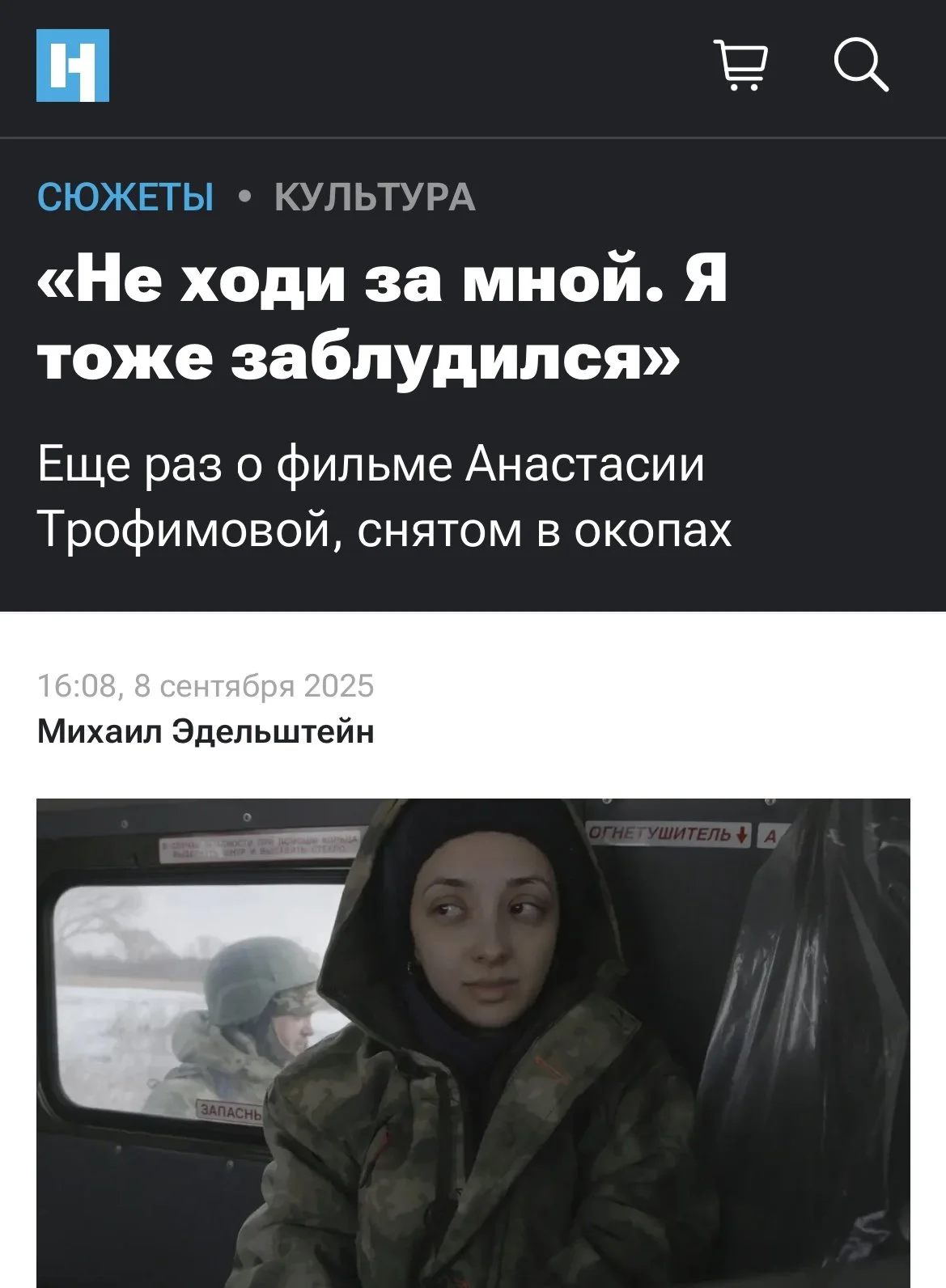
‘Trofimova’s film is a profound exploration of the very foundations of Russian life. Or perhaps not only Russian life.’
– Novaya Gazeta
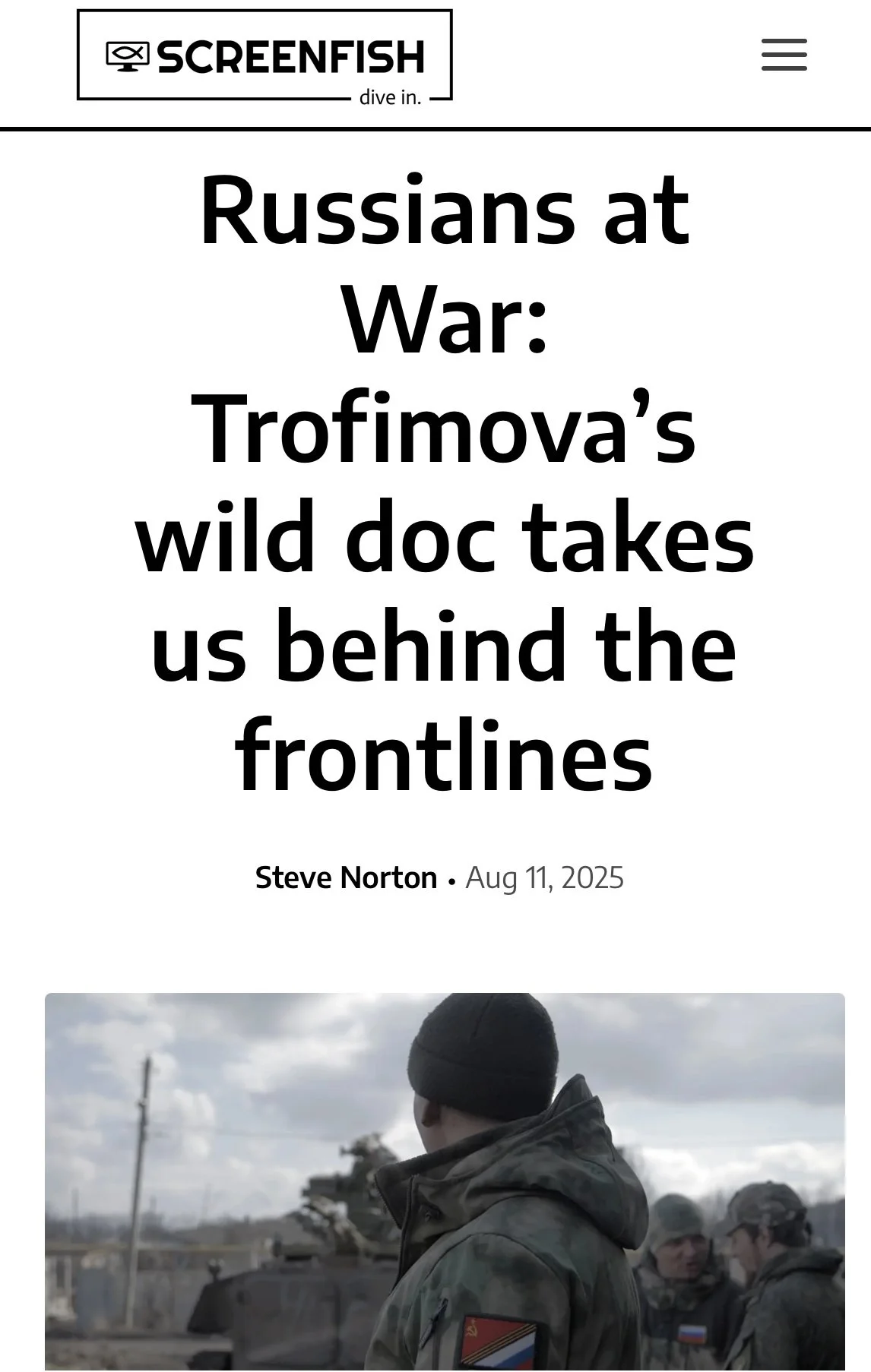
‘Russians at War is a stunning and shocking piece of cinema. By stepping behind enemy lines, Trofimova offers some of the most graphic 1st-person war footage that we’ve seen in some time.’
– Screen Fish
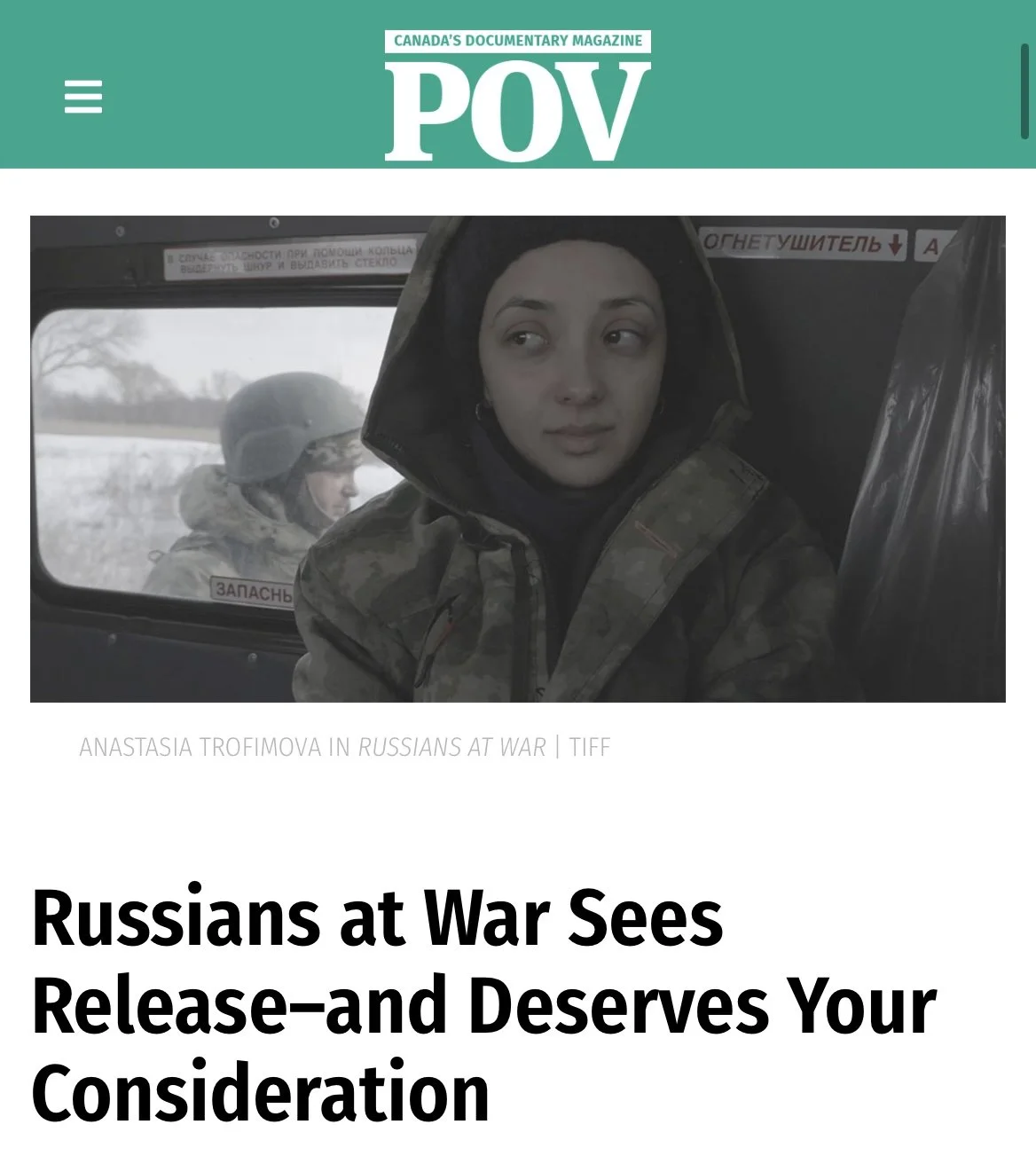
‘It’s the flashpoint film about the Russo-Ukrainian War, and probably one of the most difficult movies you’ll ever see. It’s also an essential doc about what it means to report on wartime, what it means to understand the complexities and nuances of war, and what it means to remember how empathy makes us human.’
– POV Magazine
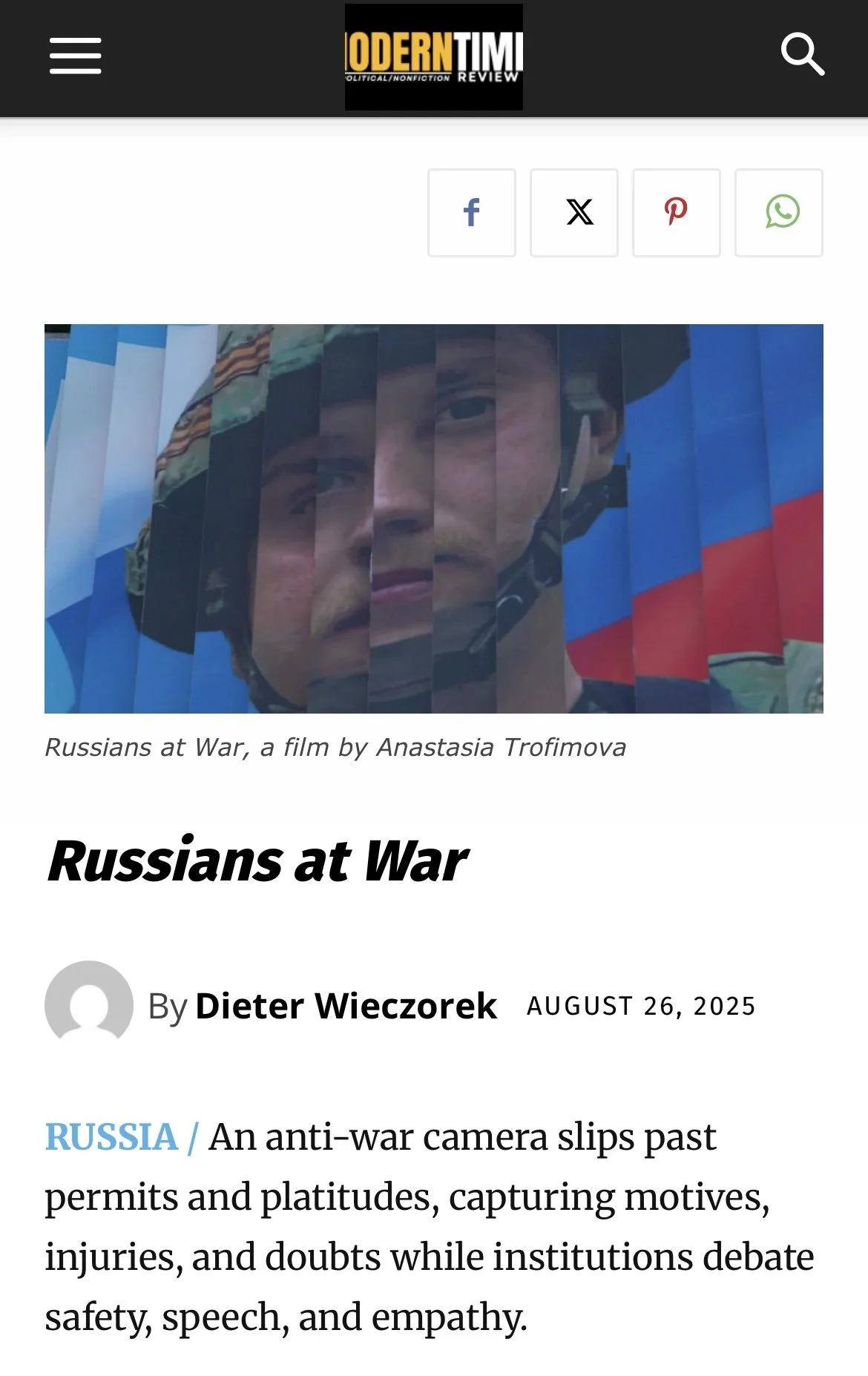
‘Trofimova offers a work that seeks humane truths… She took a truly considerable personal risk to make this anti-war film in the hope of making a small contribution to a swift end to this war… Humanity seems to be the enemy of the propaganda machine itself.’
– Modern Times Review
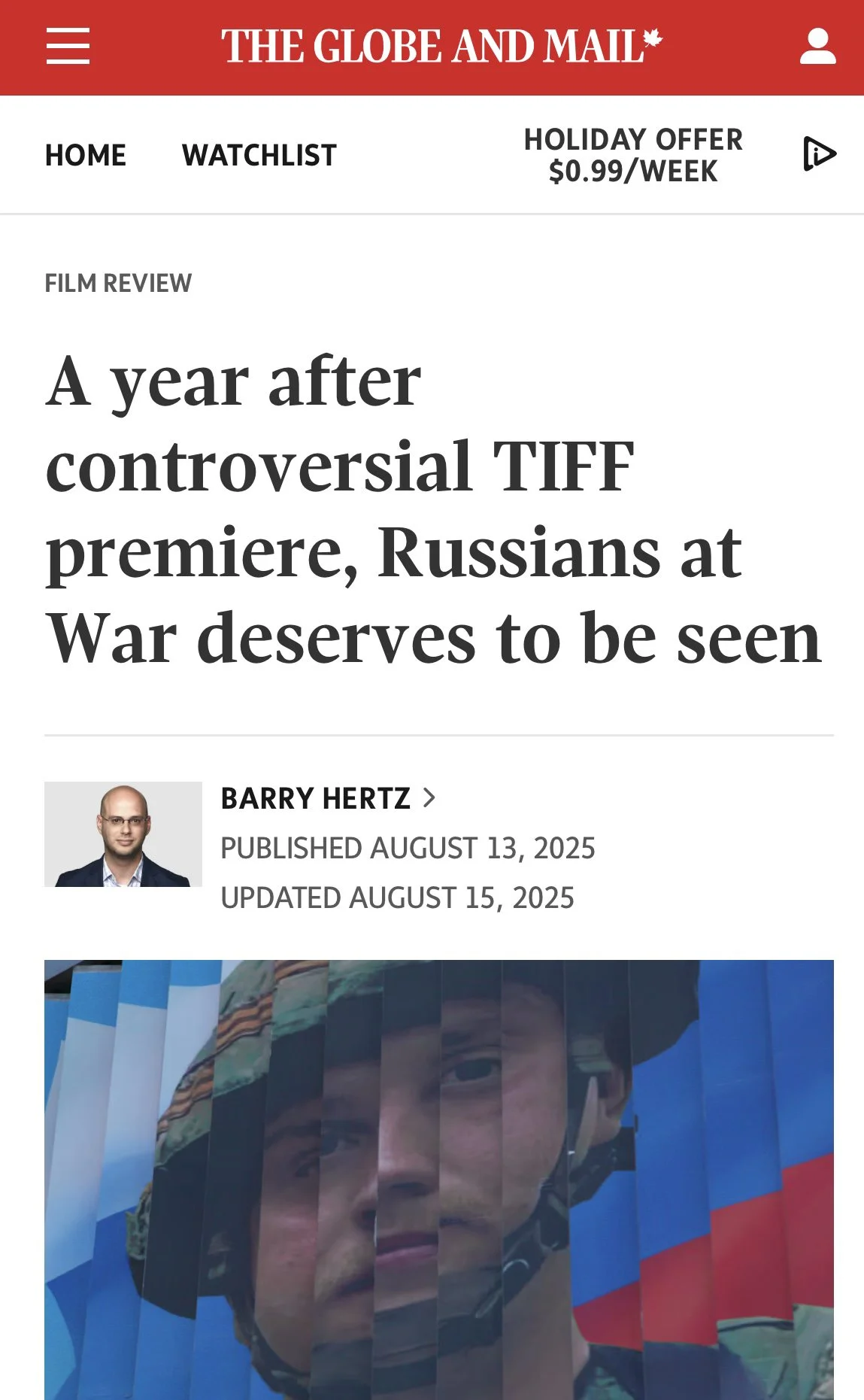
‘Like Tim Hetherington and Sebastian Junger’s lauded 2010 doc Restrepo, following U.S. soldiers in Afghanistan, or Deborah Scranton’s landmark 2006 doc The War Tapes, which largely consisted of footage shot by National Guard soldiers while deployed in Iraq, Trofimova’s film is a raw work of observational cinema meant to plunge the audience into a very specific, very narrow reality.’
– The Globe and Mail
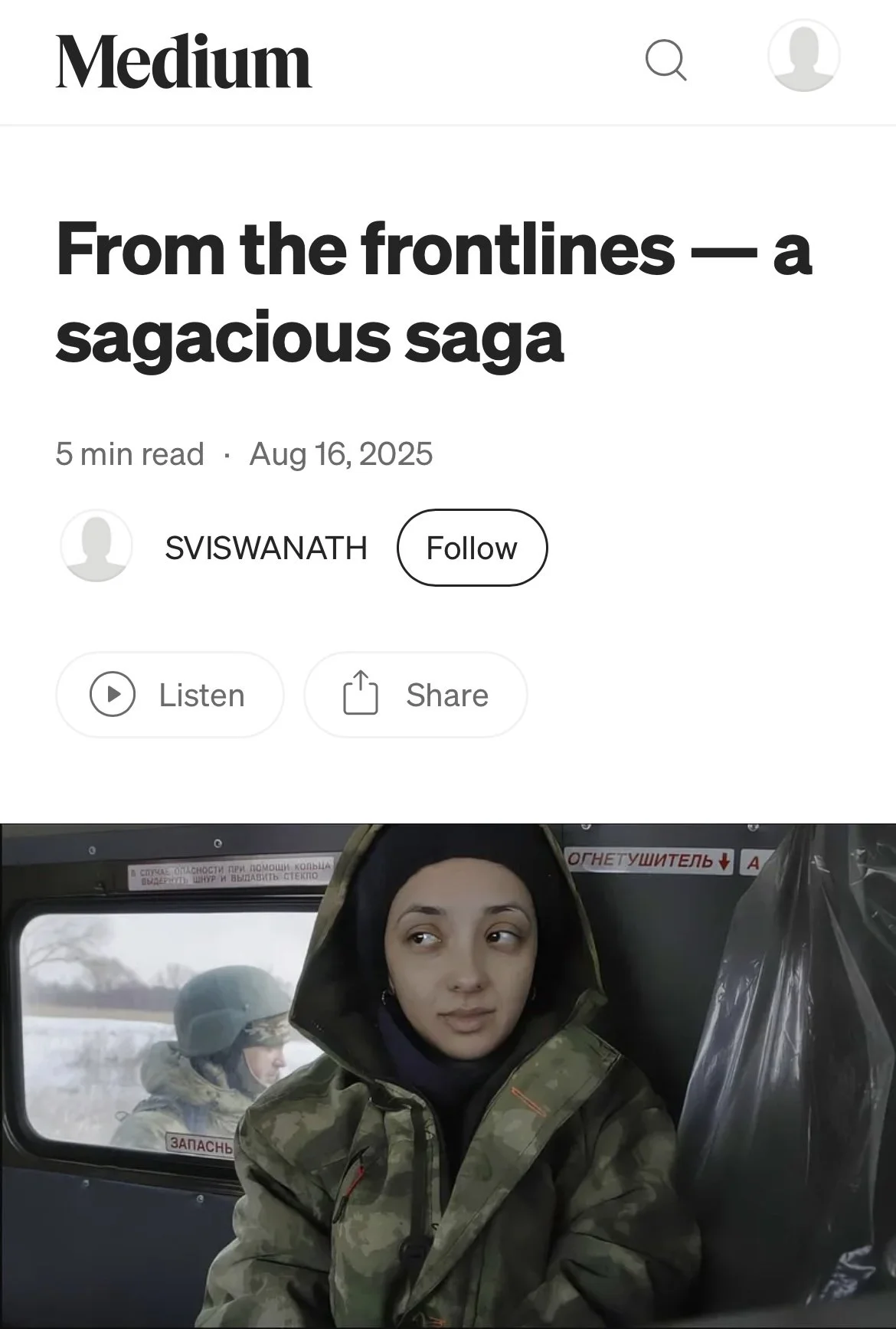
‘It is such very intimate and personal accounts of men in uniform fighting on the front facing death by the day with Damocles Sword of uncertainty looming over their heads that makes Russians at War a different documentary to experience and engage in.’
– Medium
‘Anastasia Trofimova risked her life to make Russians at War — and then spent the next year fighting to have the film shown.’
– Toronto Star
‘Russians at War reminds us that there can be no winners in war, that everyone loses, that there is no justice in the world, and that it is futile to seek it. Soldiers are nothing more than expendable pawns for those in high offices. It is strange, of course, that these banal ideas – which humanity came to grasp as early as the last century – must once again be explained.’
– Sota
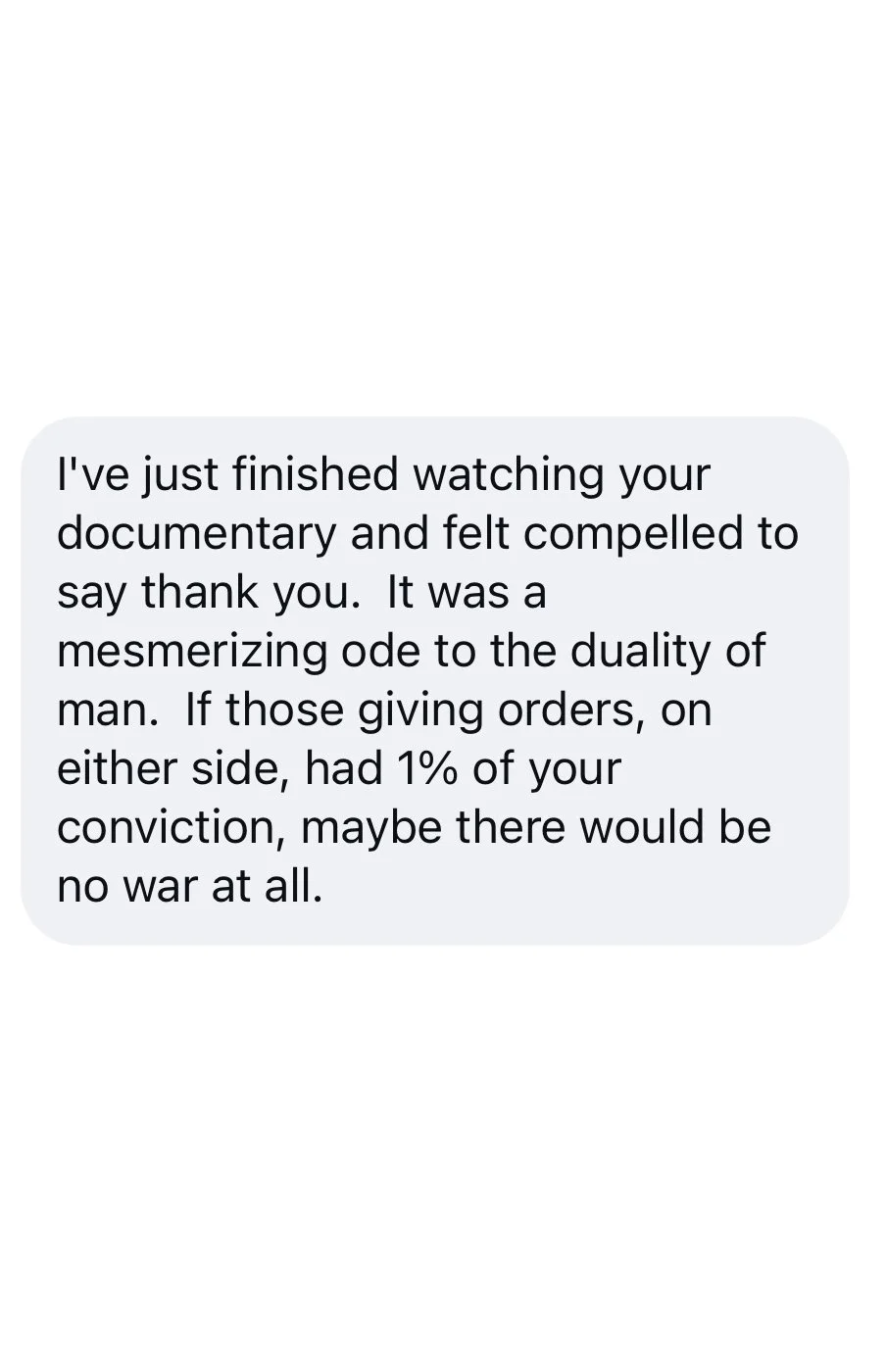
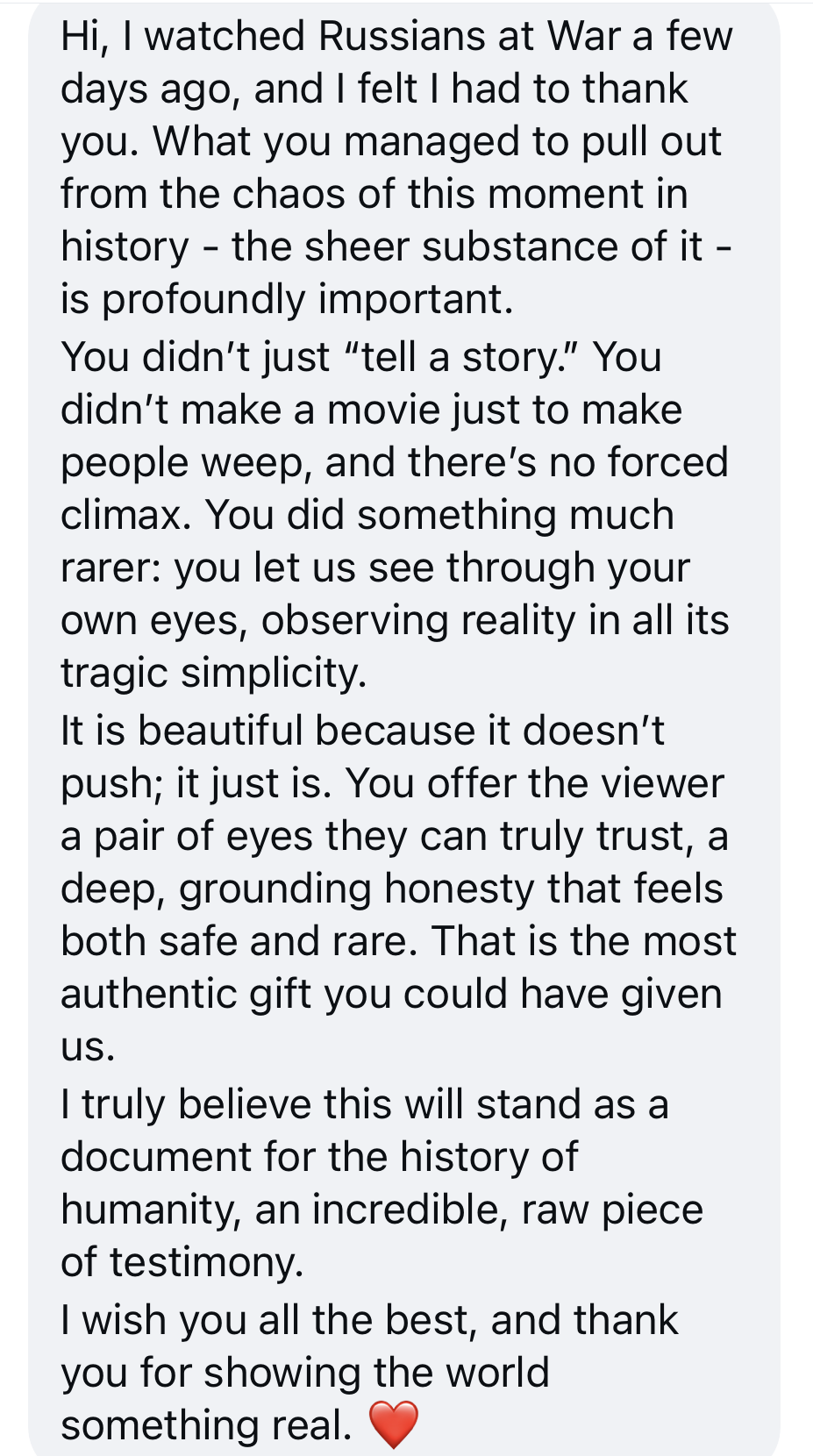
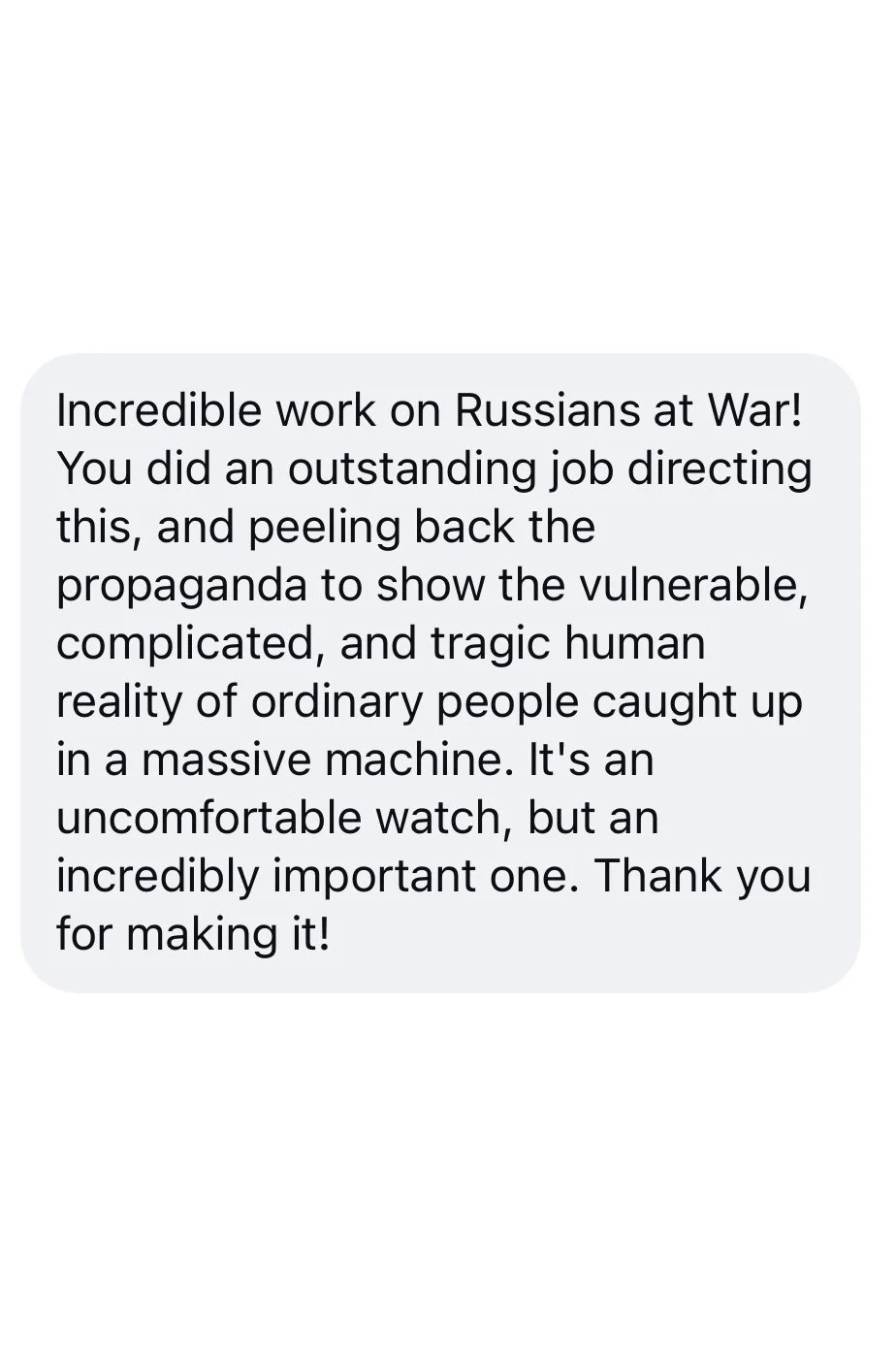
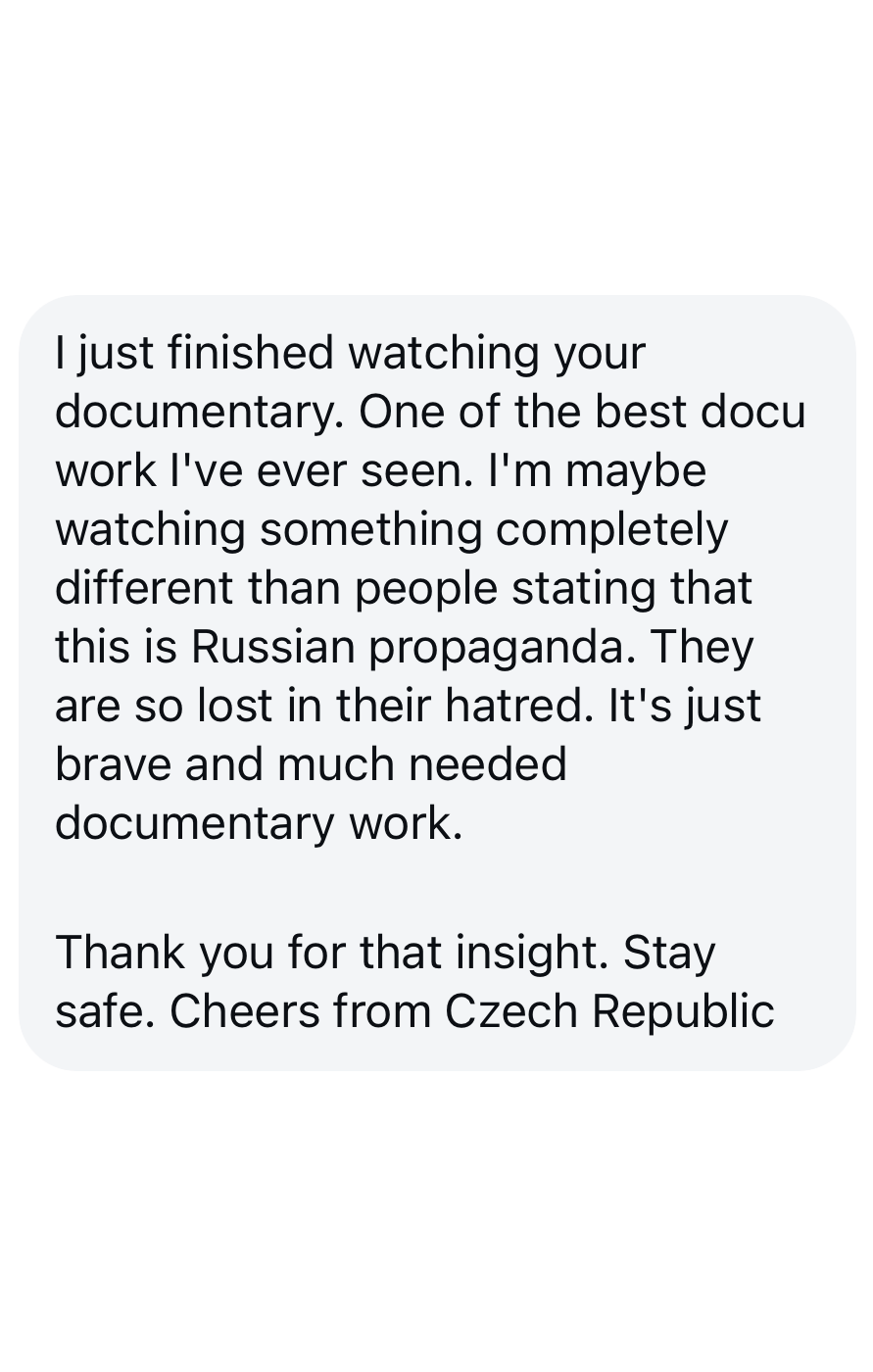
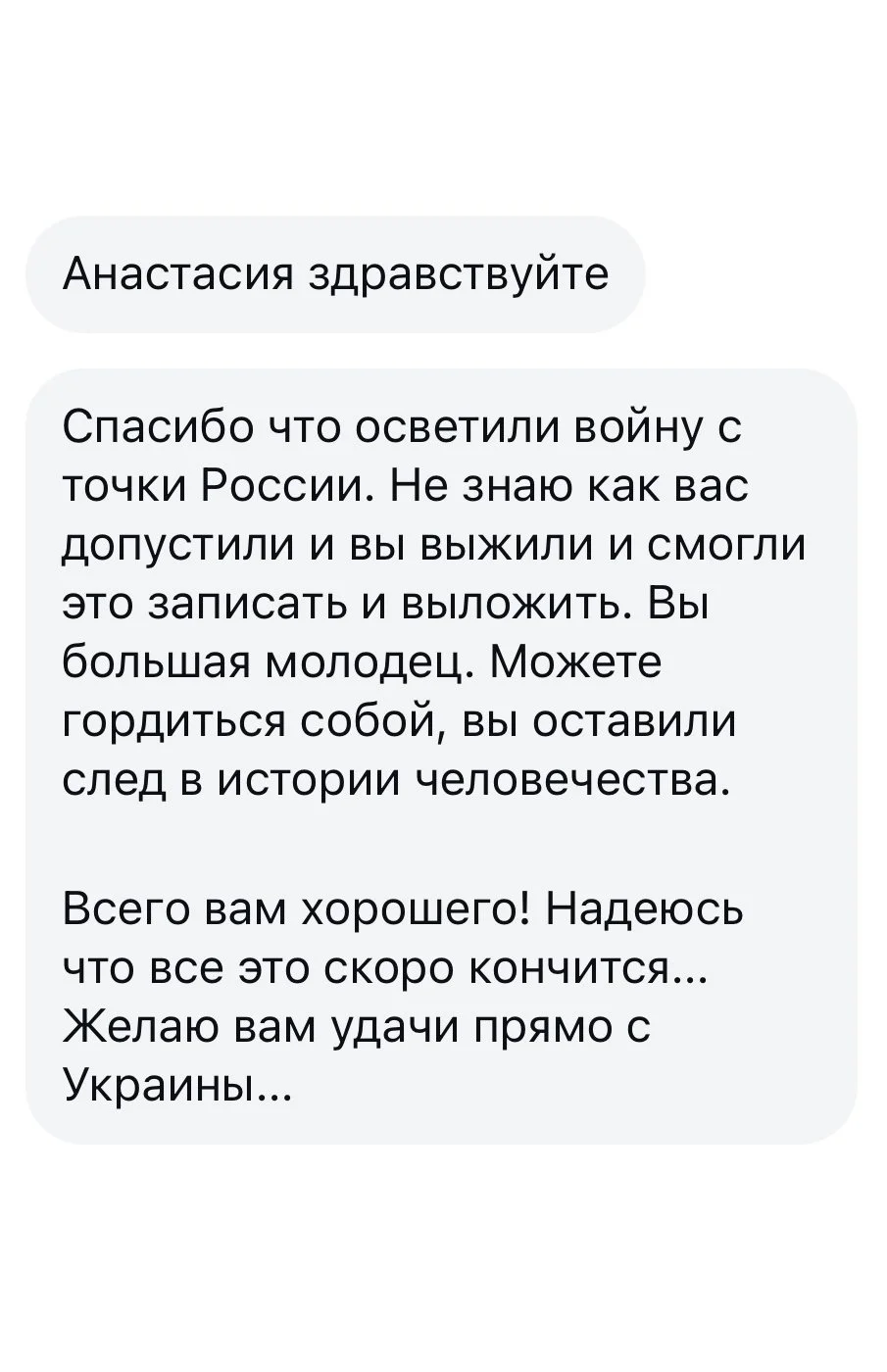
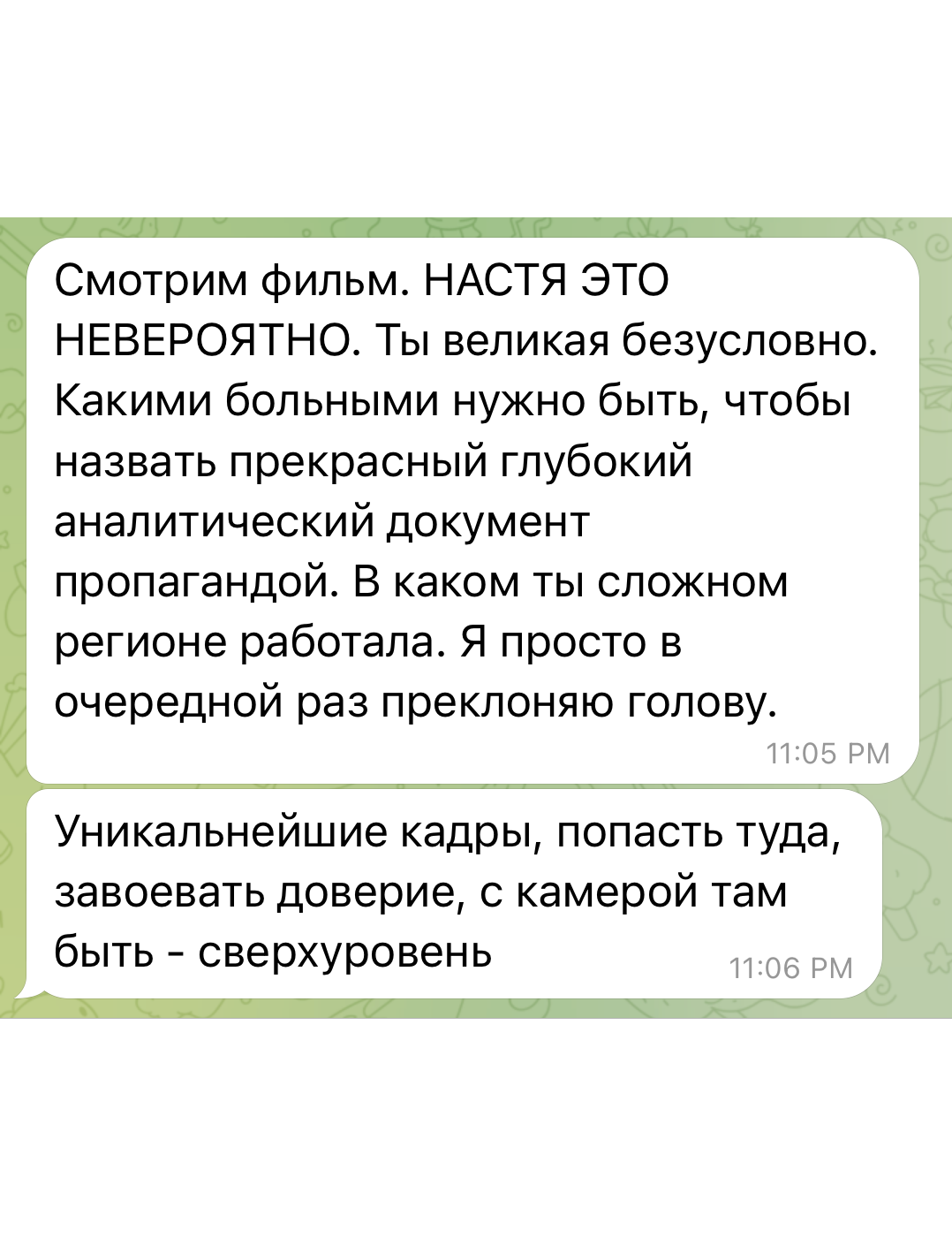
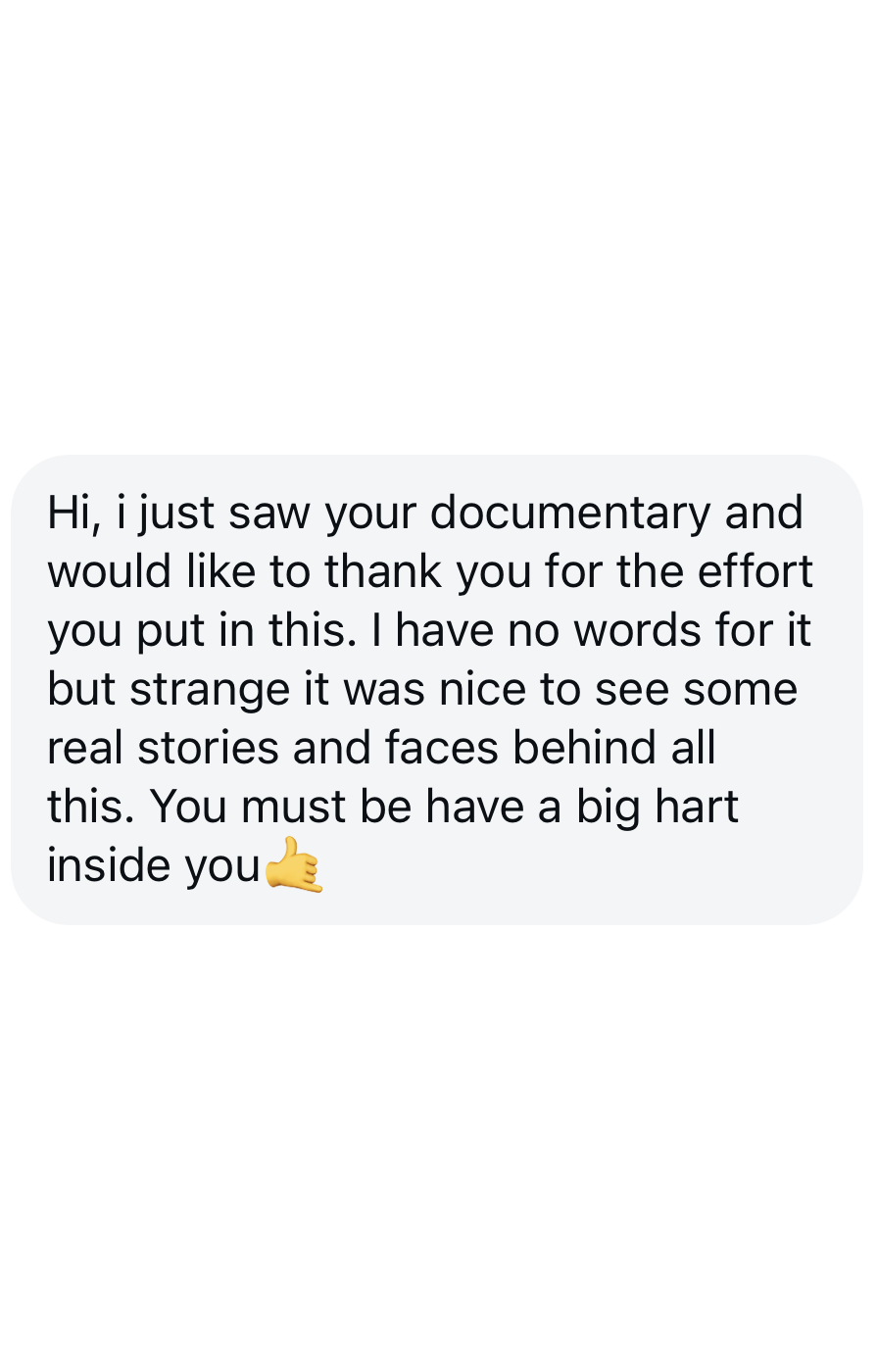
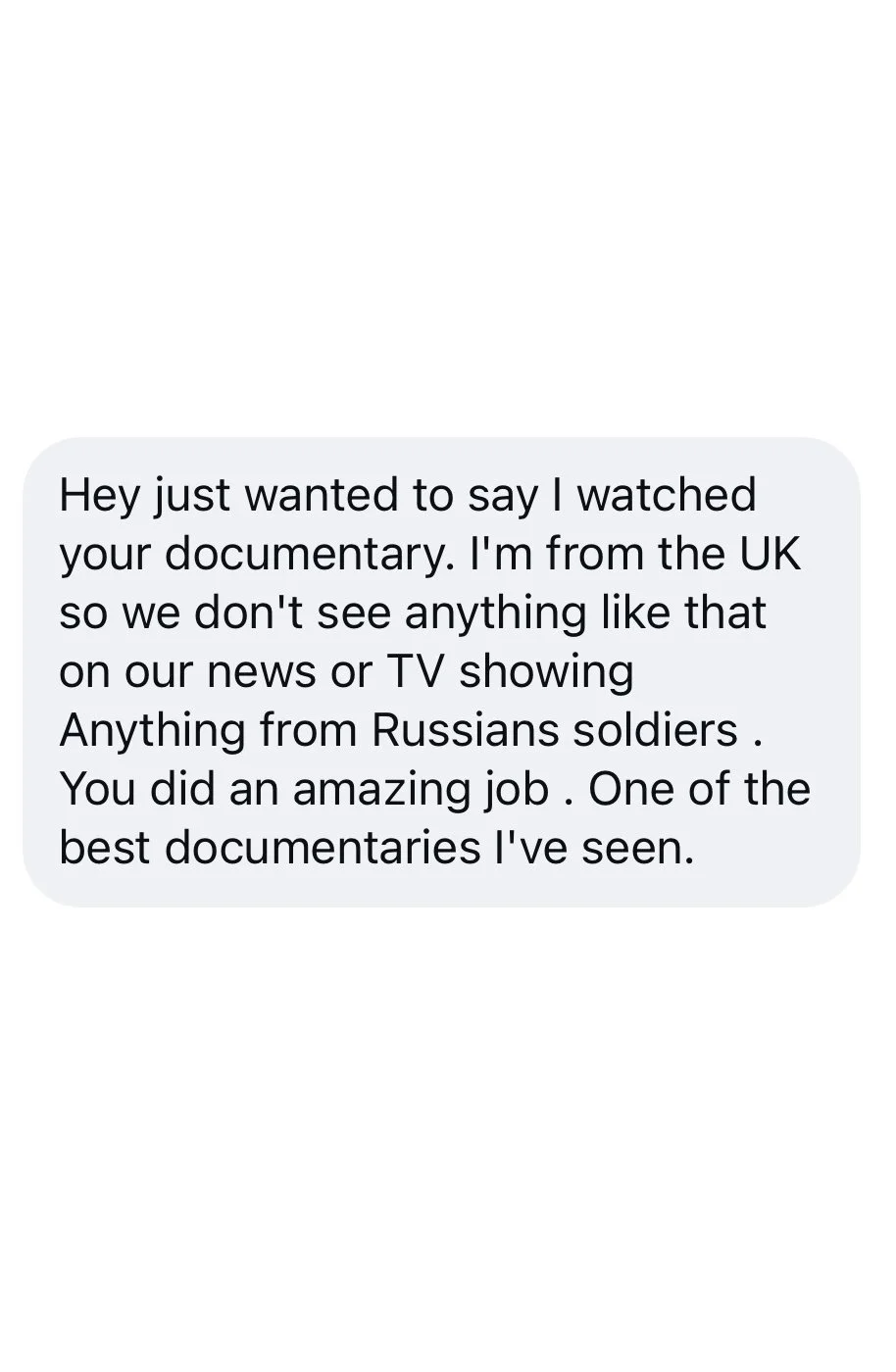
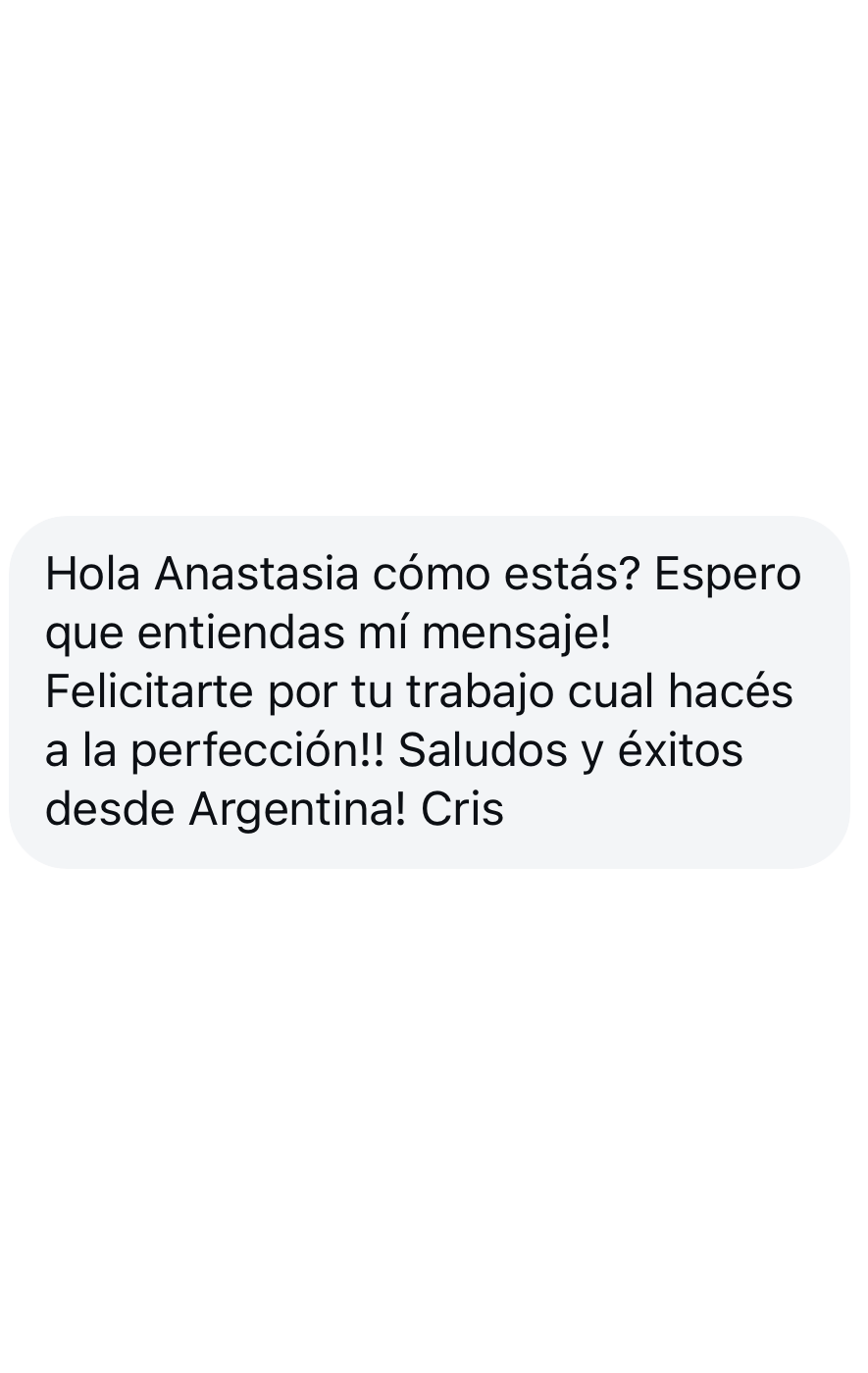
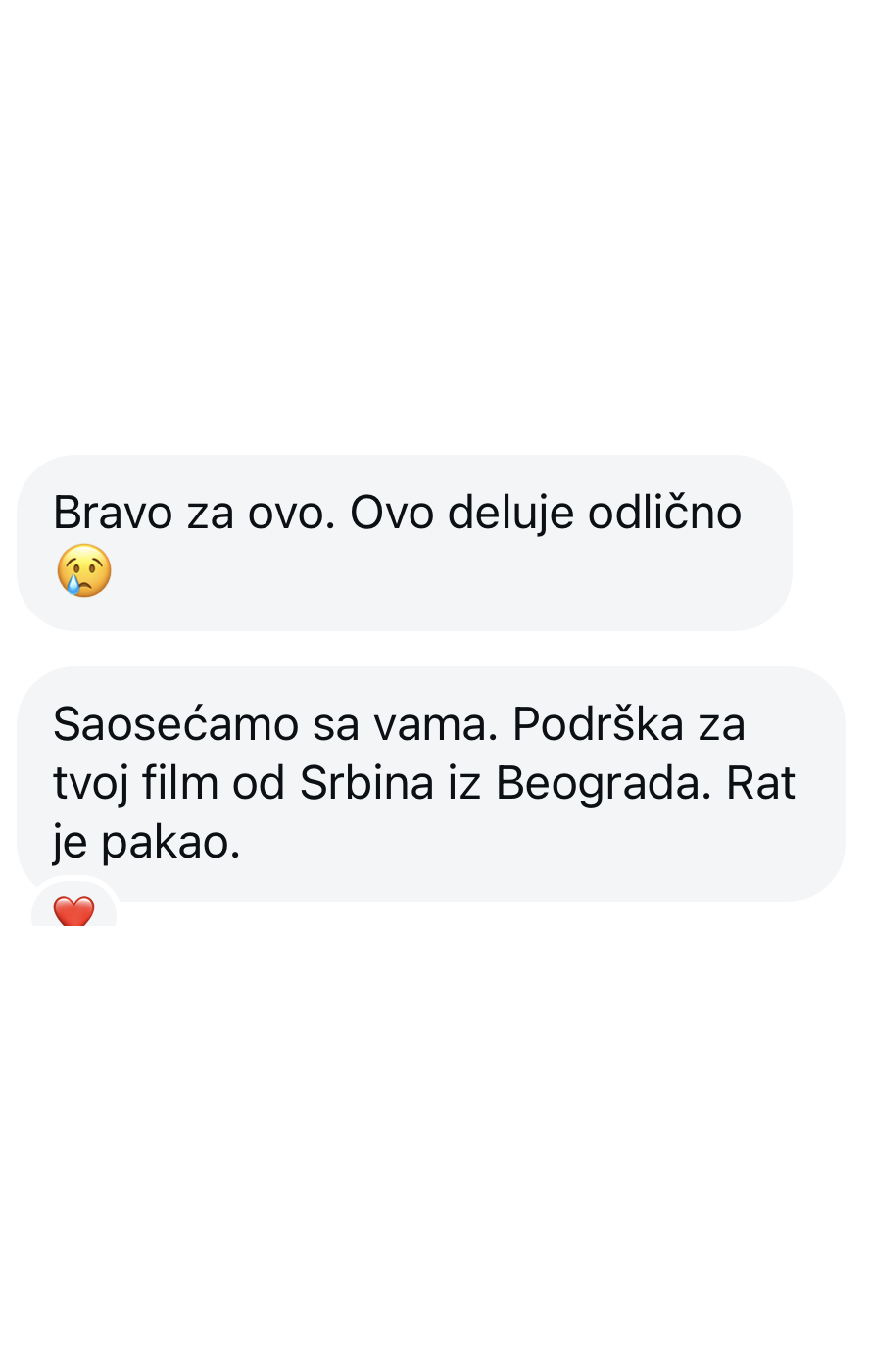
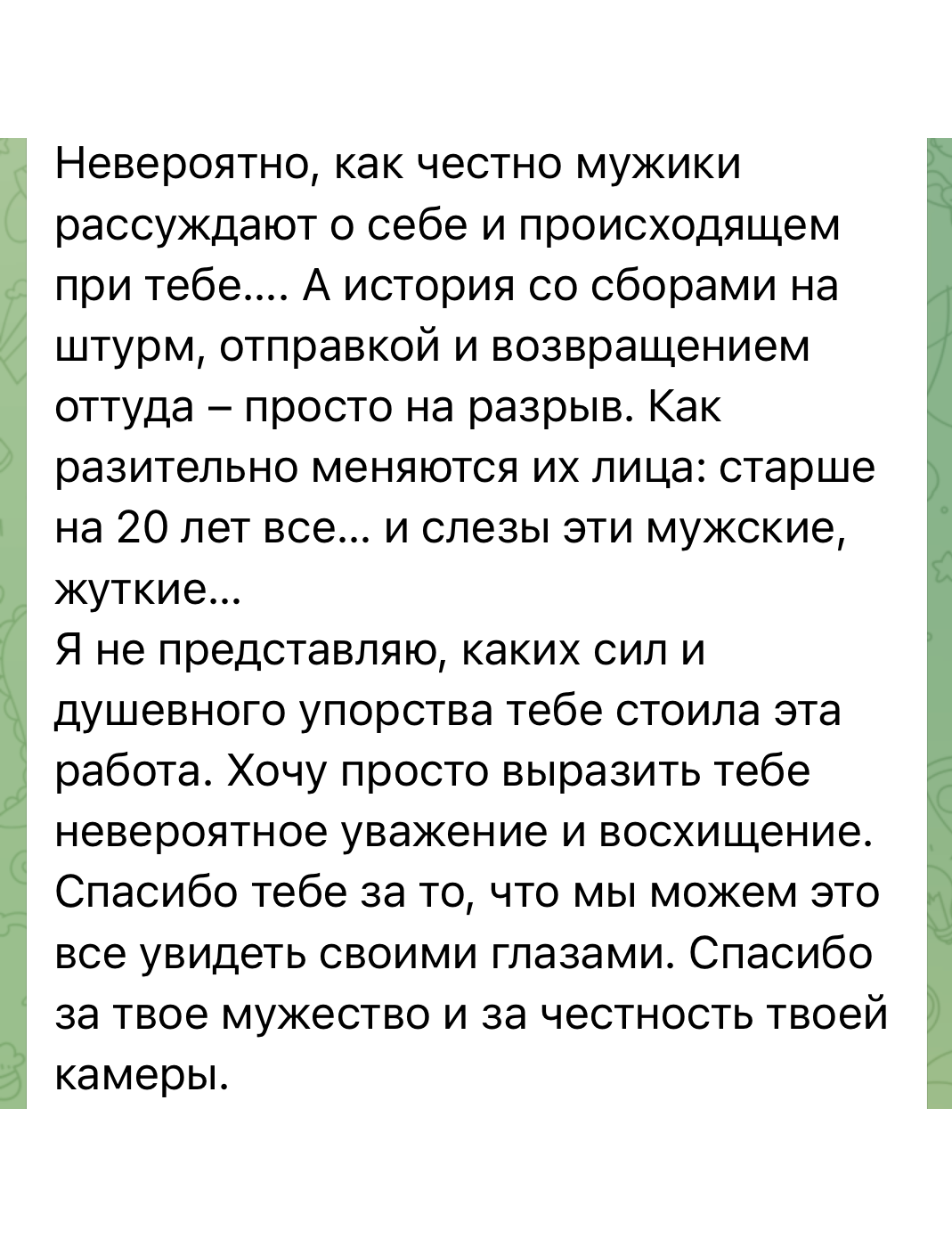
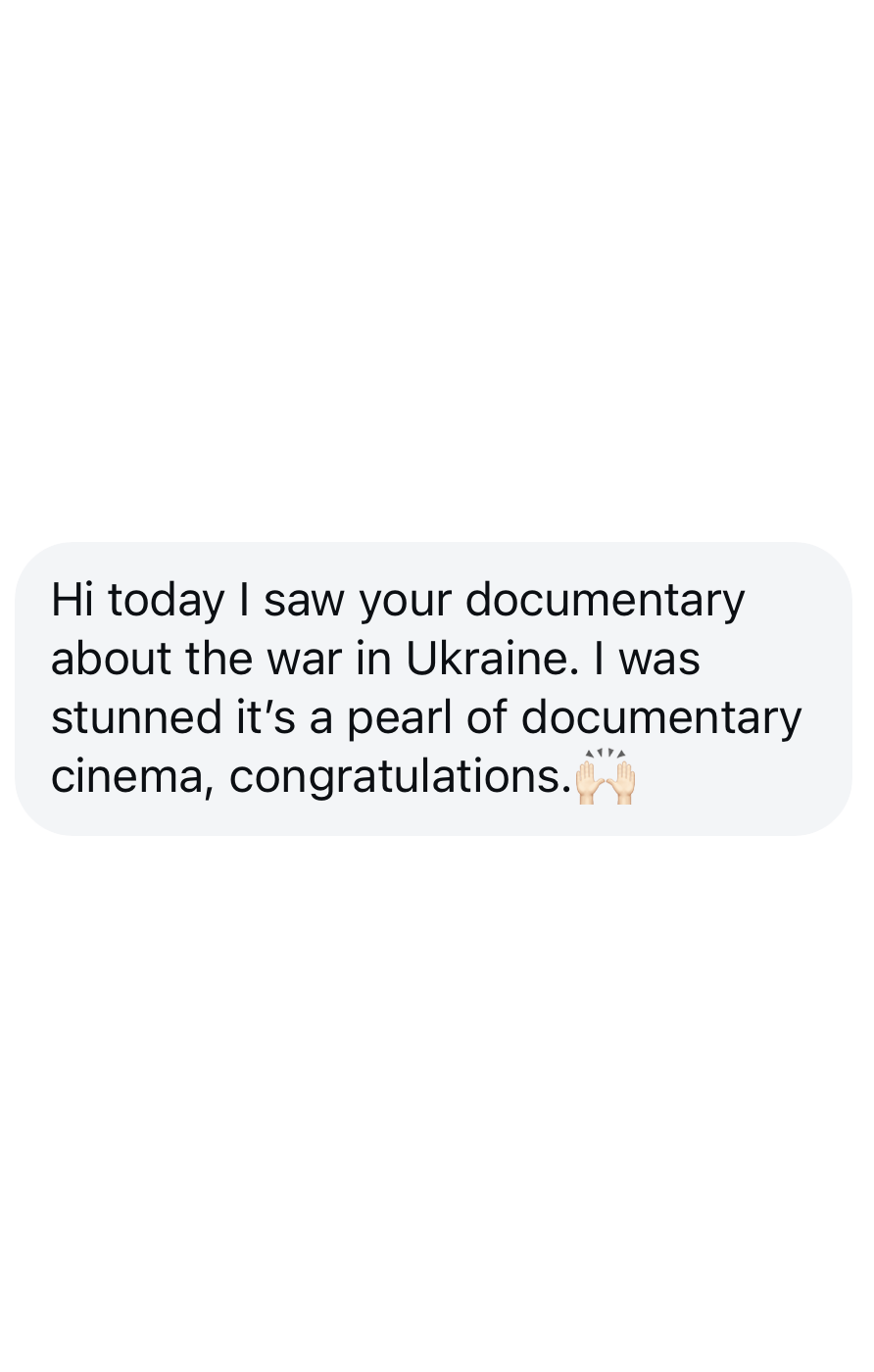
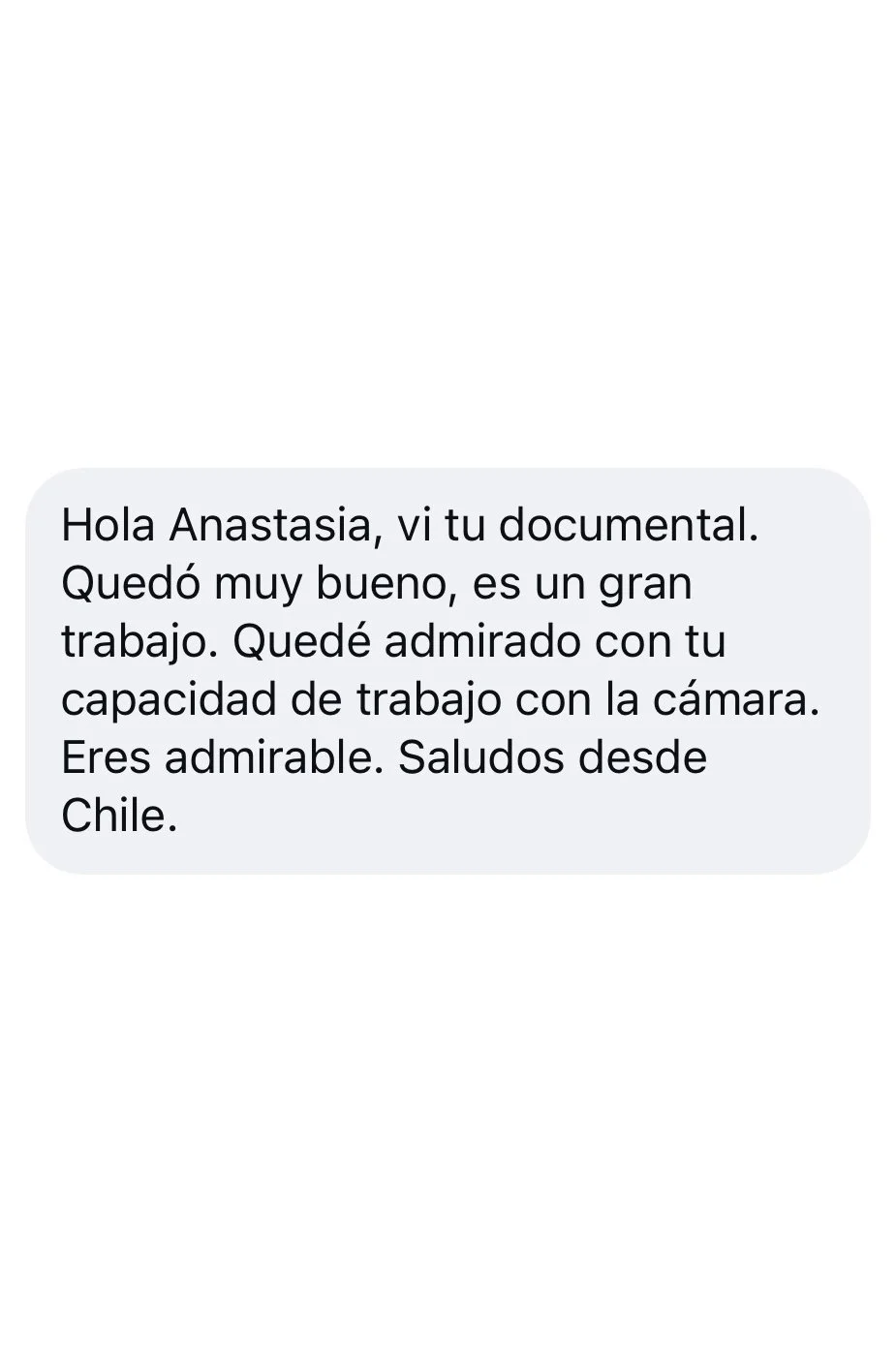
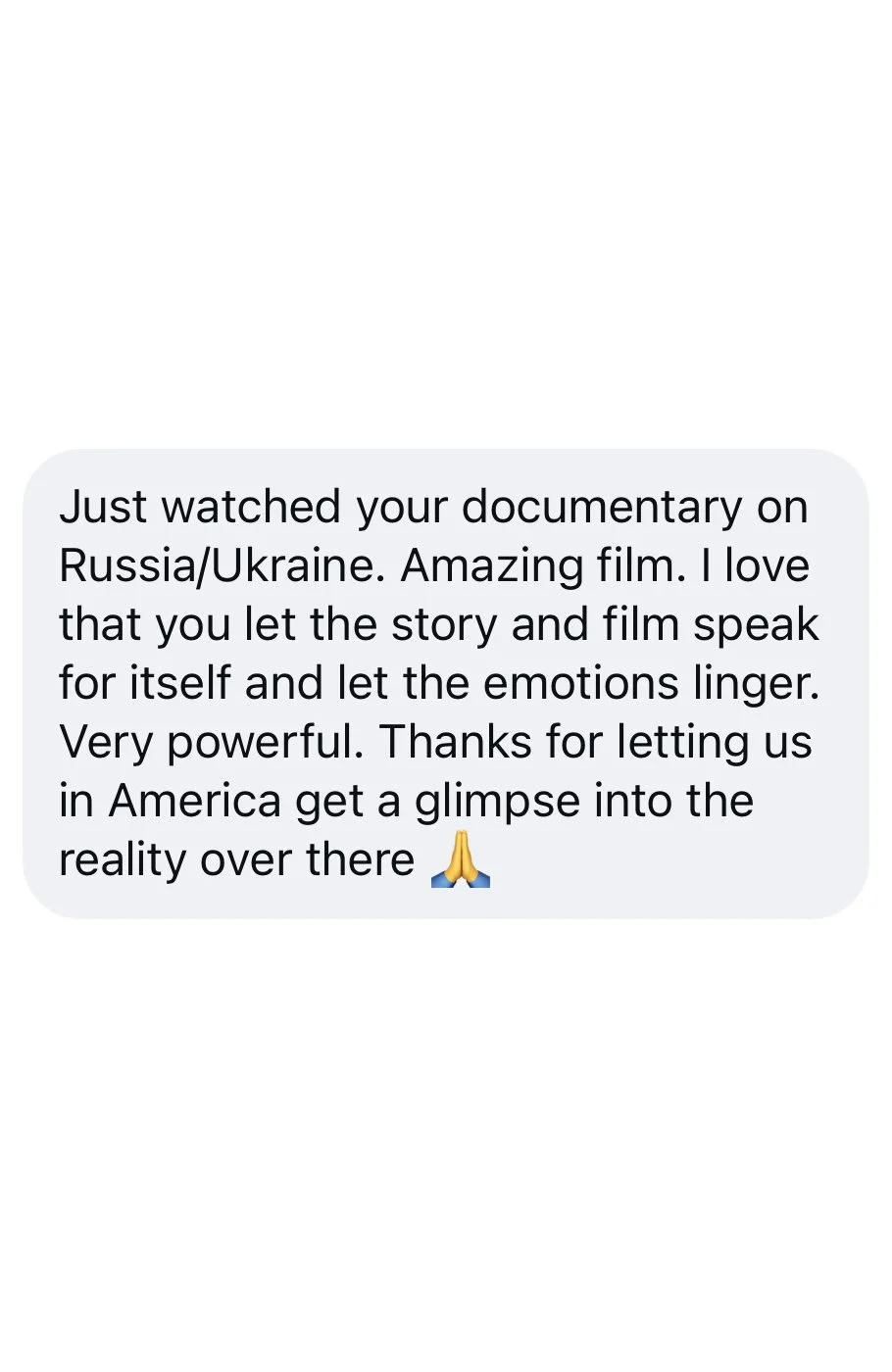
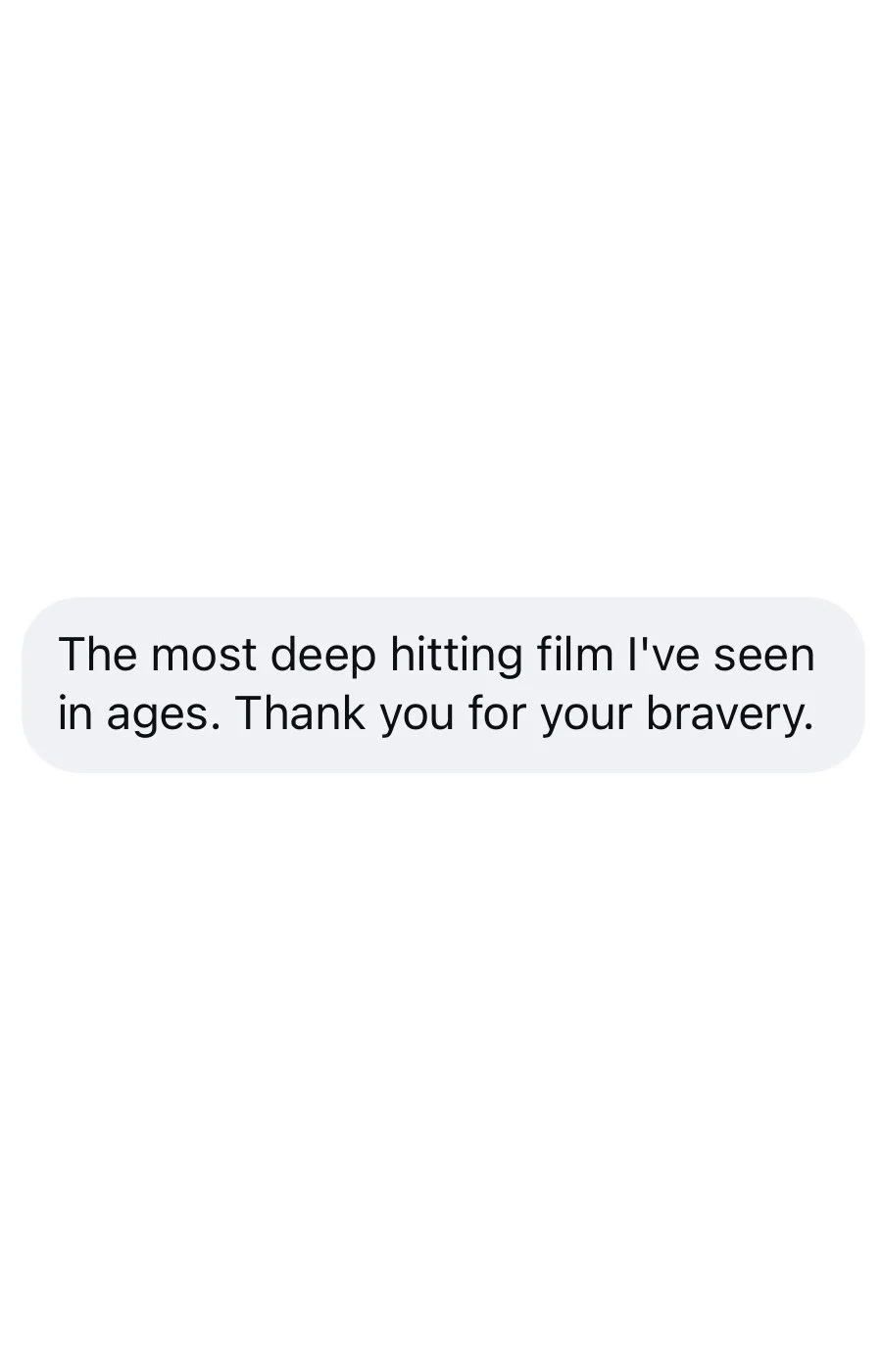
A few of the many messages from viewers all over the world…
‘…I don’t know how you managed to get in, or how you survived and were able to record and publish this. You’re truly remarkable. You can be proud of yourself, you’ve left your mark on human history... I’m sending you my best wishes all the way from Ukraine...’
‘…I want to express my gratitude for the strongest documentary, there’s no words to describe the pain that both of our nations live through… I lost a close friend there, he was mobilized, he didn’t want to go, he was raising his son… and there are thousands of such people! It’s a brave thing you did, to make this doc.’
‘It’s incredible how honest these men are to you… And the story with the offensive, going and returning – it just killed me. How drastically do their faces change: they look 20 years older… and these awful men’s tears… Thank you for allowing us to see it with our own eyes. Thank you for your bravery and the honesty of your camera.’
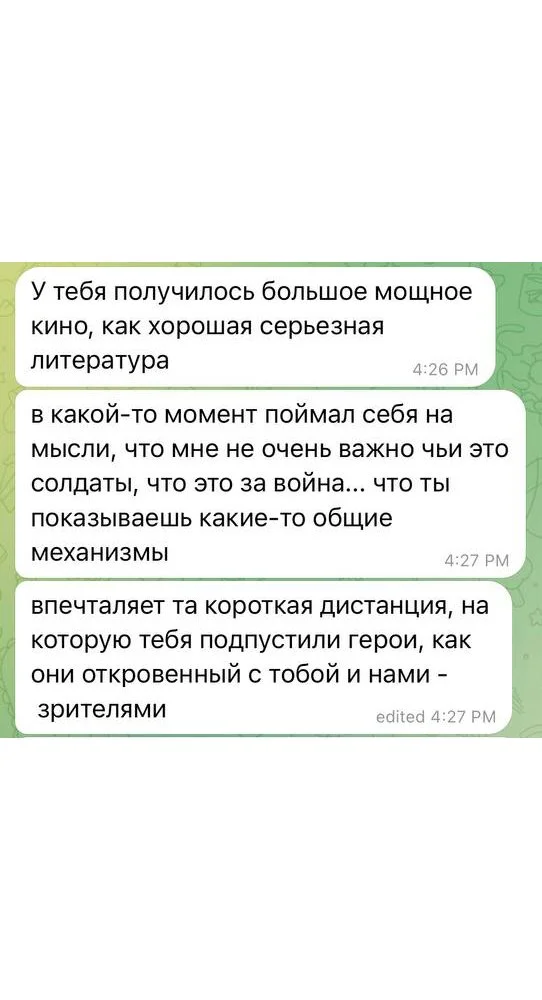
‘At some point I caught myself thinking that it doesn’t matter whose soldiers they are or what war it is… you’re showing some universal mechanisms…’
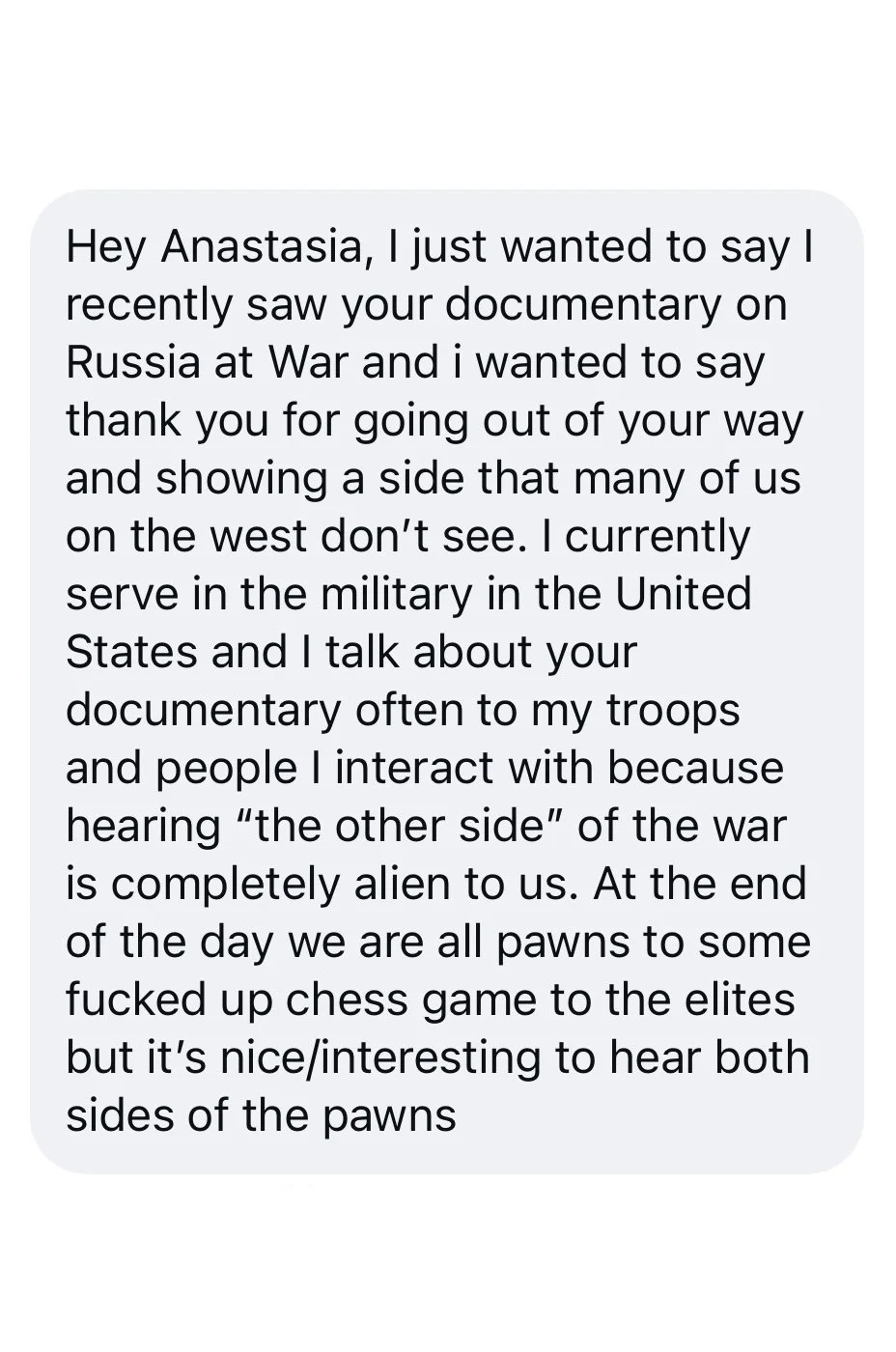
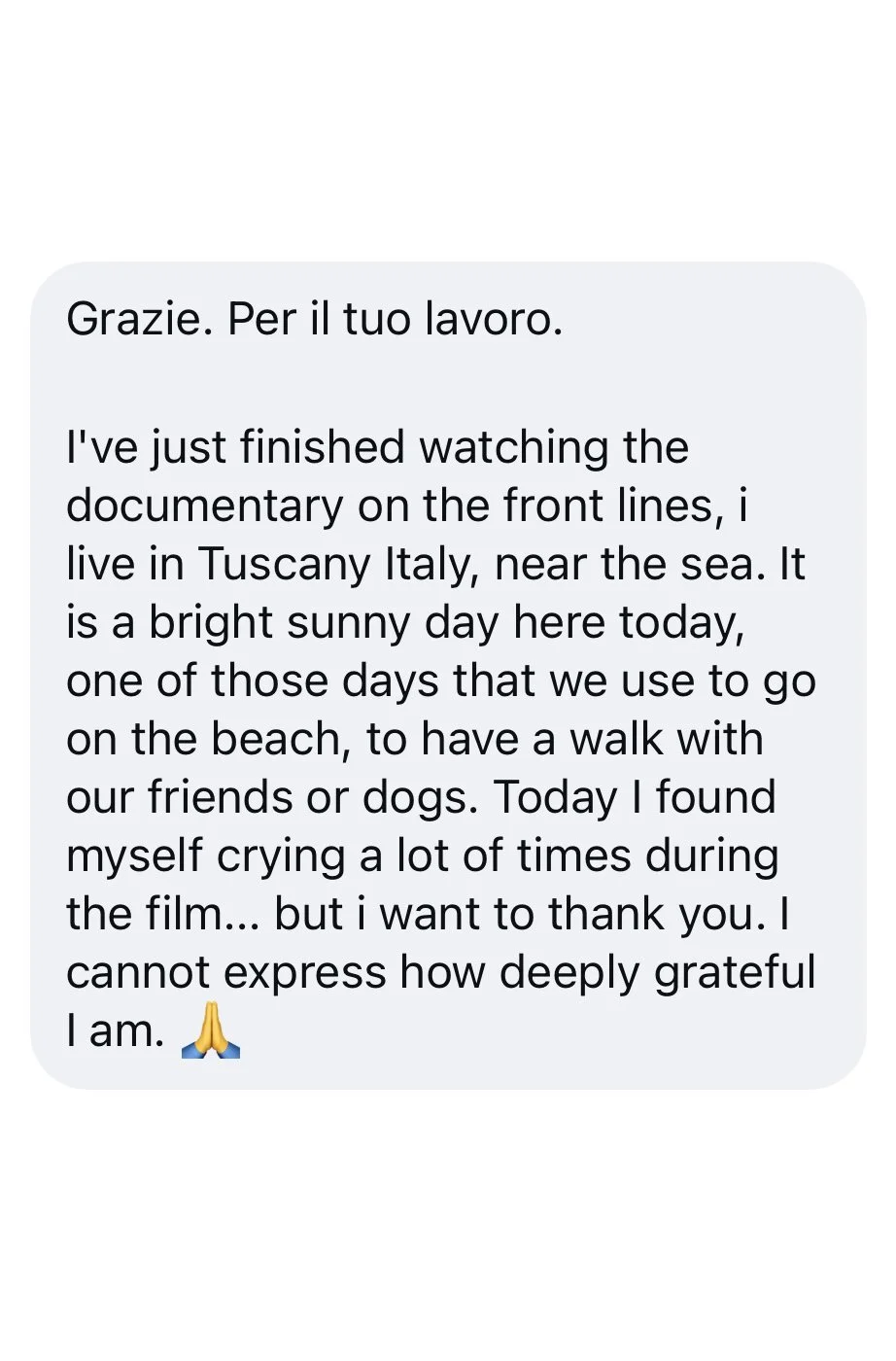
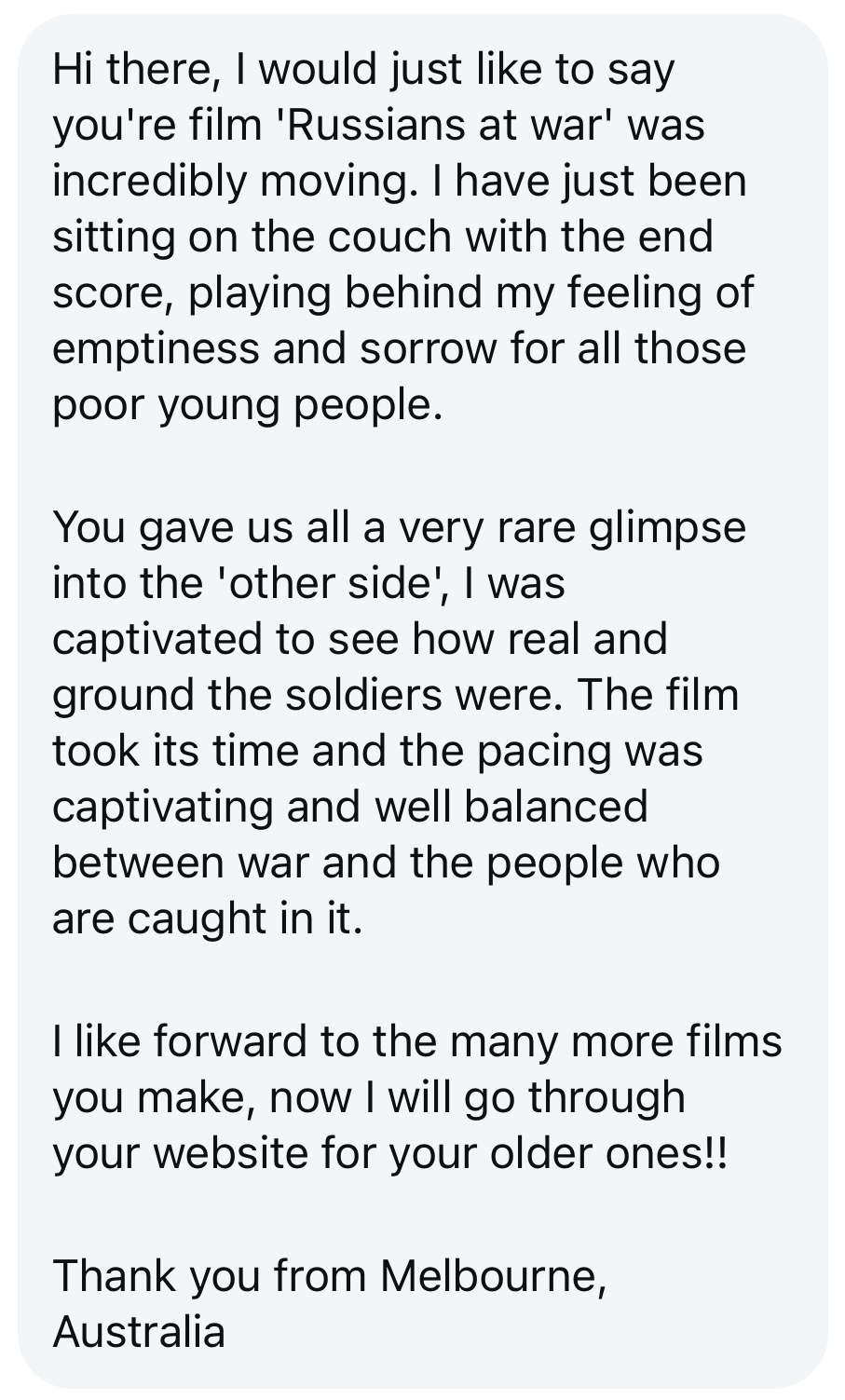
…And a watch-along review by an American blogger and an Oscars debate in N.O Media.
‘The purpose of propaganda is to make one set of people forget that other sets of people are human.’
– Aldous Huxley
Russians at War is now available to all.
Watch it here: